 Promotional Products
Introduction
If you’ve ever ordered Custom Keychains that looked perfect in the proof but arrived scratched, faded, or heavier than expected, you already know the painful truth: material choice is the real make-or-break decision. In 2026, buyers also care more about sustainability claims, skin-contact safety, and long-term brand impression—so “whatever’s cheapest” is rarely the best strategy.
At Best Patches, we’ve reviewed thousands of production samples across events, retail merch drops, and corporate swag programs. The fastest way to avoid costly remakes is to validate your material early—before you approve a mold, finalize a print method, or commit to a finish that doesn’t match how your keychains will be used in real life.
Custom keychains are personalized key accessories made from materials like metal, acrylic, PVC, leather, or wood, typically branded with logos, art, slogans, or product identifiers. They’re used for marketing giveaways, retail merchandise, fan collectibles, staff ID sets, and everyday carry personalization.
Table of Contents
- Why material choice matters more in 2026
- Zinc alloy and stainless steel
- Acrylic (clear, color, glitter, and UV printing)
- Soft PVC and rubber
- Leather and PU (vegan leather)
- Wood and bamboo
- Epoxy and resin doming
- Fabric, woven, and embroidered keychains
- A practical sampling checklist before you pay
Why material choice matters more in 2026
Keychains live rough lives: they get dropped on asphalt, scraped against keys, and baked on car dashboards. That’s why you should treat material selection like a product engineering decision, not a cosmetic one. The “right” material depends on how your audience will use it (collector display vs. daily keyring), your design complexity (fine lines vs. bold shapes), and how you’ll distribute it (mailers, events, retail hooks).
Material also affects compliance and claims. If you’re marketing eco-friendly merch, you’ll need to think about traceability and realistic sustainability language. For corporate and school distribution, you may need to avoid sharp edges, strong odors, or coatings that wear off onto hands and pockets.
“Most quality problems we see aren’t caused by bad factories. They happen when the material and finish don’t match the design details or the use case.”
— Production lead, Best Patches
Pro Tip: Ask your supplier to confirm the exact substrate (e.g., “zinc alloy die-cast” vs. “iron stamped”) and the finish system (e.g., “nickel plating + clear coat”) in writing. “Metal keychain” is not specific enough to prevent surprises.
Zinc alloy and stainless steel
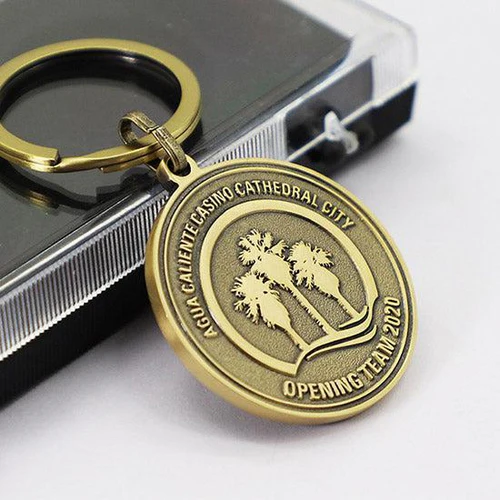
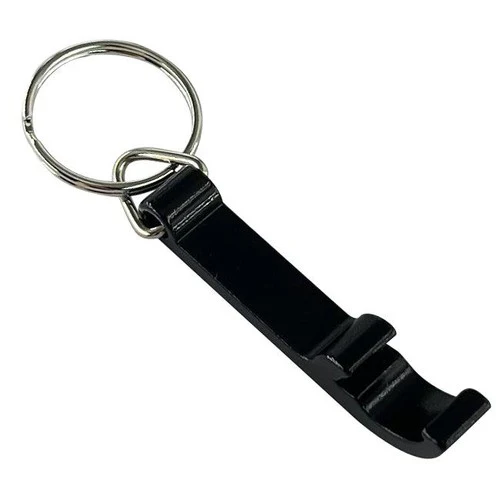
If you want a premium feel, zinc alloy and stainless steel are the workhorses. Zinc alloy is typically used for die-casting detailed shapes (raised borders, recessed areas, 3D relief), while stainless steel is commonly used for stamped or laser-cut flatter profiles with a clean, modern look.
When metal is the best choice
- High perceived value for corporate gifting, automotive, and tech brand merch
- Excellent durability for daily carry
- Precise detail for logos, crests, and geometric designs
- Premium finishes like brushed, antique, black nickel, or matte plating
Risks and limitations to watch
Metal can backfire if you ignore practical details. Heavier keychains can increase shipping costs and annoy users if they bang into phones or car consoles. Poor plating can pit or discolor, and sharp edges can be a complaint magnet if the vendor doesn’t deburr properly. Also, highly polished finishes show scratches quickly—great in photos, less great after two weeks on a keyring.
According to a 2024 report by Deloitte on consumer sustainability behaviors, buyers increasingly scrutinize “green” claims and want proof—so if you position metal as “eco,” be ready to explain recyclability and coating choices instead of relying on vague language.
Acrylic (clear, color, glitter, and UV printing)
Acrylic custom keychains are still the fan-favorite for artists, conventions, and e-commerce drops because they’re lightweight, colorful, and cost-efficient at scale. In 2026, the biggest differentiator is print durability: UV printing, layered acrylic, and protective coatings separate “cute for a week” from “still looks new after a season.”
What to check before you approve acrylic
- Thickness: 3mm is the mainstream balance; 5mm reads premium; 2mm can feel flimsy.
- Single-sided vs. double-sided print: double-sided looks better but must be aligned carefully.
- Protective film and packaging: ask if each piece ships with film on both sides and individually bagged.
- Edge quality: laser-cut edges can be glossy; poor cutting may show micro-cracks.
- Hardware choice: keyring + lobster clasp combos reduce returns because users can attach easily.
Risks and limitations to watch
Acrylic scratches. Even “hard coat” options will eventually show wear when mixed with metal keys. UV ink can chip if the print sits on the surface without a protective layer. Also, transparent acrylic amplifies dust and micro-scratches, so you’ll want realistic product photos and packaging that prevents rubbing during shipping.
Pro Tip: If your design has large dark fills, ask for a test showing banding and solid coverage. Some UV setups can show subtle stripes on big flat areas—easy to miss in proofs, obvious in hand.
Soft PVC and rubber
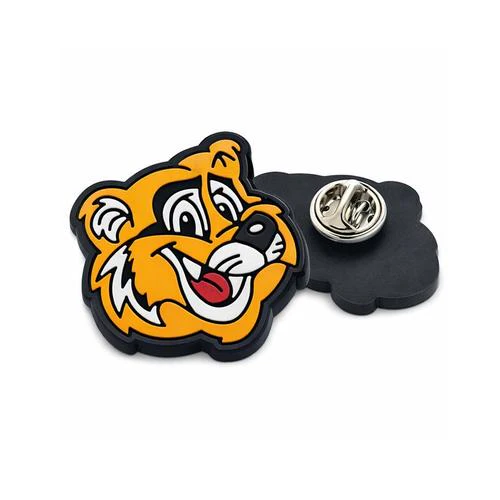
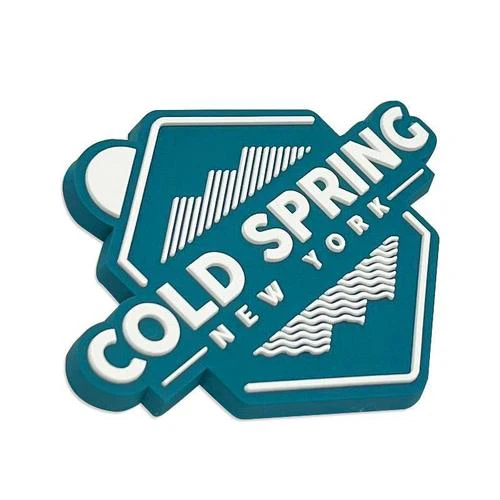
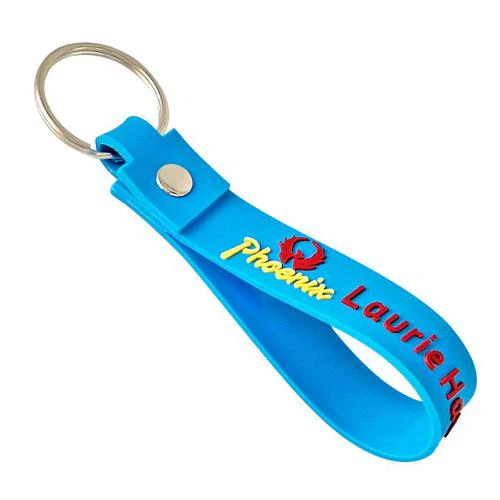
Soft PVC keychains (often called “rubber keychains”) are perfect for bold, simplified designs that need texture, color separation, and a playful look. They’re popular for sports teams, schools, outdoor brands, and kid-oriented products because they’re flexible and can handle impact without cracking.
Where PVC shines
- Color blocking with recessed fills that don’t scratch off like surface ink
- Soft-touch feel and quiet movement on keyrings
- Weather tolerance for outdoor use
- Brand mascots and simplified icons with thick outlines
Risks and limitations to watch
PVC can carry odor if the material mix is low quality, and very fine details can “mush” at small sizes. Another concern in 2026 is the buyer’s increased sensitivity to material safety and transparency. If you distribute to schools, youth programs, or healthcare environments, ask your supplier about compliance expectations for your market and whether any third-party testing is available.
According to a 2023 outlook from McKinsey on consumer trust and product transparency, brands that clearly explain materials and sourcing tend to earn stronger repeat purchasing—especially for low-cost items where quality skepticism is high.
Leather and PU (vegan leather)
Leather keychains signal “adult premium” fast—ideal for real estate teams, boutique retail, hospitality, and automotive giveaways. PU (often marketed as vegan leather) offers a similar look at lower cost and with more consistent color matching.
How to choose between leather and PU
Genuine leather ages with character and feels premium, but it varies from batch to batch and can absorb oils. PU is consistent, easy to wipe clean, and takes heat-stamped logos well, but it can peel over time if the top layer is thin or if the keychain is constantly flexed.
Risks and limitations to watch
The biggest failure mode is edge and stitch quality. If edges aren’t sealed well, you’ll see fraying or delamination. If your keychain will live on a car key set, constant twisting can stress the fold point; request reinforcement, thicker stock, or a different construction style.
Wood and bamboo
Wood and bamboo custom keychains are the go-to when you want a natural, eco-forward vibe—coffee shops, outdoor brands, wellness, and artisan retailers. Laser engraving looks sharp and doesn’t “wear off” like surface inks, and the tactile feel can be a huge differentiator in a sea of plastic merch.
What to check with wood keychains
- Grain variability: darker/lighter areas will affect engraving contrast.
- Sealing: unsealed wood can stain from hand oils and moisture.
- Edge charring: laser cutting can leave burn marks; ask if they sand and finish edges.
- Moisture behavior: thin wood can warp if not properly dried and sealed.
Risks and limitations to watch
Wood is not the best choice for ultra-detailed, full-color art unless you use printed inserts or special coating systems. And if you’re making sustainability claims, be specific. “Eco-friendly” is too broad; consider stating “made with bamboo” or “laser-engraved wood” and avoid promising recyclability unless you can support it.
Epoxy and resin doming
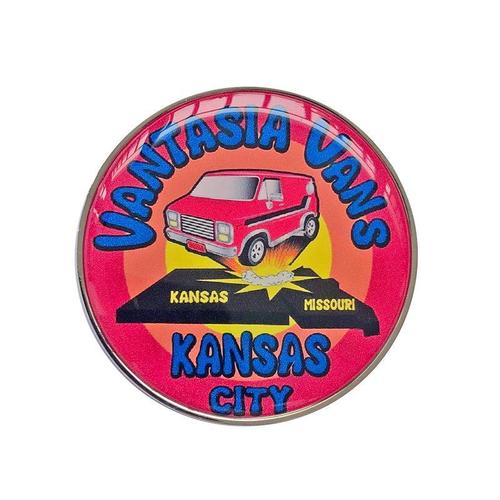
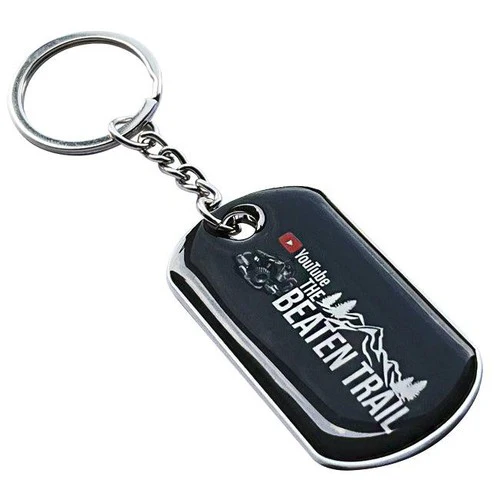
Epoxy doming is less about the base material and more about the top layer: a clear resin coat that creates a glossy, raised finish. It can be applied over printed designs, metal, or even certain fabrics. When done well, doming boosts perceived value and protects graphics from abrasion.
Where epoxy works best
Epoxy is great for corporate logos, QR code tags (when sized correctly), and designs that benefit from a “badge” look. It also helps prevent scuffing on printed surfaces, especially on keychains that will be tossed into bags with coins and keys.
Risks and limitations to watch
Doming can yellow over time if the resin system isn’t UV-stable. It can also trap dust or form uneven edges if the application process is rushed. If you expect exposure to sunlight (car keys, beach destinations, outdoor events), ask explicitly about UV resistance and request aged samples if possible.
Fabric, woven, and embroidered keychains
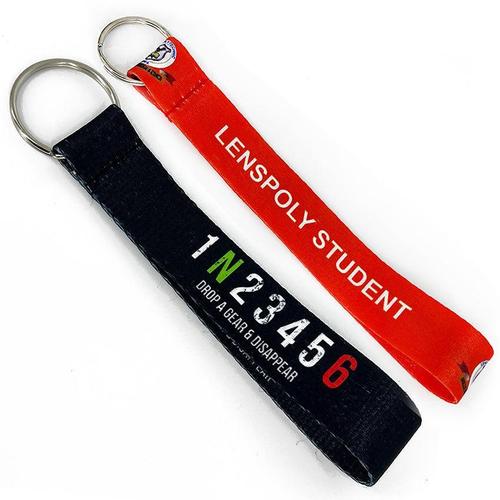
Fabric keychains—embroidered, woven, or printed—are underrated for brands that want lightweight items with high comfort and low noise. They’re common in streetwear, gyms, music merch, and aviation-style “remove before flight” tags, where the keychain is also a mini banner.
Choosing between embroidered and woven
Embroidered gives you texture and bold shapes; it’s ideal for simple logos and block lettering. Woven handles finer detail and small text better, with a flatter finish. Both can be finished with merrowed edges, heat-cut edges, or stitched borders, each affecting fray resistance and look.
Risks and limitations to watch
Small text can become illegible if thread count is too low, and edges can fray if finishing is weak. Also, bright white threads may discolor faster from pocket grime—choose slightly off-white if the keychains are meant for everyday use.
“If your keychain is going on a lanyard or a gym bag, fabric can outperform hard materials because it doesn’t chip phones or scratch sunglasses.”
— Merchandising advisor, Best Patches
A practical sampling checklist before you pay
Before you place a bulk order, do a quick material verification pass. This is where most expensive mistakes get prevented—especially when you’re ordering custom keychains for an event date or a product launch with zero schedule flexibility.
Fast pre-order checklist
- Confirm the exact material (not just “metal” or “plastic”) and ask for a spec note on the invoice.
- Ask for a physical sample (or at least a high-res video) showing edges, back side, and hardware movement.
- Stress-test the attachment point: jump ring thickness, split ring stiffness, clasp spring strength.
- Check print protection: scratch test lightly with a fingernail and a key (with permission from your supplier).
- Validate packaging: individual bagging, protective films, and carton separation to reduce transit scuffs.
- Match your use case: car keys demand durability; collector drops demand color accuracy; giveaways demand comfort and safety.
Material comparison table for real business scenarios
Material Best for Watch-outs Recommended brand scenario Zinc alloy / stainless steel Premium feel, long lifespan, detailed shapes Weight, plating quality, scratch visibility Real estate team gifting “closing day” key tags Acrylic Full-color art, light shipping, fan merch Surface scratches, ink chipping, edge micro-cracks Anime convention artist alley product drop Soft PVC Bold icons, flexibility, outdoors and schools Odor risk, fine-detail limits, compliance questions Youth sports club season registration giveaway Leather / PU Upscale branding, tactile premium, heat stamping Edge wear, peeling (PU), batch variation (leather) Boutique hotel loyalty perk and gift shop add-on Wood / bamboo Natural aesthetic, engraving, eco-forward positioning Warping, stain sensitivity, engraving contrast shifts Specialty coffee roaster retail counter merch Best Patches field notes
One of our most instructive projects at Best Patches came from a regional auto show team that wanted a “premium metal” custom keychain for VIP bags. Their first draft used a mirror-polished finish with a large flat face. The sample looked incredible under studio lights—but after we ran a basic pocket-and-keys abrasion test, micro-scratches showed immediately, and the piece looked worn within days.
We switched the spec to a brushed finish with a subtle texture and adjusted the border thickness to reduce edge dings. The look stayed premium, but the keychains held up better in real use, and the client avoided last-minute replacements when press photos hit social media.
Another example: an artist brand planned a 2mm acrylic charm to hit a low price point. We advised a 3mm upgrade and added protective film plus individual bagging. The per-unit cost increased slightly, but damage rates dropped dramatically during fulfillment—fewer refunds, fewer “arrived scratched” messages, and better reviews that actually helped conversion.
Conclusion
The best custom keychains in 2026 aren’t defined by one “best” material—they’re defined by material choices that match your design, your audience, and the real-world wear pattern. Metal wins on perceived value, acrylic wins on color and speed, PVC wins on rugged flexibility, leather wins on mature premium branding, and wood wins on natural aesthetic and engraving authenticity.
Next steps we recommend at Best Patches:
- Choose two materials that fit your use case, then order samples of both before committing to bulk.
- Standardize your hardware (jump ring thickness, clasp type, split ring size) so future reorders stay consistent.
- Write a one-page spec for your vendor: material, thickness, finish, print method, packaging, and acceptable tolerance.
References
- Deloitte (2024) — Consumer sustainability behavior insights used to frame how buyers evaluate environmental claims and trust signals.
- McKinsey (2023) — Research on consumer trust and transparency used to support clearer material communication for branded merchandise.
- Gartner (2025) — Industry guidance on brand experience expectations, supporting the idea that small physical touchpoints (like merch) influence perception and loyalty.
FAQ
What is the best material for custom keychains?
It depends on your goal. For durability and a polished look, metal (like zinc alloy or stainless steel) is hard to beat. Acrylic is the fan favourite for artists—lightweight, vibrant, and wallet-friendly. If you're going eco-friendly, wood or bamboo options are worth a look.
How thick should an acrylic keychain be?
Most acrylic keychains are around 3mm thick, which is sturdy enough to feel high-quality but not too bulky. Some shops offer thinner (2mm) for cost savings or thicker (5mm) for premium designs.
Can I sell keychains with copyrighted images?
Technically, no—and it’s not worth the risk. Using images of popular characters, logos, or memes without permission can get your shop flagged or even legally challenged. Instead, try:
Creating fan-inspired original art
Licensing artwork through stock or artist partnerships
Joining affiliate programs if you want to sell branded items legally
How much does it cost to make custom keychains?
It varies based on materials, order size, and design complexity. Here's a rough range:
Acrylic keychains (bulk): $0.50–$1.50 each
Metal keychains: $1.50–$3.00+
Soft PVC keychains: $0.80–$2.00+ depending on colors and thickness
Design software/tools: Free (like Canva) to $20+/mo (like Adobe Illustrator)
Do keychain manufacturers have minimum order quantities (MOQs)?
Yes, most do. Many suppliers set MOQs around 10 to 50 units, depending on the material and style. Some print-on-demand services may let you order just one or two for a higher price, which is useful for testing before a bulk run.
What file format should I use for keychain design?
Always check with your supplier, but in general:
.AI or .SVG for vector artwork (best choice)
.PNG with transparent background (300dpi or higher)
Avoid .JPG unless you’re sending photo-based artwork
Keep all text outlined to avoid font issues
How do I choose Custom Keychains for an event giveaway?
Start with the use case and timeline, then pick the material that reduces risk. A practical approach:
For premium VIP bags, go metal with a brushed or matte finish to hide scratches
For high-volume handouts, choose acrylic or PVC to reduce weight and shipping cost
For outdoor or kid-heavy events, use soft PVC for flexibility and impact resistance
Always order a sample and confirm packaging so they arrive scuff-free
What are the most popular shapes for keychains?
Classic rectangle and circle shapes are still common, but custom die-cut designs are trending. People love shapes that follow the contour of the artwork (like a mascot head or logo mark). Unique silhouettes make a keychain feel less mass-produced and more brand-specific.