Custom Lanyards 2026: Design Yours in 3 Easy Steps
Why Brand Teams Still Rely on Lanyards
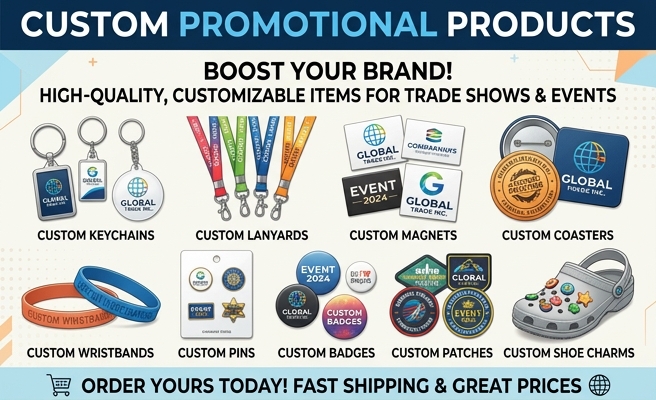
Cheap giveaways are easy to forget. Strong branded tools are not. Custom Lanyards sit in that rare middle ground where cost, visibility, and practical use all work together. Whether you need event credentials, employee IDs, retail promotions, school spirit gear, or merch for resale, the right lanyard keeps your logo in motion all day instead of leaving it buried in a tote bag.
That is why smart marketing teams keep coming back to them, and why Best Patches has become a go-to partner for brands that want lanyards to look polished instead of generic. A good lanyard is more than a strap with a logo. It is a wearable brand touchpoint that affects how professional, organized, and memorable your business feels.
Custom Lanyards are branded neck straps or wrist straps designed to carry badges, keys, passes, or small accessories while displaying a company logo, slogan, or graphic. Businesses use them because they combine function with repeated visual exposure in offices, trade shows, campuses, hospitals, and live events.
If you have ever approved a lanyard order and felt underwhelmed by the final result, the problem was probably not the product category. It was the design process. The fastest way to get better results is to simplify that process into three decisions: what the lanyard needs to do, how it should look, and what production details will protect quality.
Table of Contents
- What Makes Lanyards Work for Branding
- The Three-Part Design Process
- Materials, Printing, and Hardware Choices
- Best Brand Use Cases by Industry
- Common Mistakes and Hidden Risks
- A Real-World Brand Example
- Cost, Timeline, and Approval Planning
- Final Recommendations for Better Results
- References
What Makes Lanyards Work for Branding
Lanyards keep winning because they solve two problems at once: access and exposure. Your staff needs IDs. Your attendees need credentials. Your visitors need directional clarity. At the same time, your brand needs to appear consistently across those interactions. A lanyard handles both jobs without asking the user to learn anything new.
That utility matters more than many teams realize. According to the Advertising Specialty Institute’s 2024 ad impression research, promotional products that are used repeatedly tend to generate stronger recall than items with short or novelty-only lifespans. Lanyards fit that pattern well because they stay visible during the full span of an event or shift, not just during the handoff moment.
They also support brand perception in subtle ways:
- They make teams look coordinated and easier to identify.
- They reduce badge loss at conferences, schools, and facilities.
- They create repeated logo exposure in photos, check-in lines, and social posts.
- They can double as merch when the design is stylish enough to wear after the event.
- They offer room for functional upgrades like breakaway clasps, badge reels, and detachable buckles.
That said, not every brand should use the same formula. A hospital needs safety and clean readability. A streetwear brand may care more about bold woven details. A software company at a trade show may prioritize color contrast that photographs well under venue lighting. The strongest lanyard designs start with context, not decoration.
“A branded lanyard fails when the team treats it like leftover swag. It performs best when it is designed like part of the uniform, the event system, and the brand identity all at once.”
The Three-Part Design Process
You do not need a complicated workflow to create excellent lanyards. You need a clear order of decisions. Start with use, then build the visual layer, then lock the production details.
Define the job the lanyard must do
Before you talk about colors or printing methods, decide what the item is supposed to carry and where it will be used. The answer changes everything from width to attachment style.
- Choose the environment. Office, campus, festival, hospital, hotel, retail floor, or trade show.
- Choose the carried item. ID badge, key set, access card, USB, ticket holder, or multi-tool credential.
- Choose the wearing duration. A four-hour event needs different comfort standards than an eight-hour work shift.
If people will wear the lanyard all day, comfort matters more than brands often expect. Softer polyester or woven finishes may outperform rougher low-cost stock. If users must remove the attached item frequently, a detachable buckle becomes more important than a premium print finish.
Build a design system instead of a logo strip
Many weak lanyards are just repeated logos on a background color. That works sometimes, but it rarely creates a premium result. Better lanyards use a simple design system: logo, spacing, contrast, typography rules, and attachment color choices that all align with the wider brand identity.
Think through these visual questions:
- Will the logo repeat in one direction or alternate for readability from different angles?
- Does the strap color match a primary brand color or a secondary accent color?
- Will the text still be readable at a distance when wrapped around the neck?
- Does the design need QR codes, event labels, or role markers?
- Should the hardware be black, silver, gold, or color matched?
According to a 2023 report from Pantone on color communication in branding, high-contrast brand applications improve recognition and reduce visual confusion across physical media. On lanyards, that usually means avoiding low-contrast logo-on-logo combinations that look elegant on a screen but disappear in a crowd.
Approve production details before the order goes live
This is where many brand teams lose quality. They approve the artwork but not the manufacturing variables. Production details determine whether the final product feels clean, cheap, durable, or frustrating.
Review these points before final approval:
- Material type and strap width
- Print method or weave method
- Breakaway safety requirement
- Swivel hook, lobster claw, split ring, or buckle attachment
- Edge finish and stitching quality
- Proofing process and color tolerance
- Packaging method for bulk distribution
McKinsey’s 2024 research on customer expectations in physical brand experiences emphasized a basic truth that applies here too: consistency shapes trust. When the item in hand looks noticeably worse than the mockup, people may not say anything, but they do absorb the difference.
Materials, Printing, and Hardware Choices
The design only works if the construction supports it. Here is where brand managers need to think like product buyers, not just marketers.
Popular material options
Polyester is the most common choice because it balances cost, printability, and comfort. Nylon tends to feel smoother and slightly more premium, but it can cost more. Woven lanyards create a textured look that suits simple logos and long-term use. RPET or recycled materials appeal to brands with sustainability goals, especially for conferences and university programs.
Eco positioning can be meaningful here, but be careful with claims. If sustainability is part of your message, ask for exact material details and certification language. Vague green wording is easy to overstate and can create credibility problems.
Printing methods that fit different goals
Silkscreen works well for simple logos with limited colors. Dye sublimation is the best fit for full-color gradients, pattern-heavy art, and detailed branding. Woven designs offer durability and texture but are less ideal for very intricate graphics. Tubular lanyards are a budget option often used for basic event runs.
If your design includes gradients, illustrations, or multiple campaign colors, dye sublimation usually delivers the cleanest result. If your goal is a classic corporate look with one-color branding, silkscreen may be more cost-efficient.
Hardware can make or break usability
Teams often focus on the strap and ignore the attachment, even though the user feels the hardware every time they badge in or clip keys. A heavy keyring on a weak hook creates failure points. A breakaway clasp may be essential in schools, healthcare, and manufacturing environments. A detachable buckle saves time in offices where staff scan cards constantly.
| Brand Scenario | Best Material | Best Print Style | Best Hardware |
|---|---|---|---|
| Tech conference badge holders | Polyester | Dye sublimation | Swivel hook + buckle |
| Hospital staff ID access | Soft polyester | Silkscreen | Breakaway clasp + badge reel |
| University orientation kits | RPET | Dye sublimation | J-hook + safety breakaway |
| Retail employee key carriers | Nylon | Silkscreen | Lobster claw + split ring |
Best Brand Use Cases by Industry
The best lanyards look different depending on who is wearing them and why. Treating every order the same usually leads to generic results and wasted budget.
Corporate and trade show brands
These teams often need legibility, color consistency, and speed. The lanyard has to work in check-in lines, keynote seating, networking floors, and photos. Bold contrast and detachable buckles usually perform better than delicate branding choices. If sponsors are involved, reserve one side for the host brand and the reverse for partner marks or event naming.
Schools and universities
Campus programs benefit from comfort, safety, and identity grouping. Orientation leaders, staff, students, and visitors may need visual differentiation. Color-coded lanyards can reduce confusion and improve movement during high-traffic periods. Recycled materials are also a strong fit if the institution promotes sustainability goals.
Healthcare and facilities
Healthcare environments should prioritize breakaway features, quick-release access, and easy sanitation considerations. Clean text and role clarity often matter more than decorative styling. If the lanyard will be worn alongside other gear, choose hardware that does not snag or add unnecessary bulk.
Lifestyle, merch, and creator brands
Here, the lanyard can act less like a utility item and more like a wearable accessory. Woven labels, custom colors, charm add-ons, and stronger packaging can raise perceived value. This is where a merch-focused design can outperform plain corporate repetition.
“When the lanyard is meant for resale or fan culture, the design should feel collectible. If it only looks functional, customers treat it like a freebie, not merch.”
Common Mistakes and Hidden Risks
Lanyards are simple products, but bad decisions are easy to hide in a mockup. These are the issues that most often weaken performance:
Overcrowded artwork
A lanyard is not a flyer. Logos, slogans, hashtags, website URLs, campaign names, and sponsor marks rarely belong on the same narrow strap. Pick one main message and let the rest live elsewhere.
Poor contrast and unreadable scale
Thin white logos on pale backgrounds often disappear. So do small web addresses and taglines. If someone cannot identify the brand from a few feet away, the design is doing too much or too little.
Wrong attachment for the use case
A beautiful lanyard with the wrong hook becomes annoying immediately. People who swipe in and out all day need a buckle. People carrying keys may need stronger metal hardware. Safety-sensitive workplaces may require breakaway closures.
Ignoring fulfillment realities
If the lanyards must be sorted by event role, department, or kit type, plan that before manufacturing starts. Bulk packing without distribution logic can create a huge labor problem on arrival.
There are also broader limits to acknowledge. Lanyards are highly effective for working environments and events, but they are not always the best giveaway if your audience has no practical need for them. If the item does not fit the context, even perfect design will not save it.
A Real-World Brand Example
At Best Patches, we have seen the biggest improvements happen when clients stop treating lanyards as a last-minute add-on. One recent project that stands out involved a mid-sized events brand that had outgrown its generic black badge straps. Their old lanyards looked safe on paper, but on-site they blended into staff clothing, disappeared in venue photography, and frustrated attendees who needed quick badge scanning.
I worked with the team to simplify the brief. We changed the strap width to improve logo legibility, shifted from a low-contrast dark-on-dark palette to a bold brand blue with white type, and added detachable buckles because staff were constantly removing badges at access points. We also separated attendee and crew versions with subtle but clear color coding. The difference was immediate: cleaner check-in flow, better visual consistency across event photos, and fewer complaints about badge handling.
In another project, I helped a retail client use lanyards less as internal tools and more as branded accessories for a seasonal campaign. We moved away from a standard printed strip and built a cleaner, fashion-oriented design with fewer repeats, upgraded hardware, and packaging that matched the in-store display. The client had expected the lanyard to be a low-margin throw-in item. Instead, it became one of the pieces customers posted most often on social media because it looked intentional.
Those projects reinforced the same lesson: when the lanyard supports a real use case and a clear visual system, it stops feeling disposable.
Cost, Timeline, and Approval Planning
Budget matters, but teams often ask the wrong question. Instead of asking for the cheapest unit price, ask what combination of quantity, material, print method, and hardware gives you the best outcome for the environment.
What affects cost most
- Order quantity and bulk price breaks
- Material selection
- Number of imprint colors or full-color printing
- Custom hardware or upgraded attachments
- Safety features like breakaway closures
- Packaging and sorting needs
- Rush production or expedited shipping
For many organizations, the expensive mistake is not paying slightly more per unit. It is ordering a low-cost version that creates replacement issues, slows staff, or undercuts the brand impression at a major event.
How much lead time is safe
Standard production often works best when you allow enough room for proofs, revisions, sampling, and freight. Rush timelines can be done, but they narrow your options and increase the chance of approval errors. If the lanyard is tied to a fixed launch date, build in buffer time for at least one proof review and one internal stakeholder signoff.
A practical approval checklist
- Confirm final dimensions, width, and overall length.
- Review logo size at actual print scale, not enlarged on screen.
- Verify Pantone or closest brand color match expectations.
- Confirm attachment type and breakaway requirement.
- Approve packaging, sorting, and shipping deadlines.
- Get a final production proof signed by all decision makers.
Final Recommendations for Better Results
The strongest lanyards are not the flashiest ones. They are the ones designed around use, readability, comfort, and brand consistency. If you define the job first, build a simple visual system, and protect quality in production, your lanyards are far more likely to feel purposeful instead of forgettable.
Best Patches recommends three next actions if you are planning a new order:
- Audit your current lanyard and identify where it fails: readability, comfort, hardware, or brand impact.
- Create one approved design system with exact colors, spacing, and attachment specs before requesting quotes.
- Order with the real use case in mind, not just the lowest unit cost, especially for staff-facing or photo-heavy environments.
References
- Advertising Specialty Institute, 2024 ad impression research: Provided context on why frequently used promotional products tend to drive stronger recall.
- Pantone, 2023 brand color communication insights: Supported the importance of contrast and consistent color application in physical branding.
- McKinsey, 2024 customer experience research: Reinforced the role of consistency in shaping trust and brand perception across physical touchpoints.
FAQ
What are the best materials for Custom Lanyards?
Polyester is the most versatile choice for most brands because it balances comfort, durability, and print quality. Nylon feels smoother and more premium, woven styles work well for simple long-term branding, and RPET is a strong option for organizations that want a recycled material story.
What width should a branded lanyard be?
A width around 3/4 inch to 1 inch works for most business and event use. Narrower straps can save money, but they often make logos harder to read. If your artwork includes small text or detailed graphics, a wider strap usually gives better results.
Which attachment is best for ID badges?
For ID badges, a swivel hook is a common and reliable option. If users scan or remove badges frequently, add a detachable buckle. In schools, healthcare, and some workplaces, a breakaway clasp may also be important for safety.
How long does it take to produce custom lanyards?
Production time depends on quantity, material, customization level, and shipping method. A standard order may take a couple of weeks from proof approval to delivery, while rush jobs can move faster at a higher cost. The safest approach is to allow extra time for proofing and internal approval.
Can lanyards work as merch, not just office supplies?
Yes, if the design feels intentional and wearable. To improve merch appeal, use cleaner branding, stronger color choices, upgraded hardware, and packaging that matches the rest of the product line.
Do I need a physical sample before placing a large order?
If your quantity is large, your colors are strict, or the lanyard is tied to an important campaign, a physical sample is a smart move. It helps you evaluate texture, readability, comfort, and hardware quality before committing the full budget.