Custom Lanyards in 2026: Step-by-Step Bulk Ordering Guide
Get Bulk Orders Right From the Start
If you are ordering Custom Lanyards online for a trade show, school, hospital, franchise rollout, or internal staff program, the biggest risk is not usually price. It is getting the wrong material, weak print quality, delayed delivery, or a design that looks clean on screen but poor in production. Those mistakes get expensive fast when you are buying in volume.
That is why buyers increasingly work with experienced suppliers like Best Patches, where the process is built around artwork review, material matching, production checks, and practical order planning. A smooth bulk order is not just about placing items in a cart. It is about choosing specifications that fit real use, real budgets, and real deadlines.
Custom Lanyards are personalized neck straps or badge holders made for carrying IDs, keys, access cards, tickets, or branded items. Businesses and organizations use them to combine identification, convenience, and brand visibility in a single product. In bulk purchasing, customization usually includes material, width, attachment type, printing method, safety features, and packaging.
When you know how to compare options before checkout, you can cut waste, reduce reprints, and end up with lanyards people actually wear instead of stuffing into a drawer.
Table of Contents
- Why Bulk Ordering Strategy Matters
- Define the Real Use Case Before You Design
- Choose the Right Material and Print Method
- Build Artwork That Produces Well at Scale
- Compare Bulk Lanyard Setups by Business Type
- How to Order Bulk Custom Lanyards Online
- Understand Pricing, MOQs, and Shipping Timelines
- Common Risks and How to Avoid Them
- A Real-World Ordering Example From Best Patches
- What Is Changing in 2026
Why Bulk Ordering Strategy Matters
Bulk lanyard purchasing looks simple from the outside. Pick a color, upload a logo, choose quantity, and pay. In practice, buyers are balancing brand standards, event dates, employee comfort, safety rules, and budget pressure all at once.
According to ASI’s 2024 Ad Impressions Study, promotional products continue to deliver strong brand recall because they stay in use instead of disappearing after a single digital impression. That matters for lanyards because they are one of the few promotional items worn in public and used repeatedly over a full day. A good lanyard is both a branding tool and a functional tool.
There is also a cost-control angle. Deloitte’s 2024 supply chain outlook noted that procurement teams are putting more emphasis on supplier reliability and lead-time predictability, not just unit cost. For bulk lanyards, that means a slightly cheaper option can become the expensive one if the print smears, clips break, or delivery misses the event.
“The best promo product orders are specified backwards from real usage. If the buyer starts with the actual environment, quality problems drop sharply.”
Define the Real Use Case Before You Design
Before you choose colors or attachments, answer one question: where will these lanyards actually be used? A conference giveaway is not the same as a hospital ID program. A school fundraiser has different priorities than a construction site credential system.
Questions that shape the order
- Will users wear them all day or only at events?
- Do they need to hold keys, ID cards, whistles, USB drives, or multiple items?
- Is a breakaway safety clasp required?
- Will the logo be viewed up close or from several feet away?
- Is the audience staff, students, customers, or VIP guests?
- Do you need individual packaging for distribution?
- Will your team reorder the same spec later for consistency?
For internal staff programs, comfort and durability usually matter more than trendy design. For brand activations, visual impact and color accuracy tend to lead. For schools and healthcare environments, safety add-ons and easy badge compatibility often decide the final spec.
Choose the Right Material and Print Method
The biggest quality differences in Custom Lanyards come from the material and the decoration method. These choices affect durability, color sharpness, feel, and final cost.
Popular material options
Polyester is the workhorse choice for most bulk orders. It is durable, cost-effective, and works well for screen printing or heat transfer.
Nylon has a smoother, slightly shinier finish and can look more premium, especially with crisp printed logos.
Tubular lanyards are often a budget-friendly choice for simple branding and event use.
Woven styles are useful when long-term durability matters, although intricate logos may lose detail.
Eco-focused materials such as recycled PET are gaining ground as sustainability reporting becomes more visible in purchasing decisions.
Common print methods
Screen printing works best for simple logos and limited color counts. It is cost-efficient for many standard orders.
Dye sublimation is ideal for gradients, detailed graphics, or full-color branding. It offers better flexibility for complex artwork.
Woven text or logos can last a long time but are not ideal for very fine visual detail.
According to Grand View Research reporting in 2024 on promotional product demand, buyers are increasingly favoring practical branded items with longer usable life. In lanyards, that trend supports stronger materials and better print methods over ultra-cheap one-time-use specs.
Attachment choices that actually matter
- Bulldog clip for standard ID badges
- Swivel hook for keys or card holders
- Lobster claw for more secure attachment
- Split ring for keys and tools
- Breakaway clasp for safety-sensitive environments
- Buckle release for users who need to detach accessories quickly
Build Artwork That Produces Well at Scale
Designing for lanyards is not the same as designing for websites, flyers, or patches. The printable strip is narrow, repetition matters, and tiny text usually fails. What looks elegant in a digital mockup can become muddy on fabric.
Artwork rules that save rework
Keep logos high contrast. Use readable text. Avoid packing too much information into one repeat. If your brand palette includes subtle tonal shifts, dye sublimation may be necessary. If your logo depends on fine lines, ask for a pre-production proof at actual size.
I have seen this first-hand while reviewing branded accessory programs for event teams. The orders that go smoothly usually use a simplified logo lockup made specifically for narrow merchandise. The teams that insist on squeezing a full brand system, tagline, and QR code into one lanyard often end up revising after proofing.
“If a viewer has to stop and squint, the lanyard is overdesigned. The best production artwork is simple enough to repeat cleanly and bold enough to read in motion.”
At Best Patches, we have worked with customers who came in with beautiful but impractical artwork files. In one case, a client wanted a full crest, two slogans, and a web address on a narrow event lanyard. I recommended reducing the design to a single emblem plus one short line of text. The result looked cleaner, produced faster, and got approved by their team in one round instead of three.
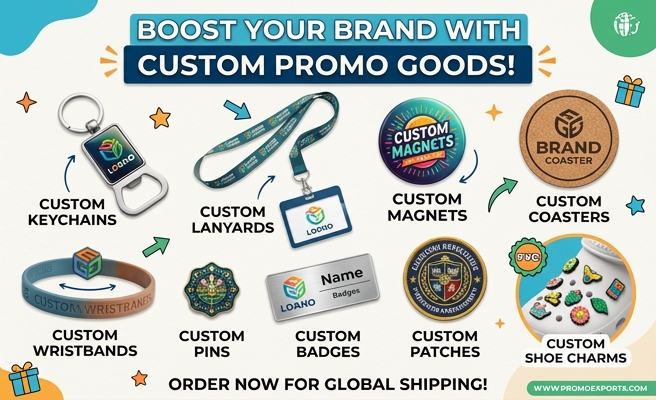
Compare Bulk Lanyard Setups by Business Type
| Business Type | Recommended Material | Best Attachment | Primary Buying Goal |
|---|---|---|---|
| Trade Show Exhibitor | Dye-sublimated polyester | Swivel hook with buckle release | Brand visibility and fast attendee distribution |
| Hospital or Clinic | Soft polyester with breakaway | Bulldog clip | Daily comfort, badge security, safety |
| School District | Tubular or polyester | Split ring plus safety clasp | Low cost and consistent reorder specs |
| Corporate HQ | Premium nylon | Detachable buckle with metal hook | Professional appearance and longevity |
| Music Festival or Event Crew | Dye-sublimated recycled PET | Lobster claw with quick-release | Colorful branding and fast access control |
How to Order Bulk Custom Lanyards Online
A smooth online order usually follows a predictable sequence. If you skip one of these checkpoints, the risk of delay or disappointment rises.
- Set the use case and quantity. Decide whether the order is for staff, events, retail resale, security IDs, or promotional distribution. Add a buffer of 5% to 10% if the event is live and attendance can fluctuate.
- Choose material and width. Match the feel and durability to how often the lanyard will be worn.
- Select the print method. Use screen printing for simpler branding and dye sublimation for more detailed designs.
- Pick attachments and safety features. This is where many buyers under-spec the product.
- Upload production-ready artwork. Vector files are best when available.
- Request a digital proof. Review logo orientation, spacing, color, and repeat pattern carefully.
- Confirm production timeline. Separate proof approval time from manufacturing time and shipping time.
- Review total landed cost. Check setup fees, rush charges, packaging, and freight before approving.
- Approve and document the spec. Save the final version for future reorders.
When buyers work with Best Patches, this process tends to move faster because the review is practical rather than purely transactional. Instead of simply accepting any file and any request, experienced production teams can catch sizing, readability, or attachment issues before the order enters manufacturing.
Understand Pricing, MOQs, and Shipping Timelines
Bulk pricing is usually driven by five things: quantity, material, print complexity, hardware, and lead time. Unit cost drops as quantity rises, but premium clips, breakaway clasps, custom packaging, and rush production can quickly change the math.
What affects cost most
- Order volume and price breaks
- One-sided versus two-sided printing
- Number of logo colors or full-color artwork
- Attachment upgrades
- Eco-material requests
- Rush manufacturing or expedited shipping
Minimum order quantities vary by supplier and product type. Some standard lanyards can be ordered in relatively small batches, while specialized specs may require higher volume. For company-wide staff programs, ordering a tested spec in larger quantities often saves more over time than placing several small rushed orders throughout the year.
Shipping is where otherwise good plans fail. Always count backwards from the in-hand date, not the order date. A proof delay of two days can easily become a missed event if your timeline is tight.
Common Risks and How to Avoid Them
Lanyards are simple products, but bulk orders still go wrong in predictable ways. Most are preventable.
Frequent buyer mistakes
- Choosing the cheapest material without considering daily wear
- Using artwork that is too detailed for the strap width
- Forgetting safety breakaways in regulated environments
- Ignoring clip quality when the lanyard carries keys or heavier items
- Approving proofs too quickly without checking logo direction
- Ordering exact quantities with no spare stock
- Assuming color on screen will match fabric print perfectly
There are also broader limitations worth mentioning. Lanyards are not the best branding product for every audience. Some users dislike neckwear. Some workplaces have snagging concerns. For high-fashion retail or premium gifting, other merchandise may better support the brand image. A balanced buying decision means recognizing where lanyards fit and where they do not.
Gartner’s 2024 procurement guidance emphasized resilience and supplier transparency as major buying priorities. That mindset applies here. A supplier that clearly explains proofing, production limits, and lead times is usually safer than one that promises everything instantly with no technical discussion.
A Real-World Ordering Example From Best Patches
One of the more useful projects I worked through with Best Patches involved a regional conference organizer that needed several hundred branded lanyards for staff, sponsors, and VIP guests. Their first instinct was to order one style for everyone to keep things simple. On paper, that sounded efficient. In practice, it would have created confusion at check-in and backstage access points.
I advised splitting the order into three color-coded versions with the same base material and hardware so production stayed consistent while functionality improved. Staff received durable black lanyards with bold white text, sponsors got a cleaner branded version for visibility, and VIPs had a premium-looking colorway that was easy to identify from a distance. The organizer also added detachable buckles for teams handling credentials throughout the day.
The result was not just better branding. It improved on-site flow. Registration staff spent less time verifying access manually, and the organizer avoided a second emergency order that they had originally considered “just in case.” That kind of outcome is why experienced pre-order planning matters.
What Is Changing in 2026
By 2026, buyers are paying more attention to three things: sustainability claims, reorder consistency, and multi-purpose functionality. Recycled materials are becoming more common, but buyers are also asking for proof and clarity instead of vague green marketing language.
Another shift is the move toward procurement standardization. Larger organizations want repeatable specifications saved by department or event type so they do not restart the approval process every time. That reduces errors and shortens reorder cycles.
Functionality is expanding too. Lanyards are being specified with badge holders, detachable modules, safety breakaways, and upgraded hardware based on actual workflow. The basic promotional strap is still useful, but the strongest demand is moving toward products that combine branding with operational convenience.
Conclusion
Ordering bulk lanyards online goes well when you treat it like a specification decision, not a quick commodity purchase. The right material, print method, attachment, proofing process, and delivery plan will matter more than shaving a few cents off the unit price.
If you want a cleaner buying process, Best Patches recommends three next steps:
- Create a short internal brief covering use case, quantity, deadline, and safety needs before requesting a quote.
- Submit simplified artwork sized for narrow-format printing, not a general brand file built for other media.
- Ask for a full proof and timeline confirmation before approving production, especially for event-driven orders.
References
- ASI Ad Impressions Study, 2024 — Provided context on the lasting brand recall value of promotional products.
- Deloitte Supply Chain Outlook, 2024 — Informed the discussion around procurement reliability, lead times, and supplier selection.
- Grand View Research, 2024 promotional products market reporting — Supported points about demand for practical, durable branded merchandise.
- Gartner procurement guidance, 2024 — Contributed perspective on supplier transparency and resilient purchasing practices.
FAQ
What are Custom Lanyards used for?
Custom Lanyards are commonly used to hold ID badges, keys, access cards, whistles, ticket holders, and small tools. They are also popular for branding at conferences, schools, hospitals, corporate offices, and public events because they combine visibility with everyday function.
What is the best material for bulk lanyards?
For most organizations, polyester is the best all-around option because it balances price, durability, and print quality. Nylon can look more premium, while recycled PET is a smart option for brands with sustainability goals.
How many lanyards should I order in bulk?
Order enough to cover your expected need plus a small overage. For events, adding 5% to 10% helps cover walk-ins, damaged units, or staff changes. For internal use, it is smart to include spare inventory for new hires and replacements.
How long does it take to receive bulk custom lanyards?
Timelines vary by quantity, customization level, proof approval speed, and shipping method. Standard orders may take a couple of weeks, while rush jobs can move faster at a higher cost. Always confirm the in-hand date before production starts.
Do I need a breakaway clasp on my lanyards?
If the lanyards will be worn in schools, healthcare settings, factories, or active workplaces, a breakaway clasp is often a wise choice and may even be required by policy. It adds safety by releasing under tension.
What file format works best for lanyard artwork?
Vector files such as AI, EPS, or SVG are usually the best option because they stay sharp at production size. If vector art is not available, use a high-resolution PNG or PDF and make sure the text is readable at actual lanyard width.