 Promotional Products


Explore the top premium materials for custom coasters in 2026, from wood and stone to cork and acrylic, with expert tips from Best Patches
Introduction
If your custom coasters look cheap, stain fast, or warp after a few uses, they stop being a brand asset and start feeling like throwaway clutter. That is the real problem buyers face in 2026: not finding a coaster supplier, but choosing a material that fits the brand, survives actual use, and still looks polished on a desk, bar, hotel suite, or event table.
Best Patches has become a trusted production partner for businesses that want custom products with stronger perceived value, and coasters are a perfect example. The material you choose affects print clarity, moisture resistance, cost per unit, shipping weight, sustainability claims, and even whether recipients keep the item long enough for it to influence recall.
Custom coasters are personalized drink mats made with branded artwork, messaging, or designs for marketing, gifting, hospitality, retail, and events. They protect surfaces, but they also work as tactile brand media that stays in view during meals, meetings, and social gatherings.
That makes material selection far more strategic than most buyers expect. A luxury cocktail lounge needs a different substrate than a wedding planner, brewery, SaaS event team, or eco-focused café.
Table of Contents
- Why material matters more in 2026
- Wood coasters
- Marble and stone coasters
- Leather and faux leather coasters
- Ceramic coasters
- Acrylic coasters
- Cork coasters
- Metal coasters
- How to choose the right material
- What we learned at Best Patches
Why Material Matters More in 2026
Coasters sit in a strange but valuable space: they are inexpensive compared with larger branded merchandise, yet they live in high-visibility places. On conference tables, kitchen counters, hotel nightstands, and bar tops, they get repeat exposure that many promotional items never achieve.
According to the 2024 ASI Ad Impressions Study, practical promotional products tend to generate repeated impressions because people keep and use them over time. That matters for coasters because a functional item with decent aesthetics does not need a massive budget to create long-term brand memory.
At the same time, buyers are more critical about materials than they were a few years ago. PwC’s 2024 Voice of the Consumer research found that consumers continue to weigh sustainability and product quality more heavily in purchasing decisions. In plain terms: if you claim premium, the substrate has to support that claim.
Material selection now affects five business outcomes at once:
- Perceived brand quality
- Durability in wet or high-traffic settings
- Print and finishing options
- Shipping cost and storage efficiency
- Environmental positioning
Wood Coasters
Best for rustic, boutique, and lifestyle branding
Wood remains one of the strongest premium choices for custom coasters because it instantly communicates warmth, craftsmanship, and authenticity. It works especially well for coffee shops, breweries, cabin rentals, artisan food brands, outdoor companies, and wedding favors.
Hardwoods such as walnut, oak, bamboo, and acacia each create a different visual tone. Laser engraving gives wood a natural, upscale look, while UV printing can add more vibrant logos and color work.
The upside is obvious: wood feels substantial, looks giftable, and ages attractively when finished well. The downside is equally important. Wood can swell, crack, or stain if it is poorly sealed or used in very wet environments. Grain variation also means no two pieces look exactly alike, which some buyers love and others see as inconsistency.
Wood is a strong fit when brand storytelling matters more than perfect visual uniformity.
“When buyers say they want premium, they often mean they want the item to feel intentional the second it’s touched. Real wood does that better than many synthetic options.”
Marble and Stone Coasters
Best for luxury hospitality and executive gifting
If the goal is high-end presence, marble and natural stone are hard to beat. They carry visual weight, feel cool to the touch, and look right at home in luxury apartments, hotel suites, fine dining spaces, and executive offices.
Stone coasters also hold up well over time. They resist heat better than many alternatives and can be paired with etched logos, metallic branding, or minimalist monograms for a refined finish. For premium gifting, they often feel more like décor than merchandise.
Still, there are tradeoffs. Stone is heavier to ship, more fragile at the edges, and generally more expensive per unit. If you need thousands for a national event, freight costs can turn a good-looking idea into a budget issue fast. Natural marble also varies in veining, so exact consistency across a large order is difficult.
For brands selling exclusivity, though, that uniqueness is often an advantage rather than a flaw.
Leather and Faux Leather Coasters
Best for clubs, hotels, law firms, and heritage brands
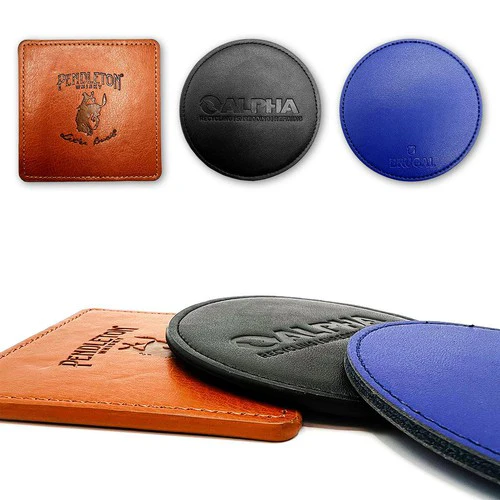
Leather coasters, whether genuine or premium faux leather, signal polish and tradition. They work especially well for whiskey brands, private clubs, upscale restaurants, law offices, luxury car dealerships, and corporate gifts where the buyer wants a softer, quieter premium feel.
Debossing and foil stamping are the standout decoration methods here. Instead of shouting the logo, leather tends to whisper it, which is exactly why it feels elevated. It also travels better than stone and often stores more efficiently than ceramic.
But leather has clear limitations. It can absorb moisture over time, especially if the finish is not robust. Genuine leather also raises price and ethical sourcing questions, while lower-grade faux leather can peel or crack after repeated use. In 2026, buyers are increasingly aware of material claims, so you need honest product descriptions.
For premium branding, leather works best when the design is understated and the use case is more controlled, such as conference rooms, gift sets, and member lounges.
Ceramic Coasters
Best for vivid printing and home décor appeal
Ceramic is a standout option when artwork matters. It offers a smooth print surface, strong color reproduction, and a familiar home-goods feel that makes it popular for retail sets, artist merchandise, cafes, weddings, and seasonal gifting.
Many ceramic coasters include a cork back, which improves grip and helps protect furniture. They can absorb condensation well depending on the finish, and they photograph beautifully for e-commerce listings.
The challenge is breakage risk. Ceramic is less forgiving in shipping and can create more damage claims if packaging is weak. It also tends to sit in the middle to upper range on cost once protective packing is included.
According to Adobe’s 2024 creative trends coverage, consumers continue to respond strongly to personalized, visually expressive products in home and lifestyle categories. Ceramic plays directly into that trend because it supports rich image quality without losing utility.
Acrylic Coasters
Best for modern brands, events, and bold graphic work
Acrylic has become a favorite for brands that want crisp edges, bright color, and contemporary styling. It suits beauty brands, tech startups, pop-up events, fan merchandise, artist stores, and social-first campaigns where visual impact matters.
Clear acrylic can create a sleek, floating effect, while frosted or colored acrylic adds personality. It is lighter than stone and usually less fragile than ceramic, making it a practical middle ground for design-forward campaigns.
That said, acrylic is not automatically premium. Thickness, edge finish, scratch resistance, and print method make a huge difference. Thin acrylic with poor finishing often looks promotional in the wrong way. Premium acrylic must feel substantial and clean.
There is also the environmental question. Some buyers avoid petroleum-based plastics unless there is a strong recycled content story or long-life use case. If sustainability is central to the brand, acrylic may need more explanation than other materials.
Cork Coasters
Best for eco-conscious cafés, wellness brands, and high-volume promotions
Cork offers a smart balance of affordability, light weight, and natural appeal. It is one of the easiest materials to position as eco-forward, and it performs well in casual hospitality, subscription boxes, wellness kits, conferences, and everyday brand giveaways.
It is soft, absorbent, and less likely to scratch surfaces. It also ships efficiently, which helps on large-volume orders. For many campaigns, cork gives you a practical route to useful branded merchandise without pushing the budget too high.
Its biggest weakness is perception. Cork can look simple rather than luxurious unless the design is strong. Print detail is also more limited than on ceramic or acrylic, and lower-density cork can crumble or wear out faster in heavy commercial use.
If your audience cares about sustainability and your visual identity leans clean or minimalist, cork can outperform more expensive materials because it fits the brand story naturally.
Metal Coasters
Best for industrial, automotive, and statement branding
Metal coasters are less common, which is exactly why they stand out. Aluminum, stainless steel, or zinc alloy options can create a dramatic premium effect for automotive brands, spirits companies, industrial firms, men’s gifting lines, and limited-edition merchandise.
They are durable, sleek, and excellent for etched or embossed logos. Some styles use an insert or backing layer to improve grip and reduce noise. When done right, they feel like collectible objects rather than standard promo pieces.
Still, metal is specialized. It can be noisy on hard surfaces, cold in feel, and prone to visible fingerprints depending on the finish. Bare metal without a suitable backing may also slide too easily. Cost can rise quickly if you want custom shapes, plating, or multi-layer construction.
Metal is rarely the all-purpose answer, but for a niche premium audience, it can be a memorable one.
Side-by-Side Material Comparison
| Material | Best Business Use | Strength | Watch-Out |
|---|---|---|---|
| Wood | Breweries, boutique hotels, weddings | Natural premium feel | Needs sealing against moisture |
| Marble/Stone | Luxury hospitality, executive gifts | High-end visual impact | Heavy and costly to ship |
| Ceramic | Retail sets, artist merch, cafés | Excellent color printing | Breakage risk in transit |
| Cork | Eco campaigns, conferences, cafés | Affordable and lightweight | Less luxurious appearance |
| Acrylic | Tech brands, pop-ups, modern retail | Sharp graphics and clean edges | Can scratch or feel cheap if thin |
How to Choose the Right Material for Your Brand
The best coaster material is not the most expensive one. It is the one that matches your setting, budget, audience, and brand personality. Here is the framework we use when advising clients at Best Patches:
- Define the use case: daily bar service, event giveaway, retail resale, or executive gifting.
- Set the visual goal: rustic, modern, luxury, eco-conscious, or artistic.
- Test moisture performance and edge durability, not just print appearance.
- Calculate full landed cost, including packaging and freight.
- Check whether the decoration method supports your logo detail.
- Review sustainability claims and sourcing language before launch.
This simple process prevents the most common buying mistake: selecting on sample appearance alone. A coaster that looks great on a desk may fail in a busy restaurant, just as a durable bar coaster may look too plain for a luxury gift box.
“Premium is not a material category by itself. Premium happens when substrate, finish, branding, and use case line up without friction.”
What We Learned at Best Patches
I worked on a project with a regional hospitality client that originally requested ceramic custom coasters for a multi-location cocktail launch. On paper, ceramic made sense because their artwork was rich, colorful, and built around a luxury visual theme. But after reviewing shipping routes, venue handling, and replacement costs, we saw the risk immediately: the campaign needed scale, and breakage would eat into margins.
We recommended moving the high-volume event run to sealed wood for the table service program while reserving a smaller ceramic set for influencer mailers and VIP gift boxes. The result was better than the client expected. The wood pieces held the brand tone, reduced shipping headaches, and gave the event a warmer tactile feel. The ceramic set still delivered the polished visual moment where it mattered most.
In another project, I advised a wellness brand that wanted “eco premium” but had initially chosen acrylic because the mockups looked crisp online. Once we reviewed their customer base and packaging copy, the mismatch was obvious. We shifted the concept to cork with a minimalist dark imprint and a cleaner message around daily ritual and natural materials. The final product did not just cost less to ship; it also made the brand promise feel more believable.
Those two projects taught the same lesson: material is not a production detail. It is part of the message.
Common Risks Buyers Overlook
Even experienced procurement teams can miss the weak points of coaster production. Watch for these before you approve a final order:
- Overly fine logo detail on textured materials like cork or rough wood
- Ignoring condensation tests for hospitality use
- Underestimating packaging needs for ceramic and stone
- Choosing faux leather without abrasion testing
- Using thin acrylic that bends or scratches too easily
- Skipping backing materials that prevent slipping or furniture marks
According to the 2025 National Restaurant Association trend coverage, operators continue to prioritize guest experience details that support brand differentiation. Small touchpoints count. A coaster that curls, chips, or smears may seem minor, but in premium service environments, small failures are exactly what people notice.
Conclusion
The best premium material for custom coasters in 2026 depends on the story you need the product to tell. Wood brings warmth and craftsmanship. Stone signals luxury. Leather feels heritage-driven. Ceramic highlights artwork. Acrylic pushes modern visual impact. Cork supports eco-minded positioning. Metal creates niche statement value.
Best Patches recommends three next steps before you place an order:
- Request material samples and test them with real cold drinks, not just dry tabletop photos.
- Match the substrate to the environment first, then to the artwork.
- Split your order by purpose if needed, using one material for bulk use and another for VIP gifting.
That approach gives you a better-looking product, stronger brand alignment, and fewer surprises after delivery.
References
ASI Ad Impressions Study, 2024 — Used to support the value of practical promotional products in generating repeated brand exposure.
PwC Voice of the Consumer Survey, 2024 — Referenced for consumer emphasis on sustainability and quality in purchase decisions.
Adobe Creative Trends, 2024 — Referenced for ongoing demand for personalized, visually expressive home and lifestyle products.
National Restaurant Association trend reporting, 2025 — Cited for hospitality focus on guest experience details and brand differentiation.
FAQ
What is the best material for custom coasters?
-
It depends on your goal. For a natural premium feel, wood is a top choice. For luxury gifting, marble or stone stands out. If you need vivid artwork, ceramic works extremely well. For eco-conscious campaigns, cork is often the smartest fit.
Are custom coasters good for business marketing?
-
Yes, especially when they are useful and visually aligned with your brand. Coasters stay on desks, tables, bars, and counters, which gives your logo repeated visibility. They work well for restaurants, hotels, breweries, trade shows, and client gift sets.
Which coaster material handles condensation best?
-
Absorbent materials usually perform best with cold drinks. Good options include:
-
Cork for casual daily use
-
Unglazed or absorbent ceramic for decorative sets
-
Sealed wood when the finish is designed for moisture resistance
How much do premium custom coasters usually cost?
-
Pricing varies by material, size, print method, and quantity. A rough market range looks like this:
-
Cork coasters: often the most budget-friendly in bulk
-
Wood and acrylic: mid-range for premium branding
-
Ceramic, stone, and metal: higher due to material and packaging needs
What artwork file should I send for coaster production?
-
Most suppliers prefer clean production-ready files. Best choices include:
-
.AI or .SVG for vector logos and line art
-
.PDF for print-ready layouts
-
.PNG at 300 dpi for raster artwork with transparent background
-
Outline text and confirm bleed or safe area requirements before submission
Do coaster manufacturers have minimum order quantities?
-
Usually, yes. Many manufacturers set MOQs based on tooling, setup time, and material type. Simple printed coasters may allow lower quantities, while stone, metal, or custom-shaped options often require higher minimums to keep unit pricing reasonable.