 Promotional Products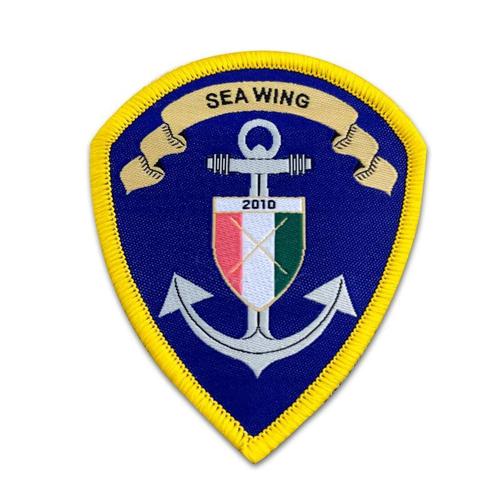











Introduction
If you’ve ever ordered patches and felt disappointed—colors off, borders fraying, backing peeling, or the “tiny details” turning into a blurry mess—you’re not alone. The hard truth is that many patch projects fail before production even starts: the artwork isn’t production-ready, the material choice doesn’t match the use case, and expectations around size, thread, and backing were never clarified.
That’s where a reliable custom patches maker process changes everything. At Best Patches, we treat patch production like product development: we translate your idea into a manufacturable spec, stress-test it against real-world wear, and then optimize the build for your budget and timeline—without sacrificing the details that make a patch feel premium.
A custom patches maker is a service (or in-house workflow) that turns artwork into finished patches by choosing the right patch type, digitizing or templating the design for production, selecting materials and backing, and managing sampling, quality control, and fulfillment.
In plain terms: it’s the difference between “a cool concept” and a patch that holds up on uniforms, backpacks, merch drops, and hard-use gear.
Table of Contents
- Start With the End Use: What the Patch Must Survive
- Choose Your Patch Type: Embroidered, Woven, PVC, Chenille, Printed
- Artwork Rules That Prevent Expensive Mistakes
- Materials, Borders, and Backings That Actually Work
- Production Workflow From Proof to Delivery
- Pricing, Lead Times, and MOQ Reality Checks
- Quality Control Checklist: What to Inspect Like a Pro
- Case Studies: How Best Patches Solves Real Patch Problems
- Risks, Limitations, and Compliance Considerations
Start With the End Use: What the Patch Must Survive
A patch isn’t “just decoration.” It’s a piece of functional branding that gets dragged through washers, scraped against seatbelts, baked in sun, soaked in rain, and sometimes attacked by Velcro hooks for months.
Before you pick a style, answer these questions:
- Where will it live? Uniform sleeve, hat front, backpack, tactical vest, jacket chest, beanie cuff, or product packaging.
- How will it be attached? Sew-on, heat seal, hook-and-loop, adhesive, or safety pin.
- What’s the abuse profile? Machine washing, heavy abrasion, outdoor UV exposure, saltwater, industrial grime.
- What’s the viewing distance? Up close (merch collectors) vs. far away (event staff, security, teams).
According to a 2024 report by McKinsey on consumer trends, shoppers continue to prioritize quality and durability—especially for items they wear repeatedly. Patches are small, but they’re often the most “touched” part of a garment. If the patch fails, the whole item feels cheap.
If your patch will be washed weekly, prioritize woven or high-detail embroidery with a merrowed border (or clean laser-cut with reinforced edge) and avoid tiny isolated stitches that can snag.
Choose Your Patch Type: Embroidered, Woven, PVC, Chenille, Printed
Picking the “best” patch type isn’t about trends—it’s about matching your design complexity and performance needs to the right construction.
Embroidered patches
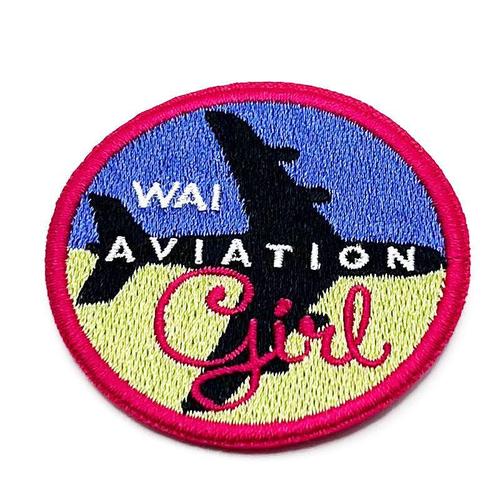
Embroidered patches use thread stitched into a fabric base. They’re classic, textured, and durable. They also have limits: micro text and fine gradients can get lost.
- Best for: Bold logos, badges, simple icons, strong outlines
- Watch-outs: Small text, thin lines, subtle shading
Woven patches
Woven patches are made by weaving threads rather than stitching on top. That structure supports finer detail and cleaner text at smaller sizes.
- Best for: Small lettering, detailed logos, crisp edges
- Watch-outs: Less raised texture than embroidery
PVC (rubber) patches
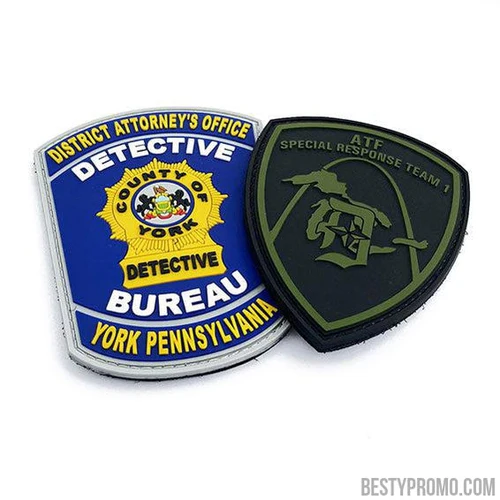
PVC patches are molded, weather-resistant, and great for outdoor and tactical applications. They’re also easy to wipe clean and hold up well in rain and mud.
- Best for: Outdoor gear, tactical branding, 3D effects
- Watch-outs: Can feel heavier; color matching may vary by factory processes
Chenille patches
Chenille is the varsity jacket look—soft, fuzzy, and bold. It reads from far away and screams “team identity.”
- Best for: Letterman-style letters, large shapes, school/team vibes
- Watch-outs: Not for fine detail; can be bulky on thin garments
Printed patches
Printed patches can capture full-color art, gradients, and photo-like detail. They can be excellent for complex artwork—if you protect the print properly (think coatings and edge finishing).
- Best for: Illustrations, gradients, multi-color art
- Watch-outs: Print abrasion and wash durability vary by method
“Most patch disappointments happen because clients choose a patch type based on what looks cool online, not what the design and use case demand. Start with performance, then style.” — Production Lead, Best Patches
Artwork Rules That Prevent Expensive Mistakes
Even the best factory can’t “fix” ambiguous art. Your job is to deliver clarity; your custom patches maker’s job is to translate that clarity into production specs.
Use the right file formats
- Best: AI, EPS, PDF (vector) for logos and line art
- Good: SVG (confirm compatibility), layered PSD
- OK with care: PNG at 300 DPI minimum, transparent background
Design for real patch physics
Thread has thickness. Borders have curvature limits. Small text has legibility thresholds. As a practical 2026 standard, we recommend:
- Minimum text height: about 0.12–0.16 inches for embroidery; smaller often needs woven
- Minimum line thickness: avoid hairlines; give shapes enough mass to stitch cleanly
- Limit micro-details: if you can’t see it at arm’s length, it may not belong on a patch
Decide your color strategy upfront
For thread-based patches, color is usually selected from standardized thread charts. For PVC, you’re selecting pigment mixes; for printed patches, you’re in a CMYK workflow with material and coating affecting final output.
According to a 2023 report by Adobe on digital trends in customer experience, consistency across touchpoints is a major brand expectation. For patches, that means you should define a color target (Pantone or equivalent) and accept that different processes will have different tolerances.
If exact brand color is mission-critical (think franchise uniforms), request a physical sample under the lighting conditions where it will be worn (indoor fluorescent vs. outdoor sunlight changes perceived color).
Materials, Borders, and Backings That Actually Work
This is where patch projects become either professional-grade or “craft fair.” Small choices here decide whether edges curl, corners lift, and threads fray.
Border options
- Merrowed border: Rounded edge wrap; durable, classic, best for simple shapes
- Heat-cut (laser-cut) border: Sharper shapes, modern look; needs good edge sealing
- Stitched border: Clean, flexible option between the two
Backing options
- Sew-on backing: Most durable; best for uniforms, workwear, long-term use
- Iron-on / heat seal: Fast application; best for casual wear and controlled fabrics
- Hook-and-loop: Perfect for tactical, teams, events; allows swapping and repositioning
- Adhesive backing: Short-term placement; great for staging, displays, or trial positioning
Comparison table for real business scenarios
| Use Case | Recommended Patch Type | Best Backing | Why It Works |
|---|---|---|---|
| Restaurant staff uniforms (weekly washing) | Woven or high-detail embroidery | Sew-on | Holds detail; survives wash cycles better than heat-only attachment |
| Tactical/outdoor brand drop | PVC (2D/3D) | Hook-and-loop | Weather resistance + swapability for collectors and field use |
| Startup conference swag (fast distribution) | Embroidered | Iron-on (plus optional stitch) | Quick application; classic look that reads at distance |
| College club varsity fundraiser | Chenille | Sew-on | Bold, premium feel; strong perceived value for fundraising |
| Artist merch with gradients and fine art | Printed patch (with protective finish) | Sew-on or heat seal | Captures complex color; correct finish improves abrasion resistance |
Production Workflow From Proof to Delivery
A disciplined workflow is what separates a dependable custom patches maker from a vendor that “hopes it turns out.” Here’s the production path we recommend (and how Best Patches runs most jobs).
- Define specifications: size, quantity, patch type, border, backing, color targets, packaging, delivery date.
- Artwork check: verify vector quality, simplify problem details, confirm text legibility at final size.
- Digitizing or templating: embroidery stitch map or woven/PVC/print production setup.
- Proof approval: you review a digital mockup that reflects production constraints (not just a pretty render).
- Sampling: a pre-production sample is made for color, edge, and backing validation.
- Production run: bulk manufacturing with in-process QC checks.
- Final QC + packing: count accuracy, defect removal, packaging, labeling, carton protection.
- Shipping and tracking: confirm addresses, import requirements, and delivery windows.
According to a 2025 report by Deloitte on supply chain resilience, teams that standardize specs and approvals reduce rework and improve delivery reliability. Patches are a small product, but the same rule applies: clear approvals prevent surprise outcomes.
“If you’re skipping samples to save time, you’re usually buying risk. A sample is cheaper than a full run you can’t use.” — Quality Manager, Best Patches
Pricing, Lead Times, and MOQ Reality Checks
Patch pricing is driven by complexity more than almost anything else. Two patches with the same size can have very different costs depending on stitch count, color changes, molding complexity, or print finishing.
What most affects cost
- Size: bigger patches use more material and time.
- Detail density: more stitches, more weave detail, or more PVC tooling complexity.
- Backing type: hook-and-loop typically adds cost; special adhesives can too.
- Border complexity: custom shapes and sharp corners can increase labor and defect risk.
- Packaging: individual polybags, backing cards, barcodes, or sets cost more.
Lead time expectations for 2026 planning
Timelines vary by season and capacity, but for planning:
- Sampling: often about 7–14 business days depending on patch type
- Production:
- Shipping:
MOQ is also a strategic question. Ordering too few can raise per-unit cost dramatically; ordering too many can leave you with dead inventory. A good custom patches maker will talk about demand forecasting, not just “unit price.”
Quality Control Checklist: What to Inspect Like a Pro
When your patches arrive, inspect them like you’re protecting your brand—because you are.
Visual and measurement checks
- Size consistency: measure multiple units; confirm tolerance is acceptable for your application.
- Edge quality: no fraying, uneven merrow, burned edges, or lifting border threads.
- Color consistency: compare across the run; look for shade drift.
- Detail integrity: text legible, lines not merged, spacing not filled in.
Backing performance checks
- Heat seal adhesion: test on the actual fabric type; peel test after cooling.
- Hook-and-loop strength: verify hook mate alignment, stitch integrity, and peel resistance.
- Sew channels: ensure stitching won’t tear through the base fabric.
Wear simulation (quick tests)
- Flex test: bend and twist the patch; check for cracking (especially for PVC) or thread popping.
- Abrasion test: rub with a rough fabric; see if print scuffs or threads snag.
- Wash test: if the patch is for apparel, wash a sample garment before full distribution.
Case Studies: How Best Patches Solves Real Patch Problems
I’ll give you two examples from projects we ran at Best Patches where the “obvious” approach would have failed.
Case study: The micro-text logo that kept turning into a blob
A fast-growing coffee brand came to us after two disappointing runs from different vendors. Their patch had a circular logo with small text around the perimeter. At 2.25 inches wide, the lettering looked okay on screen but collapsed in embroidery—threads filled in the counters and the text became unreadable.
I reviewed their file and told them the uncomfortable truth: they didn’t have a manufacturing issue, they had a design-to-process mismatch. We switched the build to a woven patch, increased negative space slightly, and adjusted the border so the text had breathing room. The sample came back crisp, and they rolled it out across barista hats and aprons.
Result: fewer customer complaints, fewer replacements, and a patch that looked “intentional,” not improvised.
Case study: Event staff needed instant role swapping without sewing
Another client ran a multi-city tech event series with rotating staff roles (security, check-in, VIP escort). They needed patches that could be swapped daily and still look clean on black jackets.
I recommended PVC patches with hook-and-loop backing, plus a matching loop field panel sewn onto jackets once. That way, daily changes didn’t stress the garment fabric. We also used a slightly raised 3D layer for the role title so it read clearly under low venue lighting.
Result: faster operations onsite and consistent brand presentation across cities.
Risks, Limitations, and Compliance Considerations
A trustworthy custom patches maker should talk about downsides, not just upsides.
Common risks
- Over-detailing: tiny elements that cannot be manufactured cleanly at your chosen size.
- Color mismatch: thread, PVC pigment, and printing all have different tolerances.
- Backing failure: heat seal used on incompatible fabric or applied with wrong temperature/time/pressure.
- Edge lifting: sharp corners, thin borders, or aggressive laundering without reinforcement.
- Timeline compression: rushing approvals leads to costly re-runs.
Brand and legal considerations
If your patch includes a third-party logo, licensed character, or trademarked slogan, you need permission. Even if a factory will “make it anyway,” the liability usually lands on the buyer and seller, not the manufacturer. If you’re building patches for a franchise system, write usage guidelines that define color targets, size ranges, and approved variations.
Conclusion
Making a custom patch that looks sharp and holds up is a process: match patch type to end use, simplify artwork to what can be manufactured, choose borders/backings based on real wear, and insist on a sample when quality matters.
Best Patches recommends these next actions if you want fewer surprises and better results:
- Send your artwork plus use case (where it will be worn, how often it’s washed, and how it attaches) before choosing patch type.
- Pick one success metric (maximum detail, maximum durability, or fastest delivery) so tradeoffs are intentional.
- Approve a physical sample for any order tied to uniforms, resale merch, or large distribution.
References
- Gartner (2024): Market and operational guidance frequently cited for standardization and process controls in vendor-managed production workflows.
- McKinsey (2024): Consumer behavior research highlighting continued preference for quality and durability in repeat-wear products.
- Deloitte (2025): Supply chain resilience research supporting standardized specifications and approval gates to reduce rework and missed timelines.
- Adobe (2023): Digital and brand experience reporting emphasizing consistency and accurate brand representation across customer touchpoints.
FAQ
What does a custom patches maker do?
-
A custom patches maker turns your artwork into a finished patch by selecting the right patch construction (embroidered, woven, PVC, chenille, printed), setting production specs (size, colors, border, backing), managing proofs and samples, and running quality control before shipping. The best providers also flag design risks early so you don’t waste money on an unusable run.
Should I choose embroidered or woven for small text?
-
If your design depends on small lettering staying crisp, woven is usually the safer choice. Embroidery looks premium and textured, but thread thickness can cause tiny text to fill in—especially at smaller patch sizes or when the design has tight spacing.
What backing is best for uniforms that get washed often?
-
For work uniforms and weekly laundering, sew-on is the most dependable. Heat seal can work, but performance depends heavily on fabric type and application settings. If you want faster application, many teams do a heat seal + perimeter stitch for extra security.
How do I prevent patch edges from fraying or curling?
-
Edge problems usually come from the wrong border for the shape, or from thin edges that can’t take stress. To reduce fraying/curling:
-
Use a merrowed border for simple shapes and durability
-
For sharp custom shapes, request a clean heat-cut edge with reinforced finishing
-
Avoid ultra-thin borders and sharp points when the patch will be washed often
-
Choose sew-on when long-term wear matters most
What file format should I send to Best Patches?
-
Vector files are ideal: AI, EPS, or PDF. If you don’t have vector art, send a PNG at 300 DPI (or higher) with a transparent background. If your design includes text, outlining fonts in the final file helps prevent font substitution issues.
Are PVC patches better than embroidered patches?
-
Not universally—just different tools for different jobs. PVC is excellent for outdoor use, wipe-clean durability, and 2D/3D effects. Embroidery is classic, textured, and often feels more traditional on apparel. The right choice depends on your design detail, the garment, and how the patch will be used.
Do I really need a pre-production sample?
-
If the patches are for resale, uniforms, or a big event, a sample is usually worth it. It helps you confirm:
-
Real-world color and contrast
-
Text legibility at final size
-
Border neatness and edge durability
-
Backing performance on the actual garment fabric
How many patches should I order for a first run?
-
For most brands, a first run is about balancing per-unit cost with inventory risk. If you’re testing demand, a smaller batch makes sense even if the unit price is higher. If you already have predictable demand (uniforms or a planned merch drop), ordering enough to cover the launch plus a small buffer for replacements can prevent rush reorders and mismatched batches.