 Promotional Products





Introduction
You don’t need a factory to create a patch that looks “store-bought.” What you do need is a reliable process—because most patch mistakes aren’t artistic, they’re technical: fuzzy borders, unreadable text, weak heat-seal backing, colors that shift between screen and stitch, or a size choice that looks great in a mockup but disappears on a hat.
If you’re searching for a custom patches maker, you’re likely balancing three competing goals: premium detail, predictable turnaround, and a unit cost that still makes sense when you’re ordering for a team, a brand drop, or a fundraiser. Best Patches is known for helping creators and organizations make those tradeoffs intelligently—so you don’t pay for quality you don’t need, and you don’t cut corners that will show after the first wash.
A custom patches maker is a company or workflow that turns your design (logo, art, text) into a physical patch using embroidery, woven construction, PVC/rubber molding, printed methods, or chenille—then finishes it with a backing like iron-on, sew-on, Velcro, or adhesive.
The “best” maker is the one that matches your use case: what fabric it’s going on, how it will be washed, how close viewers will stand, and how many you need.
Table of Contents
- Choose the Right Patch Type for Your Design
- Define Specs That Manufacturers Actually Use
- Prepare Artwork Files for Clean Edges and Readable Text
- Color Matching, Thread Choices, and Modern Production Reality
- Pick the Best Backing: Iron-On, Velcro, Sew-On, Adhesive
- Proofing Like a Pro: Avoid the Top Approval Traps
- Production, Quality Control, and How to Spot a Weak Patch
- Costs, Timelines, and What Changes Pricing the Most
- Case Studies from Best Patches: What Worked (and What Didn’t)
- Risks, Limits, and When Not to Make a Patch
Choose the Right Patch Type for Your Design
The patch type is not a style preference—it’s an engineering choice. Start by asking: is your design made of bold shapes, tiny text, gradients, or photographic detail? Next: where will it be used (uniform, backpack, beanie, tactical vest, fashion jacket)? Then: how durable does it need to be?
Embroidery, Woven, PVC, Printed, Chenille
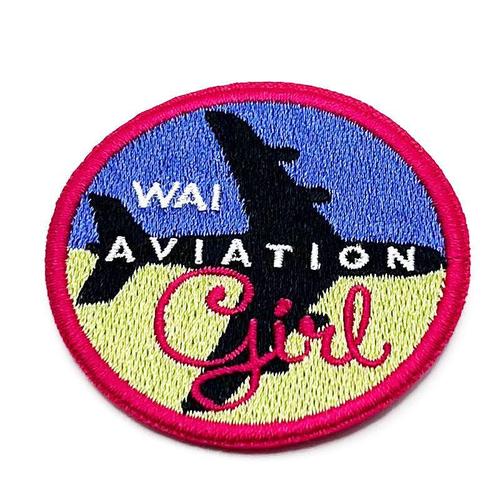
- Embroidered patches: Best for bold logos, thicker lines, and a classic raised texture. Great for uniforms and outerwear. Small text can fill in if it’s too thin.
- Woven patches: Uses finer thread; better for small text and detailed linework. Flatter feel than embroidery, often a more “graphic” look.
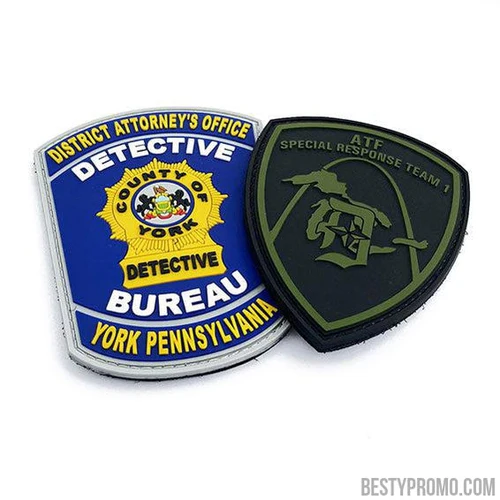
- PVC (rubber) patches: Weather-resistant, modern, and ideal for outdoor/tactical use. Excellent for 3D effects and high durability.
- Printed patches: Best when your art has gradients, photos, or many colors. They can look incredible, but abrasion resistance depends on the print method and top coating.
- Chenille patches: The varsity jacket look—big shapes, bold letters, plush texture. Not the choice for fine detail.
Quick selection rule you can trust
If your design relies on tiny lettering or tight line art, lean woven. If it needs a durable outdoor build, lean PVC. If it’s classic and bold, embroidery wins. If it’s full-color with shading, printed is the safer bet.
Define Specs That Manufacturers Actually Use
A patch gets made from specs, not from vibes. The more clearly you define these, the fewer revisions you’ll fight during proofing.
Patch size, border, and shape
Size determines legibility and cost. As a practical baseline:
- 2.0–2.5 inches: hats, small bags, sleeves (simple logos only)
- 3.0–3.5 inches: the “sweet spot” for most chest, backpacks, and jackets
- 4.0 inches+: statement patches, large back-of-jacket applications, events
For the border, you’ll typically choose:
- Merrowed edge: traditional stitched border, best for simple shapes.
- Heat cut / laser cut: cleaner edge for complex shapes, especially woven and some embroidered styles.
Thread coverage (the hidden detail that changes price and look)
Embroidery can be low, medium, or full coverage. Full coverage looks premium and hides the base fabric, but it can add stiffness. Medium coverage often looks cleaner on small designs because it avoids “overstuffed” areas that swallow detail.
Minimum readable text sizes
As a safe production rule for 2026:
- Embroidered: keep text strokes at least ~1.2–1.5 mm thick.
- Woven: can handle thinner strokes, often ~0.8–1.0 mm depending on font.
- PVC: depends on the mold; ultra-thin text may soften, so thicker is safer.
Prepare Artwork Files for Clean Edges and Readable Text
A patch is a translation: your artwork becomes thread paths, weaves, ink layers, or molded lines. Clean files reduce translation errors.
Send the right file formats
- Best: AI, EPS, or SVG (vector files with editable shapes)
- Also works: high-resolution PNG (transparent background), 300 DPI at final print size
- Avoid: low-res JPGs, screenshots, or compressed social media images
Make the design “patch-friendly”
Before you ever request a quote, do these four edits:
- Convert text to outlines (so fonts don’t change).
- Remove hairline strokes and thicken fragile details.
- Simplify micro-elements that won’t read from 3–6 feet away.
- Define solid color regions (patches love clear boundaries).
Color Matching, Thread Choices, and Modern Production Reality
The most common complaint we hear is “the blue looks different.” That’s usually not a mistake—it’s a mismatch in expectations between RGB screens and physical materials.
How to specify color without surprises
- Provide Pantone references when possible (especially for brand standards).
- State acceptable tolerance if you’re ordering multiple runs over time.
- Tell the maker the base fabric color (for embroidery/woven) because it affects perceived tone.
What 2024–2026 manufacturing trends mean for you
According to a 2024 report by Gartner on supply chain resilience, manufacturers across industries continued prioritizing lead-time predictability and supplier diversification after years of disruption. For patch buyers, that shows up as wider material options—but also more variation between factories, which makes proofing and color specification more important than ever.
According to Adobe’s 2024 Digital Trends research, customer expectations for brand consistency across channels keep rising. Translated to patches: if your patch is part of a drop, merch line, or uniform program, you should treat color and repeatability as a brand asset, not a “nice-to-have.”
“If you can’t describe your patch in measurable specs—size, backing, edge, and colors—you’re not ordering a product yet. You’re ordering a guess.”
—Production lead, Best Patches
Pick the Best Backing: Iron-On, Velcro, Sew-On, Adhesive
The backing is where good patches become great—and where “cheap” patches fail fast.
Backing options and when to use them
- Sew-on: Most durable long-term; best for uniforms and frequent washing.
- Iron-on (heat seal): Fast application; great for jackets and bags; can loosen on stretchy fabrics or if heat/pressure is inadequate.
- Velcro (hook-and-loop): Ideal for tactical, clubs, and teams swapping patches; thickness increases slightly.
- Peel-and-stick adhesive: Best for temporary use, events, packaging inserts, or short campaigns; not ideal for laundering.
A practical comparison table
| Use Case | Best Patch Type | Best Backing | Why It Works |
|---|---|---|---|
| Fire/EMS station uniforms (weekly wash) | Embroidered | Sew-on | Holds up to heat, agitation, and detergent; easy repairs. |
| Outdoor brand backpacks (rain/abrasion) | PVC | Sew-on | Weather resistance plus mechanical attachment for durability. |
| Streetwear jacket drop (fast application) | Woven | Iron-on | Sharp detail with quick fulfillment; clean edge for complex shapes. |
| Airsoft/morale patch swapping | PVC | Velcro | Rigid, readable design and easy on/off for loadouts. |
| Conference giveaways (short-term wear) | Printed | Peel-and-stick | Low friction ordering; looks great for photos; minimal handling needs. |
Proofing Like a Pro: Avoid the Top Approval Traps
Proofing is where you either protect your budget—or light it on fire. A proof isn’t just “does it look good?” It’s “will it look good at scale, on the target surface, after use?”
What to check on every proof
- Text legibility at actual size (zoom out, don’t zoom in).
- Border thickness and corner sharpness (especially on die-cut shapes).
- Color callouts (thread/ink choices) and any substitutions.
- Backing and edge type stated clearly on the proof notes.
- Placement of tiny elements that might shift during stitching or molding.
“Approving a proof without checking the backing and edge is like approving a business card without checking the phone number.”
—Customer success manager, Best Patches
Production, Quality Control, and How to Spot a Weak Patch
Quality isn’t a mystery. You can evaluate it quickly once you know what to look for.
Signs of strong workmanship
- Clean edge finish: no fraying, no uneven burn marks on cut edges.
- Consistent fill: thread density looks even; no “bald” spots.
- Stable backing: heat seal layer is smooth and fully bonded; Velcro alignment is straight.
- Color consistency: minimal variation across units in the same run.
Common failure modes and what causes them
- Peeling iron-on backing: incorrect heat/pressure/time during application, or backing chosen for the wrong fabric.
- Warping: too much dense stitching on a small patch; improper stabilizer; design needs segmentation.
- Unreadable text: font too thin, letters too close, or embroidery chosen where woven was needed.
- Color “mud”: too many dark threads packed together; switch to woven or simplify the palette.
Costs, Timelines, and What Changes Pricing the Most
Patch pricing is typically driven by complexity and production setup, not just size. To plan realistically, separate your thinking into: setup costs, unit costs, and shipping/lead time.
What increases cost fastest
- More colors (especially on embroidery with multiple thread changes)
- High stitch count (dense fill, large full-coverage designs)
- Complex custom shapes (detailed die-cuts, intricate borders)
- Velcro backing and special add-ons (glow, metallic thread, 3D puff, serialized labels)
- Rushed timelines (expedited production and shipping)
What a realistic timeline looks like in 2026
While timelines vary, many makers aim for a proof within a few business days, then production in a couple of weeks once approved. Lead times can extend during peak seasons (school sports, holiday merch, major events). According to the 2023–2024 U.S. Bureau of Labor Statistics updates on consumer price trends and services inflation, many service categories experienced higher labor and logistics costs—one reason rush fees and shipping volatility continue to matter in merch production.
Case Studies from Best Patches: What Worked (and What Didn’t)
Here are two real-world patterns we’ve seen repeatedly when clients use Best Patches as their custom patches maker—told from my perspective working on approvals and production handoffs.
Case study: A brewery merch drop that almost failed on readability
I worked with a regional brewery that wanted a 2.25-inch patch for beanies and aprons. Their logo had tiny serif text and a thin line illustration. The first instinct was embroidery because they wanted a “heritage” feel, but at that size the text was guaranteed to thicken and close up.
We switched them to a woven patch with a heat-cut edge and kept the palette tight. I asked them to widen letter spacing slightly and bump the text weight. The result looked crisp up close and still readable from a few feet away—exactly how patches are actually seen at events and behind a bar.
Case study: A volunteer SAR team that needed durability over detail
I also supported a volunteer search-and-rescue team ordering patches for packs and rain gear. Their original concept included fine shading and multiple small icons. We had a blunt conversation: if the mission is visibility and longevity, complexity is a liability.
We rebuilt the art into bold shapes, moved the team name to a higher-contrast band, and produced PVC patches with Velcro backing so members could swap between jackets and loadouts. After field use, their feedback was clear: fewer details meant faster recognition, and the PVC held up far better to mud and weather than their previous embroidered run.
Risks, Limits, and When Not to Make a Patch
Patches are powerful branding tools, but they’re not always the best answer.
Where patches can be the wrong product
- Ultra-photographic art: a sticker, tag, or printed label may look cleaner and cheaper.
- Stretch performance fabrics: patches can pucker the garment; consider direct embroidery or a softer label solution.
- Extremely small applications: below ~1.75 inches, many designs lose readability fast.
Legal and brand safety risks
Don’t use trademarked logos, copyrighted characters, or protected team marks unless you own them or have permission. Even if a maker will produce it, the liability can land on you—especially if you sell the patches publicly.
Conclusion
Making a custom patch that people actually keep comes down to smart decisions at three points: choosing the right patch type for your artwork, locking clear specs (size, edge, backing, colors), and proofing with a durability mindset—not just a pretty mockup.
Next steps Best Patches recommends:
- Audit your design for patch reality: thicken lines, simplify micro-details, and outline text.
- Request two production routes: one embroidered/woven and one PVC/printed, then compare clarity and cost.
- Approve the proof with a checklist: backing, edge, size, legibility, and color callouts—every time.
References
- Gartner (2024) — Supply chain resilience research highlighting the continued importance of lead-time predictability and supplier diversification for manufacturers.
- Adobe Digital Trends (2024) — Findings on rising expectations for consistent brand experiences, reinforcing the need for repeatable color and design standards.
- U.S. Bureau of Labor Statistics (2023–2024) — Public data releases on pricing and services inflation that help explain ongoing variability in production and logistics costs.
FAQ
How do I choose a custom patches maker for my first order?
-
Pick a maker that offers clear specs (type, edge, backing), gives realistic guidance on legibility, and provides a detailed proof before production. Ask what patch type they recommend for your exact size, what will lose detail, and how they handle reorders for consistent color and sizing.
What file format should I send for a custom patch design?
-
Vector files are best: AI, EPS, or SVG. If you don’t have vector art, send a high-resolution PNG (transparent background) sized at the final patch dimensions, ideally 300 DPI or higher. Converting text to outlines helps prevent font substitutions.
Which backing lasts the longest on clothing?
-
For maximum longevity—especially with frequent washing—sew-on is the most reliable. Iron-on can hold well on stable fabrics when applied correctly, but sewing around the edge is the best “belt-and-suspenders” approach for long-term wear.
Can small text work on embroidered patches?
-
Yes, but only if you design for embroidery. Keep letters spaced out, avoid thin serifs, and don’t force long slogans onto a 2-inch patch. If text is the priority, woven is usually the safer choice at small sizes.
How do I apply an iron-on patch so it doesn’t peel?
-
Use high heat appropriate for the fabric, apply firm pressure (not just heat), and press long enough to fully melt the adhesive. Let it cool completely before moving the garment. For items that get washed often, stitching the edge after ironing is the most reliable upgrade.
How many patches should I order for a merch launch?
-
Base it on your audience size and how you’ll bundle the patch (standalone sale, add-on, or included with apparel). If you’re unsure, start with a smaller run you can reorder—then keep your specs and proof notes so the second run matches the first.
Are PVC patches better than embroidered patches?
-
Not universally. PVC is often better for weather resistance, bold shapes, and tactical/outdoor use. Embroidery is better for a classic textured look and traditional uniform styling. The “best” option depends on where it’s worn, how it’s cleaned, and how detailed the artwork is.
What’s the fastest way to get my patches made without quality issues?
-
Send production-ready vector art, keep the design simple enough for your chosen patch type, and approve proofs quickly using a checklist (size, edge, backing, legibility, and color notes). Rushing works best when you remove ambiguity—not when you skip proofing.