 Promotional Products







Introduction
If you are comparing acrylic vs enamel custom keychains, the real difference goes far beyond appearance. Buyers usually get stuck on the same questions: Which one lasts longer, which one looks more premium, which one works better for detailed artwork, and which one makes sense for your budget. Those are manufacturing questions as much as design questions, because the production method directly shapes cost, speed, finish, and durability.
At Best Patches, we see this choice come up with artists, schools, ecommerce brands, nonprofits, and corporate merch teams that need a keychain to do a job, not just look nice in a mockup. A cute design that prints well on acrylic may fail as enamel if the lines are too fine. On the other hand, a brand that wants a polished, giftable product often regrets choosing acrylic when enamel would have matched the perceived value better.
Acrylic vs enamel custom keychains refers to comparing two popular custom keychain materials based on how they are produced, how they perform, and what kind of branding result they create. Acrylic keychains are typically printed and laser-cut from clear plastic sheets, while enamel keychains are made from molded metal filled with colored enamel.
That distinction matters because each process creates different strengths. Acrylic favors color flexibility, speed, and lower setup barriers. Enamel favors structure, weight, and a more upscale feel.
Table of Contents
- Manufacturing Basics That Change the Final Product
- How Acrylic Custom Keychains Are Made
- How Enamel Custom Keychains Are Made
- Acrylic and Enamel Side-by-Side
- Which Material Fits Which Business Goal
- Common Quality Risks and Production Challenges
- What We’ve Seen at Best Patches
- How to Choose the Right Manufacturing Path
- What’s Changing in 2026
- Final Thoughts and Next Steps
Manufacturing Basics That Change the Final Product
When buyers compare acrylic and enamel, they often focus on style first. Manufacturers look at the workflow first. That is the smarter way to compare them, because process determines almost everything downstream: lead time, defect risk, minimum order quantity, artwork compatibility, and price per unit.
Acrylic keychains are built from printed surfaces and cut shapes. Enamel keychains are built from metal structure and filled color zones. One is closer to print production. The other is closer to metal fabrication.
According to a 2024 report by McKinsey on consumer personalization, customers continue to place higher value on customized products that show identity and exclusivity. That trend helps both acrylic and enamel products, but it also raises quality expectations. Buyers do not just want “custom.” They want custom items that feel intentional and durable.
According to the Promotional Products Association International 2024 market outlook, usefulness and perceived quality remain two of the strongest drivers of retention for branded merchandise. That matters here because enamel often wins on perceived permanence, while acrylic often wins on visual expressiveness and design speed.
“The best keychain material is not the one with the most features. It’s the one whose manufacturing method matches the artwork, budget, and audience expectation.”
How Acrylic Custom Keychains Are Made
Acrylic keychains usually begin with digital artwork prepared for print. The manufacturer prints the design onto acrylic sheets, often using UV printing for vibrant color and good surface adhesion. The printed sheet is then cut into shape with a laser or precision cutting system. A protective layer, epoxy option, or double-board assembly may be added depending on the product spec.
Typical Acrylic Production Workflow
- Artwork is checked for bleed, cut line, and hole placement.
- The design is printed on one side or both sides of acrylic sheets.
- The printed sheet is cured, usually with UV technology.
- The shape is laser-cut or machine-cut to match the outline.
- A protective film may remain in place until packing.
- Hardware such as jump rings and split rings is attached.
The big strength of acrylic is image freedom. Full-color illustrations, gradients, anime-style art, tiny facial features, and layered effects are much easier to reproduce in acrylic than in enamel. If your design lives in color transitions rather than separated metal borders, acrylic usually makes more sense.
Another major advantage is speed. Acrylic typically avoids mold tooling in the traditional metal sense, which reduces setup time and allows more efficient short-run production. For artists, conventions, and test-launch merch drops, that speed can be a real business advantage.
Still, acrylic has limits. It can scratch, especially if the printed side is exposed or insufficiently protected. Edges can chip under heavy impact. It is also lighter, which some customers interpret as less luxurious even when the print quality is excellent.
How Enamel Custom Keychains Are Made
Enamel keychains follow a more complex manufacturing path. The process typically starts with vector artwork adapted into metal linework. A mold or die is created so the design can be stamped or cast into metal. Recessed areas are then filled with enamel colors, baked or cured, polished if needed, plated, and assembled with hardware.
Typical Enamel Production Workflow
Unlike acrylic, enamel is not just “printed onto a surface.” It is built through physical structure. Raised metal lines separate color fields, and those metal borders are part of the visual identity of the finished piece.
- Artwork is simplified into fillable sections and metal outlines
- A mold is produced for stamping or casting
- Metal blanks are formed and trimmed
- Color enamel is filled into recessed sections
- The piece is baked, polished, or plated depending on soft or hard enamel style
- Attachment hardware is added after final inspection
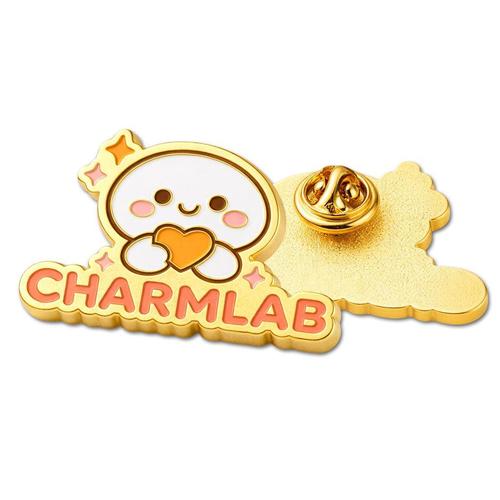
Enamel keychains usually come in two common forms: soft enamel and hard enamel. Soft enamel leaves raised metal edges that you can feel with your fingers. Hard enamel is polished flatter for a smoother, more jewelry-like surface. Both styles generally look more formal and premium than acrylic.
The tradeoff is design complexity. Very small details, soft gradients, and photo-like artwork do not translate naturally into enamel. Every color area needs separation. Every line must be manufacturable in metal. That means some art needs to be redrawn rather than simply uploaded.
According to a 2025 Deloitte consumer products outlook, buyers continue to reward products that feel durable and gift-worthy, especially in categories tied to fandom, team identity, and premium branded merchandise. Enamel benefits from that preference because weight and metal finish strongly affect perceived quality at first touch.
“If the design depends on metallic outlines, tactile texture, and a collectible feel, enamel usually earns the extra production effort.”
Acrylic and Enamel Side-by-Side
Here is where the manufacturing comparison becomes practical. The question is not just which looks better. It is which process supports your design and sales objective with the least friction.
| Business Scenario | Acrylic Keychains | Enamel Keychains | Best Fit |
|---|---|---|---|
| Anime artist selling at conventions | Excellent for full-color faces, gradients, and fast restocks | Less ideal for fine illustrated detail | Acrylic |
| Corporate anniversary gift | Affordable but may feel too casual | Premium metal look with stronger gift appeal | Enamel |
| Startup brand testing new merch | Lower setup barrier and easier small-batch testing | Higher setup investment due to mold creation | Acrylic |
| Outdoor club or motorcycle group | Can work, but surface wear is a concern | Better toughness and long-term feel | Enamel |
| Museum shop with art-driven souvenirs | Strong for painterly or colorful modern artwork | Strong for iconic logos and collectible badge style | Depends on artwork style |
Where Acrylic Usually Wins
- Complex illustrations and full-color artwork
- Faster production cycles
- Lower upfront tooling burden
- Short-run merch tests and creator drops
- Playful visual effects such as holographic film or transparent backgrounds
Where Enamel Usually Wins
- Premium brand perception
- Greater tactile durability
- Structured logos and icon-based artwork
- Collectible or commemorative products
- Executive, club, or institutional merchandise
Which Material Fits Which Business Goal
If your main objective is margin control and fast design turnover, acrylic is often the more forgiving path. It works especially well for social-media-driven stores, fan artists, student organizations, and brands testing seasonal concepts. You can update styles quickly without reworking a metal mold for every design change.
If your goal is brand elevation, enamel tends to do more heavy lifting. The metal base, plating options, and solid hand-feel create a stronger sense of permanence. That matters for donor gifts, employee recognition, alumni merchandise, and premium retail add-ons.
There is also a pricing psychology issue that many buyers miss. Acrylic can be cheaper to make, but customers in some categories expect to pay more for enamel because it looks and feels collectible. In those cases, the higher production cost may still support healthier margins if the audience values premium finish.
Common Quality Risks and Production Challenges
No manufacturing route is perfect. The smartest buyers plan around failure points before approving production.
Acrylic Risk Areas
Acrylic often runs into scratching, print abrasion, edge chipping, and misalignment between artwork and cut line. These issues become more obvious on transparent styles because any offset is visible. Protective film helps during shipping, but it does not solve weak print protection if the construction itself is poor.
Enamel Risk Areas
Enamel products can suffer from underfilled color areas, inconsistent plating, rough edges, color mismatch, and line collapse in designs that are too intricate for metal separation. Soft enamel also has recessed areas that can trap dust over time, which is fine for many buyers but not ideal for every premium application.
To reduce defects, ask suppliers the following before production:
- What artwork adjustments are required for manufacturability?
- What thickness and finish options are standard?
- How is color accuracy managed for print or enamel fill?
- What does quality control include before packing?
- Can the supplier provide a physical sample or detailed proof?
What We’ve Seen at Best Patches
At Best Patches, we have worked with clients who came in convinced they wanted one material, only to switch after reviewing what their artwork actually needed. I remember one creator brand that brought us six character designs for a convention release. The team originally asked for enamel because they wanted a collectible feel. Once we reviewed the art, it was clear the facial shading, transparent accents, and layered color transitions would lose impact in enamel. We recommended acrylic with a premium finish package instead. The launch sold through faster than their previous metal merch, mainly because the art finally looked the way fans recognized it online.
In another project, I worked with a corporate client preparing recognition gifts for a national sales event. They first considered acrylic because it fit the initial budget. But when we looked at the audience, the event format, and the message behind the gift, acrylic felt too casual. We moved them to enamel with antique plating and a cleaner badge-style layout. The unit cost rose, but the reaction from recipients was notably stronger because the product looked intentional and commemorative rather than promotional.
These two jobs reinforced the same lesson: manufacturing should follow the emotional purpose of the item. If the keychain is about expressive artwork, acrylic often wins. If it is about status, memory, or prestige, enamel usually has the edge.
How to Choose the Right Manufacturing Path
Use this decision framework when choosing between acrylic and enamel:
- Review the artwork. If it depends on gradients, tiny illustrated features, or transparency, start with acrylic.
- Define the product role. If it is a premium gift, collectible, or recognition item, evaluate enamel first.
- Check your order size. Small test runs often favor acrylic because setup is simpler.
- Consider customer expectation. Fan merch buyers may love colorful acrylic; executive audiences often expect metal.
- Match finish to price point. Premium add-ons can elevate either material, but not every audience will pay for them.
- Ask for proofing support. A strong supplier should flag production issues before they become defects.
The mistake most buyers make is treating material selection as a style preference alone. It is actually a product strategy decision that affects economics, usability, and customer perception.
What’s Changing in 2026
The keychain market is getting more segmented, not more uniform. Buyers now expect products tailored to audience type, sales channel, and unboxing experience. That means suppliers and brands need to be sharper about manufacturing choices.
We are seeing stronger demand for:
- Low-MOQ acrylic launches for creators and microbrands
- Hybrid collections that mix enamel logos with acrylic character art
- Upgraded packaging that raises perceived value without changing the material itself
- Cleaner proofing workflows that catch artwork issues before production starts
- More interest in durability and finish transparency from B2B buyers
According to Adobe’s 2024 creative trends reporting, audiences continue responding to bold color, expressive character design, and personalized visual identity. That trend supports acrylic strongly. At the same time, premium gifting and collectible culture continue to support enamel, especially where permanence and tactile quality matter more than photographic detail.
Final Thoughts and Next Steps
Acrylic and enamel custom keychains are not interchangeable products with different price tags. They are different manufacturing systems that create different business outcomes. Acrylic gives you speed, color flexibility, and easy adaptation for expressive art. Enamel gives you structure, weight, and a stronger premium signal. The right choice depends on your artwork, audience, budget, and brand position.
Best Patches recommends three practical next steps:
- Audit your artwork first and identify whether it relies on print detail or metal linework.
- Decide whether your keychain is meant to be affordable merch, premium gifting, or a collectible item.
- Request a production review before ordering so manufacturing limits are addressed early, not after the sample stage.
References
- McKinsey & Company, 2024 personalization research — highlighted how consumer demand for personalized products continues to shape purchase behavior.
- Promotional Products Association International, 2024 market outlook — provided insight into perceived quality and usefulness in branded merchandise performance.
- Deloitte, 2025 consumer products outlook — supported the importance of durability and premium perception in product selection.
- Adobe, 2024 creative trends reporting — informed observations about color-rich visual culture and design preferences that favor acrylic applications.
FAQ
What is the main difference between acrylic and enamel keychains?
Acrylic keychains are usually printed onto plastic and cut to shape, while enamel keychains are made from molded metal with colored enamel fill. Acrylic is better for full-color artwork and faster runs. Enamel is better for a heavier, more premium feel.
Which lasts longer, acrylic or enamel custom keychains?
Enamel keychains usually last longer under rough daily use because the metal structure is tougher and less prone to scratching than printed acrylic surfaces. Acrylic can still perform well, especially with protective construction, but it generally shows wear sooner.
Is acrylic vs enamel custom keychains mostly a budget decision?
No. Budget matters, but artwork style, target audience, production speed, and perceived value matter just as much. Acrylic is often cheaper and faster, while enamel may justify a higher price if your customers expect a collectible or gift-worthy product.
Which material is better for detailed character art?
Acrylic is usually the better choice for detailed character art because it can handle gradients, tiny expressions, layered color, and transparent effects more naturally than enamel.
Are enamel keychains always more expensive?
Often yes, especially when mold creation, plating, and polishing are involved. However, the higher cost can make business sense when the product needs to feel upscale or supports stronger retail pricing.
Can one brand use both acrylic and enamel keychains?
Absolutely. Many strong merch programs use acrylic for colorful art drops and enamel for logos, commemorative designs, or premium collections. That mixed strategy often gives the best balance of cost, variety, and customer appeal.