 Promotional Products

















Why Secure Wristbands Matter More Than Ever
Event theft, gate-crashing, age-verification mistakes, and re-entry confusion can turn a great festival into an expensive operational mess. That is why custom festival wristbands have become more than a branding add-on. They now sit at the center of crowd control, attendee identification, access management, and loss prevention for organizers who need a system that works under pressure.
For teams that want both security and presentation, Best Patches has become a trusted production partner by helping organizers match wristband materials, print methods, and anti-counterfeit features to the real demands of live events. When the stakes include revenue leakage, compliance, and guest safety, small wristband decisions create outsized results.
Custom festival wristbands are wearable admission and access-control tools designed specifically for events. They are customized with branding, color coding, security features, and material choices so organizers can verify entry, segment access, and reduce fraud quickly.
At a practical level, they help staff answer the questions that matter at the gate: Is this person paid, old enough, allowed backstage, approved for VIP, or permitted to re-enter? A good wristband system makes those answers visible in seconds.
Table of Contents
- What custom festival wristbands actually do for security
- Choosing the right material for your event type
- Security features that stop copying and pass-sharing
- How to build a wristband plan from ticket sale to teardown
- Branding without weakening access control
- Cost, waste, and operational trade-offs
- A real organizer case study from Best Patches
- Common mistakes that create gate chaos
- What changes in festival security through 2026
What Custom Festival Wristbands Actually Do for Security
At the most basic level, wristbands replace slow visual checks with instant recognition. But the real value shows up when you build them into the full event workflow. Instead of treating them as souvenirs, strong organizers treat them as physical access credentials.
A secure wristband program helps you:
- Separate paid attendees from staff, vendors, artists, and volunteers
- Control age-restricted areas such as beer gardens or sponsor lounges
- Reduce ticket fraud and unauthorized re-entry
- Speed up gate throughput during peak arrival windows
- Give security teams a visual way to spot anomalies fast
- Support emergency response by identifying access levels instantly
According to the Event Safety Alliance, access control failures remain one of the most common operational weak points at live events because they trigger a chain reaction: longer lines, frustrated guests, distracted staff, and weaker perimeter enforcement. That is why organizers who focus only on design and unit price usually pay more later in labor, disputes, and leakage.
There is also a risk-management angle. According to IBM’s 2024 Cost of a Data Breach Report, identity and access weaknesses remain a major factor in incident exposure across industries. Festivals are not data centers, but the principle still applies: weak access systems invite abuse. Physical credentials need the same seriousness as digital credentials.
Choosing the Right Material for Your Event Type
Not every festival needs the same wristband. A one-night food festival has a different risk profile than a three-day music event with camping, alcohol service, VIP areas, and overnight re-entry. Material choice shapes durability, comfort, print quality, and how easy the band is to transfer or counterfeit.
Tyvek for short, high-volume entry
Tyvek wristbands are light, economical, and useful for single-day events or controlled sessions. They work well when speed matters more than premium presentation. The downside is that they are less durable in wet conditions and can feel disposable, which may not fit a higher-end brand experience.
Vinyl for durability and visible control
Vinyl suits multi-day events, water parks, active outdoor festivals, and sites where wear and tear are expected. It is harder to remove intact, offers better tamper resistance than paper-based options, and stays readable longer. The trade-off is a less refined feel than woven fabric.
Fabric for premium branding and longer wear
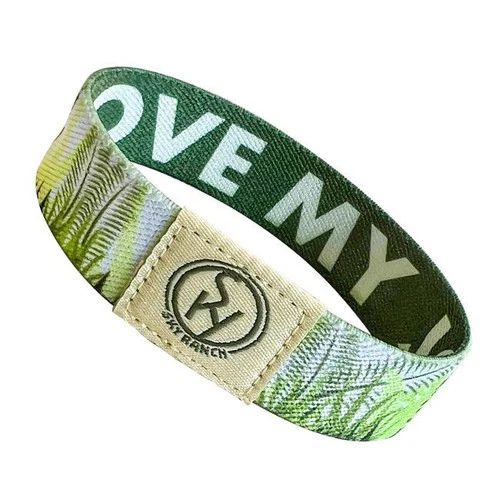
Fabric wristbands are a favorite for music festivals, VIP programs, artist access, and multi-day events where attendees may keep the band on for days. They offer strong brand appeal and can include woven logos, serial numbering, or RFID integration. Their weakness is that low-security closures or poor fit instructions can make them easier to share if you cut corners.
RFID-enabled bands for data and access precision
RFID wristbands add scanning, cashless payments, zone access, and real-time reporting. They are powerful, but they also require stronger setup discipline, better device coordination, and a larger budget. According to a 2025 report from Grand View Research, RFID adoption continues to expand across event operations because organizers want better tracking and faster entry processing, especially at larger venues.
| Event Scenario | Best Wristband Type | Security Strength | Operational Note |
|---|---|---|---|
| Single-day street food festival | Tyvek | Moderate | Fast, low-cost distribution for large crowds |
| Weekend music festival with re-entry | Fabric with locking closure | High | Better comfort and branding for multi-day wear |
| Brew fest with age-restricted zones | Vinyl plus color coding | High | Easy visual verification for bar staff |
| VIP sponsor activation lounge | Woven fabric with foil or serial print | High | Supports premium presentation and anti-copying |
| Large festival with cashless payments | RFID fabric band | Very high | Requires device testing and strong backend setup |
“The best wristband is not the fanciest one. It is the one your gate team can verify instantly, your attendees can wear comfortably, and counterfeiters cannot easily mimic.”
Security Features That Stop Copying and Pass-Sharing
Security features matter because fraud is rarely sophisticated. Most festival abuse comes from simple tactics: swapping bands, loosening them for reuse, reproducing colors, or using a visually similar fake in a dark queue. Good design blocks these easy wins.
Useful anti-fraud features include:
- Unique serial numbers for batch tracking
- Tamper-evident adhesive or locking closures
- Color shifts by day, zone, or attendee class
- Microtext or fine print details that cheap copies miss
- Holographic foil, UV ink, or specialty threading
- Barcode or RFID validation tied to ticket records
One mistake organizers make is over-relying on color alone. A bright wristband may look secure, but if a counterfeit printer can get close enough and staff are rushed, color coding loses value fast. Layering two or three visible and invisible elements is far safer than paying for one premium-looking effect.
There are limits, though. More features mean more complexity. If your team does not know where to look for a serial, how to verify UV ink, or when to scan instead of glance, the security layer exists only on paper. Training is part of the product.
How to Build a Wristband Plan From Ticket Sale to Teardown
The strongest wristband programs are mapped before production starts. That means deciding not only what the band looks like, but how it will move through the event life cycle. Here is a practical framework many organizers use.
- Define access groups. Separate general admission, VIP, staff, vendors, media, artists, minors, and alcohol-approved adults.
- Match each group to a material and security level. Not everyone needs the same band.
- Assign visual logic. Use color, print, or closure differences that staff can interpret immediately.
- Plan distribution points. Decide whether bands are shipped, will-call issued, box-office applied, or activated on-site.
- Write gate instructions. Tell staff exactly what to inspect and what counts as invalid.
- Test edge cases. Handle rain, torn bands, re-entry disputes, underage guests, and counterfeit attempts before show day.
- Track overages and leftovers. Unused stock should be secured just like cash drawers or ticket rolls.
I have seen this go wrong when organizers order a great-looking band but never define who is allowed to apply it. At one regional music event, volunteers handed out adult access bands before ID checks were completed. That error created bar-line friction all night and forced managers into manual overrides. The wristband did not fail. The process did.
At Best Patches, we often tell organizers that the production proof is only half the job. The other half is the human workflow around the band. When a client sends us zone maps, staffing plans, and guest categories early, the final product becomes much harder to misuse.
Branding Without Weakening Access Control
Organizers often want wristbands that people photograph, keep, and post online. That is a smart branding opportunity, especially for festivals trying to stand out in a crowded calendar. But aesthetics should never make security harder to read.
The sweet spot is a design that looks polished while preserving quick visual logic. For example, a sponsor-heavy art band may look great in a mockup, but if the access color is buried or the print contrast is weak, your security team loses time at every checkpoint.
Strong design choices usually include:
- Clear contrast between background and access markers
- Brand graphics that do not obscure security text
- Distinct day or zone indicators visible from a short distance
- Closures that fit the experience level of your staff
- Premium finishes reserved for categories where counterfeiting risk is highest
According to a 2024 report by Freeman, event attendees continue to value memorable branded touchpoints, but organizers also face pressure to improve operational flow. Wristbands sit at that intersection. They are both a guest-facing object and a security device. Treating them as only one or the other leaves value on the table.
“Branding should help your team read access faster, not force them to decode artwork in a dark crowd.”
Cost, Waste, and Operational Trade-Offs
Cheapest is rarely cheapest. A low unit price can be wiped out quickly by longer entry lines, replacement claims, fraud losses, or overspending on backup labor. On the other hand, going straight to RFID for a modest local event may create unnecessary setup cost and more failure points than you need.
When budgeting, weigh these factors together:
- Per-unit wristband cost
- Printing and specialty security add-ons
- Shipping timeline and rush fees
- Expected replacement volume
- Staff training needs
- Counterfeit risk by ticket tier
- Sustainability or waste-reduction targets
There is also a sustainability discussion that more organizers now need to address. Fabric bands tend to be kept as souvenirs, while Tyvek and vinyl are often discarded. If your audience values lower waste, material choice can affect brand perception. That said, eco-positioning should not override crowd safety. A weak “green” option that causes fraud or overproduction is not a smart trade.
McKinsey’s 2025 consumer research has continued to show that buyers care about both convenience and trust. Festivals feel that pressure directly. Guests want fast entry and a polished experience, but they also expect organizers to control access responsibly. Wristbands help you meet both expectations when selected with discipline.
A Real Organizer Case Study From Best Patches
Last season, I worked through a planning review with a mid-sized outdoor festival that had a familiar problem: strong ticket sales, weak perimeter confidence, and a history of friends passing bands back through fences after dark. They had been using generic single-color bands that looked clean but gave staff almost nothing to verify.
We recommended a fabric wristband system through Best Patches with three visible layers: category-specific base colors, woven event branding, and serialized print tied to distribution batches. For the 21+ group, we added a sharply contrasting marker that bar teams could identify in a split second. We also pushed the organizer to tighten application rules so every band was fastened by trained gate staff rather than handed over loose.
The result was immediate. Their operations lead reported fewer re-entry disputes, faster bar verification, and much better confidence at restricted access points. The design still looked premium enough for social sharing, but it now functioned like a control system rather than a souvenir ribbon.
In another project, I reviewed post-event notes from a sponsor-heavy lifestyle festival that wanted luxury aesthetics above all else. Their first concept had metallic printing, soft neutral tones, and minimal category contrast. It looked expensive but read poorly in low light. We revised the design with clearer segmentation, stronger text placement, and a more secure closure. That revision probably prevented a lot of checkpoint confusion that would have been blamed on staff instead of design.
These projects reinforced a simple rule: the best custom festival wristbands are the ones that make the right action easy for both guests and staff. Security improves when the product and process support each other.
Common Mistakes That Create Gate Chaos
Most wristband failures are avoidable. They show up not because the idea was bad, but because the organizer skipped one practical detail too many.
Choosing a band before mapping access levels
If you order first and define groups later, you usually end up with overlapping permissions and manual workarounds.
Making VIP too subtle
Premium audiences often want elegant design, but if the visual differences are too understated, checkpoint staff cannot verify quickly.
Ignoring closure quality
A beautiful fabric band with a weak lock can become a transferable pass. That defeats the point.
Failing to train temporary staff
Contracted gate workers, bar teams, and volunteers need a one-page visual guide. Never assume they will “figure it out.”
Storing extras carelessly
Unused wristbands should be counted, secured, and controlled. A stolen box of valid bands is just pre-printed fraud.
What Changes in Festival Security Through 2026
The next shift is not only better materials. It is better system thinking. Organizers are moving toward layered access control where wristbands work alongside mobile ticketing, ID checks, cashless systems, and live incident reporting.
Expect these trends to shape buying decisions through 2026:
- More hybrid systems that mix visual verification with scan-based validation
- Greater use of serialized inventory tracking for premium ticket tiers
- Stronger pressure to shorten entry times without adding more staff
- More demand for eco-aware materials that still support tamper resistance
- Higher expectation that branded credentials also serve as operational tools
That does not mean every event needs sophisticated tech. For many festivals, the smartest move is still a well-made physical wristband with clear segmentation and anti-transfer features. The lesson is to fit the solution to the risk profile, not to chase novelty.
What to Do Next
Secure wristbands are not a small detail. They affect admission speed, alcohol compliance, revenue protection, staff confidence, and the guest experience from arrival to exit. The strongest programs pair the right material with clear access logic, visible security markers, and staff training that holds up under real crowd pressure.
Best Patches recommends these next actions for organizers who want better results:
- Audit your last event for access failures, re-entry disputes, and counterfeit risk before selecting your next wristband type.
- Build your wristband categories around real operational zones, not just ticket names.
- Request samples early and test them with gate staff, bar staff, and security before placing the final bulk order.
References
- IBM Cost of a Data Breach Report 2024 — Provided context on how access-control weaknesses increase operational exposure.
- Event Safety Alliance guidance — Informed best practices related to access control, crowd management, and event operations.
- Freeman event industry research 2024 — Supported the point that attendee experience and operational efficiency must work together.
- Grand View Research 2025 RFID market analysis — Offered trend data on growing RFID adoption in event environments.
- McKinsey consumer research 2025 — Added perspective on trust, convenience, and buyer expectations that affect live event planning.
FAQ
What are custom festival wristbands used for?
-
They are used for admission control, age verification, VIP or backstage access, re-entry management, and brand visibility. A well-designed wristband also helps staff identify the right guests quickly and reduces pass-sharing or counterfeit use.
Which material is best for custom festival wristbands?
-
It depends on the event format:
-
Tyvek works well for single-day, high-volume entry
-
Vinyl is better for durable, multi-zone access control
-
Fabric is ideal for multi-day festivals and premium branding
-
RFID bands are best when you need scanning, analytics, or cashless payments
How can I make festival wristbands more secure?
-
Use layered security rather than one single feature. The most effective upgrades include:
-
Tamper-evident closures or one-way locks
-
Unique serial numbers or barcodes
-
Distinct color coding for ticket tiers or age groups
-
Specialty details like holographic foil, UV ink, or RFID chips
Are fabric wristbands secure enough for multi-day festivals?
-
Yes, especially when they use locking closures, serialized printing, and clear category markers. Fabric wristbands are one of the strongest choices for multi-day wear because they are comfortable, durable, and harder to replace casually than paper-style options.
How many wristband types should a festival have?
-
Only as many as your operation genuinely needs. Most festivals do well with separate bands for general admission, VIP, staff, vendors, minors, and 21+ guests. Too few categories create confusion, but too many can slow staff decisions and increase ordering mistakes.
Do I need RFID for a smaller local festival?
-
Not always. If your event is small, single-day, and easy to control visually, a secure non-RFID wristband may be enough. RFID makes more sense when you need fast scanning, cashless transactions, detailed zone control, or large-scale reporting.
When should I order wristbands before my event?
-
Earlier is better, especially if you want samples or specialty finishes. A practical timeline is:
-
6 to 8 weeks out for planning, proofs, and revisions
-
4 to 6 weeks out for standard production and delivery
-
Earlier still if you need RFID setup, serialization logic, or multiple access categories