 Promotional Products











Why Global Wristband Orders Break Down
If you are sourcing custom festival wristbands across borders, the biggest problems usually show up long before the box arrives: unclear proofs, color drift, missed customs paperwork, weak closures, and production timelines that looked fine until freight delays hit. Buyers rarely lose sleep over the wristband itself. They lose sleep over the check-in line, counterfeit access, sponsor branding, and whether thousands of guests will wear something that actually feels good for twelve hours or three days.
Best Patches has become a trusted partner for organizers, agencies, and merch teams that need wristbands to work as both security tools and brand assets. The practical side matters more than most first-time buyers expect. Material choice changes scanning speed, closure choice affects fraud risk, and artwork setup affects both readability and manufacturing speed.
Custom festival wristbands are branded admission bands made for events such as music festivals, fairs, club nights, campus events, and VIP activations. They can be printed, woven, or RFID-enabled, and they help organizers manage entry, identify ticket tiers, reduce transfer abuse, and extend branding across the attendee journey.
The global part raises the stakes. A domestic reorder can fix a bad proof in days. An international rush order can get expensive fast, especially if you have multiple event dates, several access levels, or country-specific compliance needs.
Table of Contents
- What to decide before you request a quote
- Choosing the right wristband type for your event
- How global production timelines really work
- Artwork, sizing, and proofing mistakes that cost money
- Security features that matter in 2026
- Budget planning, shipping, and landed cost control
- Real-world ordering lessons from Best Patches
- How sustainability and compliance affect buying decisions
- The final pre-approval checklist
What to Decide Before You Request a Quote
A good wristband order starts with operational clarity, not aesthetics. Before you compare suppliers, define exactly how the wristband will be used. Is it for single-day entry, all-weekend access, backstage control, age verification, cashless payment, or sponsor promotion? One band can do several jobs, but only if the spec is built for it.
Ask your team these questions early:
- How many access tiers do we need?
- Will guests keep the band on for a few hours or several days?
- Do we need tamper evidence or scan capability?
- Will the event happen in heat, rain, or water-heavy environments?
- Do we need sequential numbering, QR codes, or RFID chips?
- What is our last safe in-hand date, not just our event date?
The last question is where many international buyers slip. “Need by Friday” is not a production timeline. It is a risk statement. You need a press-ready date, production completion date, export date, customs buffer, and local delivery window.
Choosing the Right Wristband Type for Your Event
Not every event needs the same band. If your order is built around the wrong material, you either overspend or create headaches at the gate.
Tyvek for fast, low-cost control
Tyvek-style wristbands are lightweight, economical, and ideal for short events, bars, school functions, and single-day admissions. They are easy to distribute and hard to reapply once removed. Their limitation is obvious: they are not designed for premium perception or multi-day wear.
Vinyl for durability and water resistance
Vinyl bands work well for water parks, resorts, sports tournaments, and events that require stronger wear performance. They hold up better than paper-based options and offer stronger visual presence. The trade-off is less comfort in hot weather and less premium branding than woven fabric.
Fabric for premium festivals and multi-day use
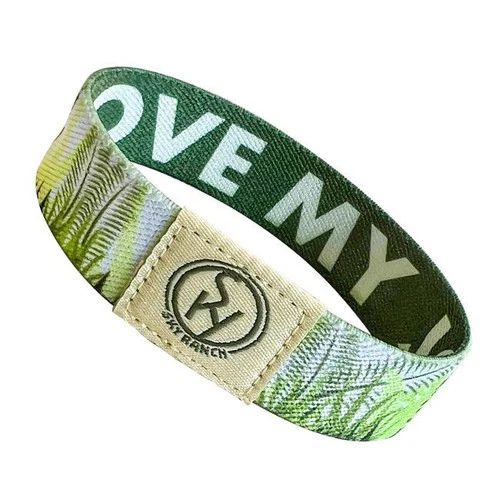
Woven or printed fabric wristbands are the default choice for serious festival operators because they feel collectible, support better branding, and are comfortable enough for extended wear. If your event sells identity as much as admission, fabric usually wins.
RFID for speed, data, and revenue control
RFID-enabled bands take the wristband from a pass to a system. They can speed up entry, support cashless spending, track zone access, and help sponsors measure engagement. According to a 2024 report by Grand View Research, the global RFID market is set to maintain strong growth through the decade, largely driven by inventory, tracking, and contactless-use cases. That trend is part of why more event operators now ask for RFID-ready formats even when they are not using every feature on day one.
| Event Scenario | Best Wristband Type | Typical Lead Time | Why It Fits |
|---|---|---|---|
| Local beer festival, one day, 3,000 guests | Tyvek with serial numbers | 5-10 business days | Low cost, quick application, good anti-transfer control |
| Beach music event, weekend, 8,000 guests | Printed fabric with locking closure | 12-18 business days | Comfortable, brand-forward, handles sweat and moisture |
| VIP sponsor activation across three cities | Fabric with QR or NFC add-on | 15-20 business days | Supports access validation and campaign tracking |
| Water park summer promotion | Soft vinyl with color coding | 10-15 business days | Water resistant and easy for staff to verify visually |
How Global Production Timelines Really Work
Global ordering is less about “fast” than “predictable.” A wristband supplier can manufacture beautifully and still fail your event if the timeline leaves no room for proof corrections, freight disruption, or customs review.
Here is the simplest workflow buyers should follow:
- Confirm event use case, quantities, and access levels.
- Choose material, closure, print method, and any data features.
- Submit vector artwork and variable data if needed.
- Approve digital proof with dimensions and color notes.
- Lock production schedule and shipping method.
- Request tracking plus an expected customs handoff date.
- Inspect samples or arrival batch before mass distribution.
Air freight can save a schedule, but it can also crush margins. Sea shipping lowers unit economics on very large orders, yet it demands earlier planning. The safest approach is to treat your “need by” date as at least seven to ten days earlier than the event, especially for multi-country shipments or complex RFID jobs.
A 2025 outlook from Skift Meetings noted that organizers are putting more weight on speed of entry, sponsor measurement, and attendee experience. That matters here because your wristband order is no longer just a procurement line item. It touches operations, marketing, finance, and data capture all at once.
Artwork, Sizing, and Proofing Mistakes That Cost Money
Most avoidable wristband problems begin in the proof stage. The design may look great on a laptop and still fail in real use. Narrow print areas compress logos, tiny text disappears, and dark-on-dark color choices reduce readability in low light.
Keep artwork functional before decorative
A festival wristband is wearable branding, but it is also an operational object. Prioritize legibility, access coding, and closure placement. If staff cannot identify the band from a few feet away, your design is too subtle for the job.
Build for how people actually wear it
Wrist size variation matters, especially for mixed-age audiences or all-inclusive hospitality events. Some closures are extremely secure but less forgiving during application. Others are comfortable but easier to manipulate. That is why proof approval should include both visual review and wear-use logic.
“The best wristband design is not the one that looks most artistic on screen. It is the one that still reads clearly at a crowded gate, under bad lighting, with a stressed entry team.”
At Best Patches, I once worked with a touring promoter who wanted metallic ink, black fabric, and compact text for six different access levels. On screen it looked sharp. In a dark venue, staff could not separate Crew from Artist Guest without scanning each band. We rebuilt the system with stronger contrast, larger tier labels, and unique end-tab colors. The client kept the premium look, but the gate team finally got something usable.
Security Features That Matter in 2026
Counterfeit prevention is no longer optional for high-demand events. If your tickets are valuable, your wristbands are valuable too. The right anti-fraud setup depends on your threat level, resale policy, and staffing model.
Low-tech features that still work
Sequential numbering, custom patterns, color zoning, and tamper-evident closures remain effective for many events. They are affordable and easy to train staff on. Their weakness is that they rely heavily on human checking.
Digital features for higher-control environments
QR codes, barcodes, NFC, and RFID can tighten control and improve reporting. The downside is system dependency. If readers fail, batteries die, or syncing breaks down, the gate slows instantly. Build a fallback plan before you go live.
Data security also belongs in this conversation. IBM’s 2024 Cost of a Data Breach report placed the global average breach cost at $4.88 million. If your wristbands connect to attendee profiles, payment tools, or access logs, your vendor review should include data handling, chip sourcing, and system permissions, not just print quality.
Budget Planning, Shipping, and Landed Cost Control
Cheap per-unit pricing can be expensive in practice. Smart buyers compare the full landed cost: unit price, setup charges, tooling if any, personalization fees, freight, duties, and the cost of delay. A band that is ten cents cheaper is not cheaper if it arrives late or fails at entry.
Watch these cost drivers closely:
- Rush production surcharges
- Custom closures or specialty thread
- RFID chip type and encoding requirements
- Split shipments to multiple destinations
- Reproof cycles caused by poor artwork files
- Brokerage, taxes, and destination-country import rules
Sustainability can affect cost as well. Recycled materials, biodegradable options, and low-impact inks may add cost upfront, but they can support sponsor alignment and attendee perception. According to Deloitte’s 2024 consumer sustainability research, many buyers continue to weigh environmental practices in their purchase decisions, even when price remains a major factor. For festivals with visible ESG goals, that can justify a modest premium.
Real-World Ordering Lessons from Best Patches
One of the clearest lessons I have learned at Best Patches is that the client’s internal approval chain often creates more delay than production itself. A North American music festival came to us after a prior supplier missed color expectations and delivered too close to opening day. Their issue was not just manufacturing. Marketing wanted a collectible look, security wanted anti-transfer control, and operations wanted faster sorting by access tier.
I helped the team compress the brief into three rules: visual separation first, wearable comfort second, sponsor branding third. We moved from a decorative concept to a printed fabric band with a stronger closure and high-contrast tier coding. We also split the shipment so the core GA stock arrived first and specialty tiers followed. That reduced the client’s schedule risk and protected opening day.
In another case, a European event agency needed multilingual packaging notes and destination-specific carton labels for shipments to separate venues. The order itself was straightforward, but the logistics were not. We built the shipping matrix before final production, not after. That one change prevented relabeling delays and cut confusion for venue staff receiving inventory.
“When buyers treat wristbands like simple merch, they usually run into access problems. When they treat them like part of the event system, everything gets easier to manage.”
How Sustainability and Compliance Affect Buying Decisions
Buyers in 2026 are asking sharper questions about materials, traceability, and disposal. Not every sustainable claim means the same thing. Recyclable, recycled-content, biodegradable, and compostable are different standards, and event teams should ask for clear definitions rather than marketing language alone.
Compliance also matters when you ship internationally. Depending on where your order is going, you may need cleaner labeling, safer packaging declarations, or additional product detail for customs review. If your bands contain RFID or NFC components, document that early so shipping paperwork is accurate from the start.
There is also a brand risk in overpromising. If you market your festival as low-waste, but your access materials are visibly disposable and inconsistent with that promise, attendees notice. The better path is honest improvement: use lower-impact options where feasible, shorten overproduction, and plan collection or reuse policies for technology-enabled bands.
The Final Pre-Approval Checklist
Before you sign off on any global wristband order, pressure-test the details that tend to fail under deadline. This is the stage where a careful ten-minute review can save thousands of dollars and a lot of staff frustration.
- Artwork is final, sized correctly, and readable at distance
- Material matches event duration and environment
- Closure type fits your fraud risk and guest comfort needs
- Tier differentiation is visible beyond color alone
- Serial, QR, barcode, or RFID data is verified and mapped correctly
- Production timeline includes proofing and shipping buffer
- Freight method matches the real deadline, not the optimistic one
- Customs and destination labels are confirmed before dispatch
- Backup gate procedure exists if scanning tools fail
Conclusion
Ordering festival wristbands globally is not hard because the product is complicated. It is hard because the wristband sits at the intersection of branding, logistics, security, and guest experience. The strongest orders start with operational clarity, use materials that fit the event, and leave enough time for proofing, freight, and contingencies.
Best Patches recommends three next steps if you are planning an order now:
- Build your spec around event use, not just design preference.
- Set an in-hand deadline at least a week before the event whenever possible.
- Ask for a proof review that covers visibility, closure logic, and shipping details together.
References
- Grand View Research, 2024: Provided market context on continued RFID adoption and growth across tracking and contactless applications.
- Skift Meetings, 2025 industry outlook: Highlighted organizer priorities around attendee flow, data value, and event experience.
- IBM Cost of a Data Breach Report, 2024: Supplied a benchmark for the financial importance of data security when wristbands connect to digital systems.
- Deloitte consumer sustainability research, 2024: Supported the point that environmental expectations continue to shape purchase decisions.
FAQ
What are custom festival wristbands used for?
-
They are mainly used for admission control, VIP identification, age verification, cashless payment, and brand visibility at festivals, concerts, fairs, and nightlife events. The right band can also reduce ticket fraud and help staff sort guests faster.
How do I choose the best material for custom festival wristbands?
-
Match the material to the event duration and setting:
Tyvek for short, budget-focused events
Vinyl for water exposure and stronger durability
Fabric for premium branding and multi-day comfort
RFID-enabled bands when you need scanning, data, or cashless functions
How long does it take to order custom festival wristbands internationally?
-
Most international orders take anywhere from one to four weeks depending on the material, customization level, quantity, and shipping method. RFID projects, split shipments, and custom packaging usually need extra time. A safe practice is to aim for delivery at least seven to ten days before your event.
Are RFID festival wristbands worth the extra cost?
-
They can be worth it when speed, access control, sponsor analytics, or cashless payment matter to your event model. For small single-entry events, they may be unnecessary. For larger festivals with multiple zones and high guest volume, they often pay off through smoother operations and better reporting.
What file format should I send for wristband artwork?
-
Vector files are the safest option. Most suppliers prefer:
.AI or .SVG for scalable logo artwork
.PDF when vector paths are preserved
.PNG at high resolution for simpler printed graphics
Text converted to outlines to prevent font issues
Do festival wristband suppliers have minimum order quantities?
-
Usually, yes. Minimums vary by material and print method. Simple Tyvek bands may have low minimums, while woven fabric or RFID bands often require larger runs because setup and encoding costs are higher. If your quantity is small, ask whether a stock format with custom print can reduce the minimum.