 Promotional Products









Introduction
Picking the right custom lanyard size sounds simple until you have to order hundreds of them for staff badges, trade show passes, school IDs, or retail promotions. Too narrow, and the lanyard can feel flimsy or cheap. Too wide, and your logo may look oversized while the strap feels bulky around the neck. Length matters just as much, especially when safety, comfort, and visibility are on the line.
That is where experienced suppliers make a difference. Best Patches works with brands, schools, event teams, and organizations that need lanyards to do more than hold a badge. The right size helps your design print clearly, improves wearability, and reduces complaints from the people who actually use them every day.
Custom lanyard size refers to the width and length of a lanyard, along with how those dimensions affect comfort, branding space, attachment options, and use case. In practical terms, it is the measurement decision that determines whether your lanyard feels professional, readable, and easy to wear.
If you are comparing 3/8-inch, 3/4-inch, and 1-inch widths or wondering whether 16, 18, or 20 inches is the better length, this guide will help you match the size to the job instead of guessing and paying for a bad fit later.
Table of Contents
- Why Lanyard Size Matters More Than Most Buyers Expect
- How to Choose the Right Lanyard Width
- How to Choose the Right Lanyard Length
- Best Sizes by Industry and Use Case
- Quick Comparison of Common Lanyard Sizes
- How Size Affects Printing, Logos, and Readability
- Common Sizing Mistakes, Risks, and Limitations
- A Simple Process to Pick the Best Size
- Real-World Sizing Experience from Best Patches
- Final Thoughts and Next Actions
Why Lanyard Size Matters More Than Most Buyers Expect
Lanyard sizing affects four business outcomes at once: comfort, brand visibility, durability, and user compliance. If people dislike wearing the lanyard, they tuck it away, clip badges elsewhere, or stop using it entirely. That turns a useful branded item into wasted budget.
According to the Promotional Products Association International 2024 consumer research, wearability and practical usefulness remain two of the strongest factors behind long-term retention of promotional items. That matters because a lanyard is only effective when people keep it on and use it repeatedly.
Size also shapes how professional your program looks. A conference lanyard carrying event sponsorship logos needs enough width for legibility. A school lanyard for younger students may need a lighter, narrower profile to reduce bulk. A warehouse access lanyard may need extra length for scanners and breakaway safety features.
“The right lanyard size is not a cosmetic decision. It changes how people wear, read, and trust the item.”
That is why experienced buyers do not ask only, “What is the cheapest lanyard?” They ask, “What size will people actually wear comfortably while keeping our branding visible?”
How to Choose the Right Lanyard Width
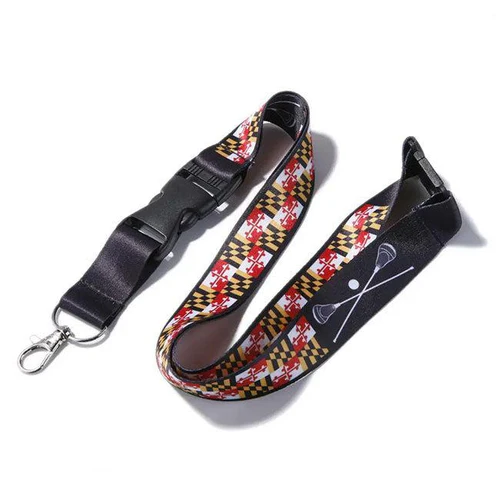
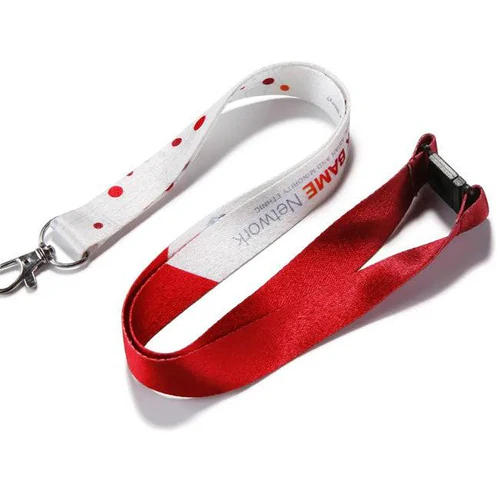
Width is usually the first sizing decision. Common custom lanyard widths include 3/8 inch, 1/2 inch, 5/8 inch, 3/4 inch, and 1 inch. Each width creates a different balance between visual impact and comfort.
Narrow widths work best for lightweight, minimal-use applications
A 3/8-inch or 1/2-inch lanyard is often used for simple badge holding, small text, or budget-sensitive promotions. These widths feel lighter and can be a good option when you want a lower-profile item. They are often chosen for short events, visitor passes, and basic employee IDs.
The trade-off is branding space. Narrow straps can limit how large your logo appears, especially if the design includes long company names, taglines, or multiple colors.
Mid-range widths offer the best all-around balance
The 5/8-inch and 3/4-inch options are often the safest choice for most organizations. They feel substantial without becoming heavy, and they provide enough room for readable branding. If a client asks Best Patches for a versatile recommendation without a specialized use case, this is usually where the conversation starts.
Wide lanyards are best for strong branding and premium feel
A 1-inch lanyard gives you the largest printable area and often feels more premium in hand. It works well for sponsors, universities, corporate onboarding kits, and campaigns where the lanyard doubles as visible brand merchandise.
Still, wider is not always better. On smaller frames, in active environments, or with all-day wear, a 1-inch strap can feel too warm or bulky.
How to Choose the Right Lanyard Length
Length determines where the badge or attachment sits on the body. Standard adult lanyards are commonly measured around 16 to 18 inches folded, which creates a full loop length of about 32 to 36 inches. Some specialty versions run longer or shorter depending on role and audience.
Shorter lengths give better control
Shorter lanyards help keep an ID card higher on the chest. That is useful for office environments, front-desk staff, and settings where badges need to stay visible and avoid swinging too much. Shorter lengths also tend to feel more controlled when used with lightweight plastic card holders.
Standard lengths fit most adult users
An 18-inch folded length is often considered the standard adult option because it sits comfortably for most body types and works well with common badge holders, swivel hooks, and safety breakaways. It is a strong default when you need one size for a mixed group.
Longer lengths help with scanning and task-based use
Longer lanyards can be useful in facilities where staff frequently tap badges on readers, present credentials to security, or need easier access to attached tools. But longer straps may swing more, snag more easily, and create more movement during active work.
According to OSHA guidance on workplace safety and personal accessories in hazard-prone environments, loose neck-worn items can increase snagging risk in some industrial settings. That does not mean lanyards should be avoided entirely, but it does mean sizing and breakaway selection should be handled carefully.
Best Sizes by Industry and Use Case
The best lanyard size depends less on trend and more on the job the item needs to do. Here are the most common applications and what usually works best.
- Trade shows and conferences: 3/4 inch width, standard adult length for visibility and sponsor logo readability
- Schools and universities: 1/2 inch to 3/4 inch width with breakaway option for everyday wear
- Corporate offices: 5/8 inch or 3/4 inch width for a professional look without bulk
- Hospitals and healthcare: lighter widths with easy badge access and washable or durable materials
- Warehouses and manufacturing: size paired carefully with safety features and task needs
- Retail promotions: narrower widths if budget matters, wider widths if branding matters more
The Advertising Specialty Institute reported in its 2023 promotional product findings that practical branded items continue to deliver strong repeat exposure because they stay in circulation. Lanyards fit that pattern, but only if the item is comfortable enough to remain in use after the event or campaign ends.
Quick Comparison of Common Lanyard Sizes
| Width | Typical Length | Best Business Scenario | Main Trade-Off |
|---|---|---|---|
| 3/8 inch | 16-18 inches folded | Visitor badges, budget events, simple text designs | Limited logo visibility |
| 1/2 inch | 16-18 inches folded | School IDs, office badges, lightweight daily wear | Less premium visual impact |
| 5/8 inch | 18 inches folded | Corporate teams, nonprofits, mixed-use branding | May feel too modest for sponsor-heavy designs |
| 3/4 inch | 18-20 inches folded | Trade shows, universities, branded staff programs | Slightly more material cost |
| 1 inch | 18-20 inches folded | Premium kits, sponsor visibility, bold merchandising | Can feel bulky for all-day wear |
How Size Affects Printing, Logos, and Readability
Many buyers think of size as a comfort issue first, but print quality is just as important. If your custom lanyard size does not fit your artwork, the final product may look crowded, blurry, or inconsistent.
Wider straps support cleaner logo repetition
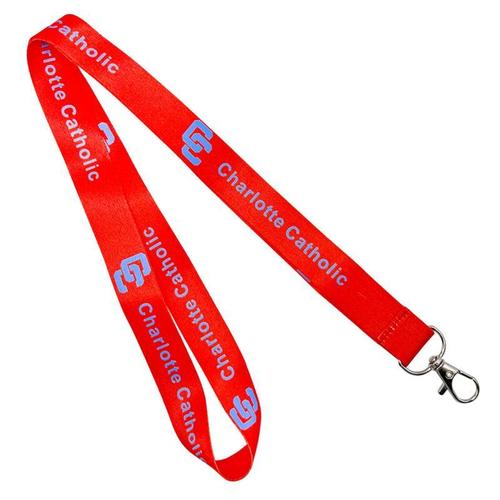
Repeated logos and sponsor names tend to print better on 3/4-inch and 1-inch widths. This is especially true for dye-sublimated designs with gradients, multiple brand colors, or small supporting text.
Narrow straps require design discipline
On 3/8-inch and 1/2-inch widths, the best-performing art is usually simpler:
- Short brand names
- Single icons or monograms
- High-contrast colors
- Minimal legal copy or secondary messaging
If you try to fit too much onto a slim strap, readability drops fast. This is one of the most common reasons bulk lanyard orders disappoint buyers after delivery.
“A lanyard should be read at a glance, not studied at close range. If the print needs effort, the size or artwork is wrong.”
Attachment hardware changes perceived size
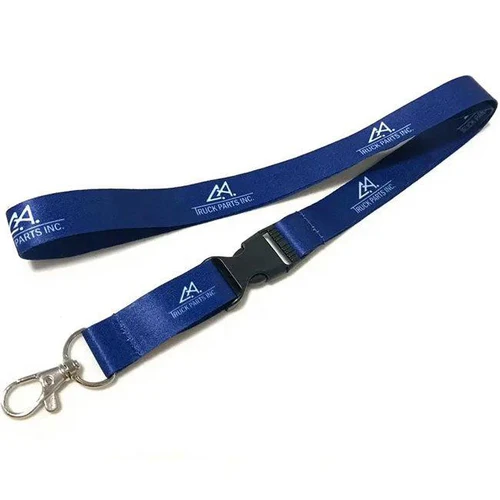
A medium-width lanyard with a large bulldog clip, badge reel, or safety buckle can feel more substantial than its raw dimensions suggest. That means the width decision should always be made together with accessory choices, not in isolation.
Common Sizing Mistakes, Risks, and Limitations
No sizing choice is perfect. Each option comes with trade-offs, and good planning means being honest about them.
Choosing size based only on price
The cheapest width may reduce your upfront spend, but if the logo becomes hard to read or the item feels low quality, your cost per effective impression goes up. Cheap that does not get used is rarely cheap in the long run.
Ignoring the end user’s daily routine
A front-office employee, a college student, and a machine operator interact with lanyards differently. One may need comfort during eight hours of wear, another needs branding at a crowded event, and another needs careful safety consideration. One standard size cannot solve every environment equally well.
Overbuilding for light-duty use
Some buyers choose the widest, longest option because it seems more premium. But heavier is not always better. For short-term event passes, youth programs, or lightweight credentials, oversized lanyards can feel awkward.
A Simple Process to Pick the Best Size
If you are stuck between two options, use this decision path.
- Define the primary use: badge display, event branding, scanning access, merchandise, or safety-conscious wear.
- Review your artwork: note logo length, text size, number of colors, and whether you need sponsor placement.
- Consider wear time: one-day event, weekly use, or daily all-shift wear.
- Check the user group: adults, students, mixed audiences, or specific staff roles.
- Choose hardware early: swivel hook, lobster claw, breakaway clasp, buckle release, or badge reel.
- Request a scaled proof or physical sample: this is the fastest way to prevent expensive sizing mistakes.
For many organizations, the safest default is still a 3/4-inch width with standard adult length. It handles branding well, feels balanced for most users, and suits a wide range of events and workplaces.
Real-World Sizing Experience from Best Patches
I once worked with a mid-sized conference organizer that planned to order narrow 1/2-inch lanyards to reduce cost across a 4,000-attendee event. On paper, the savings looked good. But when we reviewed the sponsor lineup, the issue became obvious: several logos had long names and secondary text. Printed on a narrow strap, they would have looked cramped and inconsistent.
At Best Patches, we recommended moving to a 3/4-inch custom size and slightly simplifying the repeat pattern. The organizer was hesitant at first because the unit price increased. After seeing the proof, they approved the change. At the event, the lanyards photographed better, sponsors were easier to identify, and the organizer later told us the upgrade helped justify premium sponsorship placements the following year.
In another project, I worked with a school program that originally wanted wide promotional lanyards for students and staff under one order. We paused and asked a basic question: would elementary students wear the same size comfortably as office personnel? The answer was clearly no. Best Patches split the order into narrower student-friendly lanyards and slightly wider staff versions. That small sizing adjustment reduced bulk, improved comfort, and made daily wear more realistic.
Those projects reinforced a simple lesson: the best custom lanyard size is rarely the biggest or the cheapest. It is the one that matches actual use.
Final Thoughts and Next Actions
The right lanyard size sits at the intersection of branding, comfort, and function. Width affects how well your design reads. Length affects how naturally the item is worn. Hardware, safety needs, and audience type all shape the final decision.
If you want a dependable starting point, 3/4 inch width and standard adult length fit most professional use cases well. If your design is simple and budget-sensitive, narrower may work. If your branding needs to stand out or your lanyard is part of a premium package, wider may be worth it.
Best Patches recommends these next actions:
- Review your logo at actual lanyard scale before final approval.
- Match width and length to the people wearing the product, not just the purchasing budget.
- Request a proof or sample when ordering for events, schools, or staff programs at volume.
References
- Promotional Products Association International, 2024 consumer research — supported the point that usefulness and wearability drive retention of promotional items.
- Advertising Specialty Institute, 2023 promotional product findings — reinforced the value of practical branded products that stay in circulation.
- OSHA workplace safety guidance — informed the discussion on snagging risk and the need for careful lanyard selection in active or hazardous environments.
FAQ
What is the most common custom lanyard size?
A 3/4-inch wide lanyard with a standard adult length is one of the most common choices because it balances comfort, durability, and logo visibility. It works well for conferences, schools, offices, and event staff.
How do I choose the right custom lanyard size for my business?
Start by looking at these factors:
How large and detailed your logo is
How long users will wear the lanyard each day
Whether the badge needs to be scanned often
What hardware or safety breakaway features you need
Whether the audience is staff, students, attendees, or visitors
Is a wider lanyard always better for branding?
Not always. Wider lanyards usually give your logo more space and stronger visibility, but they can also feel heavier or bulkier. For all-day wear, a mid-width option like 5/8 inch or 3/4 inch is often the better balance.
What custom lanyard size is best for schools?
For many schools, 1/2-inch to 3/4-inch widths work well. Students often benefit from lighter, less bulky options, while staff may prefer slightly wider straps for daily wear and better identification visibility.
Does lanyard length matter if everyone uses badge holders?
Yes. Even with badge holders, length changes where the credential sits, how much it swings, and how easily it can be scanned or presented. Standard adult lengths work well for most users, but highly active roles may need more careful sizing.
Should I request a sample before ordering bulk lanyards?
Yes, especially for large events, staff programs, or school orders. A sample or scaled proof helps you judge print readability, comfort, hardware feel, and whether the chosen custom lanyard size matches real-world use.