 Promotional Products
Introduction
Choosing between dye sublimation and screen printing sounds simple until you are the one approving artwork, balancing budget, and worrying about whether the final lanyards will actually look sharp in person. For buyers comparing lanyard printing methods, the wrong choice can lead to blurry logos, limited colors, peeling ink, or a unit cost that makes the whole project harder to justify.
That is where experience matters. Best Patches has worked with organizations that needed custom lanyards for trade shows, schools, staff IDs, sports events, and retail promotions, and the same question comes up constantly: which printing method gives the best mix of color quality, durability, and value?
Lanyard printing methods are the production techniques used to place logos, text, and graphics onto lanyard fabric. The two most common choices are dye sublimation, which infuses ink into polyester fibers, and screen printing, which applies ink onto the surface in solid layers.
That difference affects almost everything: design freedom, texture, fade resistance, setup cost, production speed, and how your brand appears from a distance. If you are ordering custom lanyards in 2026, knowing where each method wins saves money and avoids expensive reprints.
Table of Contents
- What Makes These Printing Methods Different
- How Dye Sublimation Works
- How Screen Printing Works
- Side-by-Side Comparison for Real Buyers
- When Each Method Makes the Most Sense
- Cost, Quality, and Durability Tradeoffs
- Best Patches Case Studies
- How to Choose the Right Method
- What Is Changing in 2026
What Makes These Printing Methods Different
The core difference is where the color lives. With dye sublimation, heat turns special ink into gas and bonds it into polyester fibers. With screen printing, ink is pushed through a mesh screen and sits on top of the material. That sounds technical, but in buying terms it means this:
- Dye sublimation is better for detailed artwork, gradients, and full-color branding.
- Screen printing is often better for simple logos, bold text, and limited spot colors.
- Sublimation usually feels smoother because the ink becomes part of the fabric.
- Screen printing can create stronger contrast on straightforward designs but may crack or wear faster over time.
According to the Advertising Specialty Institute’s 2024 Ad Impressions Study, promotional products that are useful and worn repeatedly tend to generate stronger brand recall than short-life giveaway items. Lanyards fit that pattern, which makes print quality more than a cosmetic issue. If people wear the product daily, weak printing becomes visible fast.
How Dye Sublimation Works
Dye sublimation starts with artwork printed onto transfer paper using sublimation inks. Heat and pressure then move that color into the polyester surface of the lanyard. Because the pigment enters the fibers rather than coating them, the result is typically vivid, smooth, and highly resistant to fading from ordinary use.
Why buyers like dye sublimation
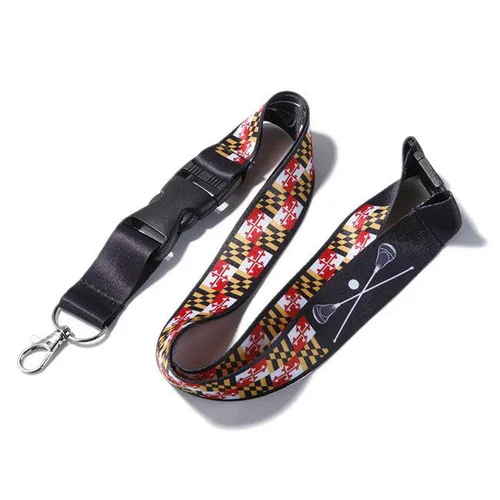
This method is the favorite for brands that need color flexibility. If your logo includes gradients, photography, tiny icons, or multiple shades, sublimation handles complexity far better than most traditional methods. It also supports edge-to-edge decoration on many polyester lanyards, which helps the design feel intentional rather than squeezed into a narrow printable area.
It is especially useful for:
- Corporate branding with full-color logos
- Event credentials with sponsor-heavy artwork
- School and university lanyards with mascots or multicolor seals
- Retail merchandise with pattern-based designs
Where sublimation has limits
It is not perfect. Dye sublimation works best on polyester or high-polyester blends, so material options can be narrower. If a buyer specifically wants cotton texture or certain specialty fabrics, sublimation may not be the right fit. It can also be less cost-efficient than basic screen printing when the artwork is extremely simple and the order is focused purely on low price.
How Screen Printing Works
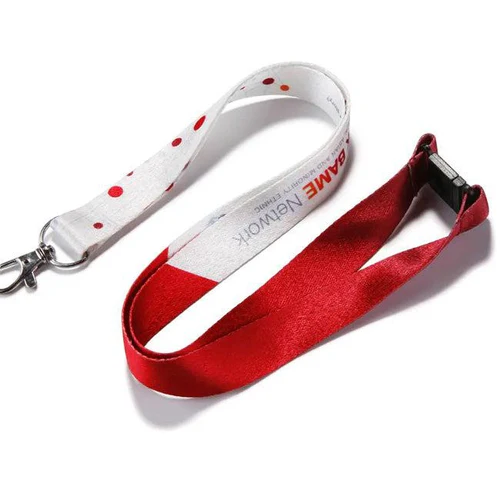
Screen printing applies ink in layers directly onto the lanyard surface. Each color usually requires its own screen, which means setup becomes more involved as artwork gets more complex. For a one-color or two-color design, though, screen printing remains a reliable and often cost-effective option.
Why buyers still choose screen printing
There is a reason this method has stayed relevant. It creates clean, bold marks for straightforward branding. If you need a company name, a simple icon, or a slogan repeated across the strap, screen printing can deliver strong visibility at a competitive price point.
“If your artwork can be explained in one sentence and seen from ten feet away, screen printing is often the smarter production choice,” says a senior promotional products consultant who specializes in event merchandise sourcing.
Common drawbacks
Screen printing is less flexible with intricate artwork. Fine lines can soften, gradients are difficult, and photographic effects are generally off the table. Because the ink sits on the surface, heavy friction can eventually affect the print. On lower-grade production runs, buyers sometimes notice cracking, chipping, or slight misregistration between colors.
According to Smithers’ 2024 analysis of the global printed packaging and industrial print market, buyers are increasingly prioritizing shorter runs, faster customization, and high-variation graphics. That trend favors digital and transfer-driven methods like sublimation in many branded textile applications, especially where personalization matters.
Side-by-Side Comparison for Real Buyers
| Business Scenario | Dye Sublimation | Screen Printing | Best Fit |
|---|---|---|---|
| Tech conference with sponsor logos and gradients | Excellent for full-color detail and consistent branding | Too limiting if many colors are involved | Dye sublimation |
| Local gym chain needing one-color branded staff lanyards | Works well but may be more than necessary | Low-cost and visually bold for simple artwork | Screen printing |
| University bookstore selling mascot-themed merch | Great for detailed logos and school colors | Acceptable only for simplified art | Dye sublimation |
| Nonprofit fundraiser with tight budget and plain text | Good appearance, moderate flexibility | Often the most economical option | Screen printing |
| Retail brand launching premium patterned lanyards | Best for all-over prints and polished finish | Limited visual sophistication | Dye sublimation |
When Each Method Makes the Most Sense
Choose dye sublimation when
- Your design uses more than two colors.
- You want gradients, shadows, or photo-style art.
- Brand consistency matters across multiple SKUs.
- You want a softer feel without raised ink texture.
- The lanyard itself is part of the visual identity, not just a functional strap.
Choose screen printing when
- Your design is simple and bold.
- You are ordering in volume and trying to control unit costs.
- Color count is limited.
- You need a classic promotional look.
- The main goal is readable branding rather than design complexity.
Cost, Quality, and Durability Tradeoffs
Price is where many buyers hesitate, but the cheapest method upfront is not always the least expensive over the life of the project. A basic screen-printed lanyard may cost less on a simple order, especially if only one or two spot colors are involved. However, if design revisions increase color count, or if the print quality does not match brand expectations, the value equation changes fast.
Dye sublimation often offers stronger value when artwork is complex because color richness does not require separate screens for each shade. The method also performs well over time because the image is embedded into the material. For organizations using lanyards daily in schools, hospitals, corporate offices, and venues, that can matter more than a small upfront savings.
There are still risks on both sides:
- Sublimation can disappoint if the fabric is not suitable polyester.
- Screen printing can lose detail on busy designs.
- Rush production can reduce registration quality or finishing consistency.
- Very low-cost suppliers may cut corners on hardware, stitching, or safety breakaways regardless of print method.
According to a 2025 report from Deloitte on consumer product expectations, buyers continue to place higher value on durability and personalization, even in lower-cost branded merchandise categories. That reinforces a shift many suppliers already see: customers are less tolerant of generic-looking promo items that wear out too fast.
Best Patches Case Studies
I once worked with a client through Best Patches preparing for a multi-city gaming convention. Their first instinct was screen printing because they wanted to keep costs low on 5,000 lanyards. But their artwork included neon gradients, layered sponsor logos, and a subtle geometric background that was central to the event brand. We reviewed both methods and quickly saw that simplifying the design for screen printing would strip away the premium look they were trying to create.
We recommended dye sublimation. The finished lanyards kept the full visual system intact, and the organizers later told us attendees were posting close-up photos of the credentials and straps on social media. That would not have happened with a flat one- or two-color result. In that case, the print method directly affected perceived event quality.
In another project, I advised a regional security services company ordering staff lanyards for everyday ID use. Their design was plain: navy background, white company name, and a small shield icon. No gradients, no patterning, no visual flair needed. Best Patches guided them toward screen printing because it matched the use case better. The client reduced costs, kept branding highly readable, and avoided paying for complexity they did not need.
“The best printing method is not the fanciest one. It is the one that preserves the purpose of the product,” as one branded merchandise buyer for a national events agency put it during a sourcing review in late 2025.
How to Choose the Right Method
If you are comparing suppliers and trying to make a final call, use a decision process instead of guessing. This helps prevent the two most common mistakes: overbuying premium production for a basic design, or underbuying quality for a brand-sensitive order.
- Review your artwork honestly. Count colors, inspect fine detail, and note any gradients or photo elements.
- Match the fabric. If you want sublimation, confirm polyester compatibility before approving production.
- Define the use case. Daily wear, short-term event use, and retail resale all require different quality thresholds.
- Request proofs. Ask to see how the design looks at actual size, not just enlarged on screen.
- Compare total value. Include durability, brand presentation, and reordering consistency, not just unit price.
- Vet the supplier. Ask about hardware quality, attachment options, print tolerance, and production lead time.
When evaluating lanyard printing methods, this framework usually makes the answer obvious. The artwork and usage should decide the method, not habit.
What Is Changing in 2026
Buyer expectations are getting sharper. More brands want lanyards that function as part of a broader identity system, not just cheap accessories. That means richer color fidelity, smaller batch customization, and more pressure on suppliers to deliver consistent results across repeated orders.
Three trends are shaping the category in 2026:
- Short-run personalization: Event organizers and schools increasingly want segmented designs by department, access level, or sponsor tier.
- Premium promo standards: More companies are treating lanyards like wearable brand assets, which favors high-detail methods.
- Smarter procurement: Buyers are asking better technical questions about fabric, wash performance, abrasion, and color consistency.
That does not mean screen printing is going away. It still makes sense for clean, economical, high-volume basics. But for any buyer aiming for visual sophistication, dye sublimation continues to gain ground because it aligns with where branding is headed.
Conclusion
Dye sublimation and screen printing both have a place in custom lanyard production, but they solve different problems. Dye sublimation is usually the stronger choice for full-color, detailed, premium-looking designs on polyester. Screen printing remains a practical option for simple artwork, bold messaging, and budget-sensitive bulk orders.
Best Patches recommends three clear next steps before you place an order:
- Audit your artwork for detail, color count, and readability at actual lanyard width.
- Match the print method to the real use case, whether that is daily wear, events, or resale.
- Request a proof or sample from a trusted supplier before approving volume production.
If your brand image matters, the print method is not a minor production detail. It is the difference between a lanyard people wear and one they ignore.
References
- Advertising Specialty Institute, 2024 Ad Impressions Study — Provided context on the long-term promotional value of useful branded products.
- Smithers, 2024 industrial and specialty print market analysis — Offered market insight into customization trends and the shift toward high-variation print methods.
- Deloitte, 2025 consumer product expectations report — Supported the point that durability and personalization are rising purchase priorities.
FAQ
Which of the lanyard printing methods lasts longer?
Dye sublimation usually lasts longer on polyester because the color is infused into the fibers rather than sitting on top of the surface. For daily-use ID lanyards, that often means better fade resistance and less visible wear over time.
Is screen printing cheaper than dye sublimation for custom lanyards?
Often, yes, for simple one-color or two-color designs. Once artwork becomes more detailed or uses many colors, dye sublimation can offer better value because it handles complexity without the same screen setup burden.
Can dye sublimation print full-color logos and gradients?
Yes. That is one of its biggest advantages. Dye sublimation is ideal for multicolor logos, gradients, detailed illustrations, and repeating patterns that would be difficult or expensive to reproduce with screen printing.
Are screen-printed lanyards good for large orders?
Yes, especially when the design is simple. Large-volume staff, school, or nonprofit orders with limited colors are often a strong fit for screen printing because the process can be cost-efficient and visually clear.
What artwork works best for screen printing?
Bold logos, solid text, simple icons, and limited-color branding work best. If the design includes gradients, tiny type, or photo-like detail, screen printing is usually not the strongest option.
Do I need polyester for dye sublimation lanyards?
In most cases, yes. Dye sublimation performs best on polyester because the heat process bonds color into synthetic fibers. If you want a different fabric feel, ask your supplier whether the material can support the print quality you expect.