 Promotional Products












































Introduction
If you are comparing detachable buckle vs breakaway lanyard, you are probably trying to solve a practical problem, not a design one. You need a lanyard that fits how people actually work, move, scan badges, carry keys, and stay safe in busy environments. The wrong choice can create daily frustration, increase replacement costs, or even introduce avoidable safety risks.
At Best Patches, we regularly help schools, factories, offices, event teams, and retail brands choose the right lanyard construction for their use case. The most common mistake we see is assuming detachable buckles and breakaway clasps do the same job. They do not. One is mainly about convenience and modular use, while the other is mainly about safety under tension.
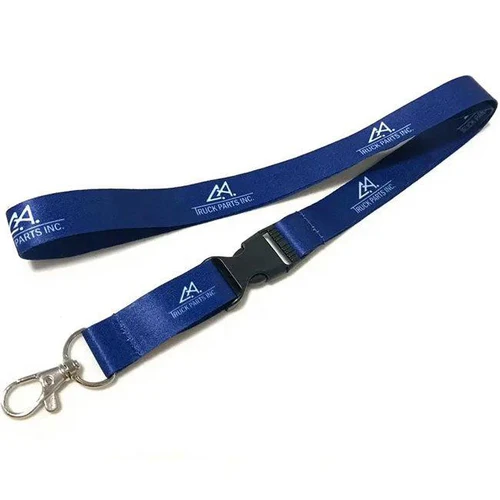
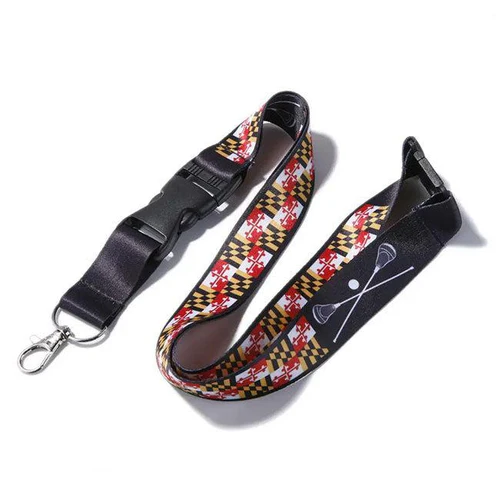
Detachable buckle vs breakaway lanyard refers to the difference between two separate lanyard features. A detachable buckle lets the lower part of the lanyard disconnect quickly so users can remove keys, ID holders, or tools without taking the entire strap off their neck. A breakaway lanyard has a safety release, usually near the neck, that pops open when the lanyard is pulled with enough force.
That distinction matters because many buyers choose based on price or appearance when they should be choosing based on risk level, daily handling, and user behavior. If your team works around machinery, students, patients, or crowded check-in lines, small hardware decisions can have outsized consequences.
Table of Contents
- The Core Difference Between These Two Lanyard Types
- How a Detachable Buckle Works
- How a Breakaway Lanyard Works
- Best Use Cases by Industry
- Quick Comparison Table
- Pros, Cons, and Limitations
- How to Choose the Right Option
- What We Have Seen at Best Patches
- What Is Changing in 2026
The Core Difference Between These Two Lanyard Types
Here is the short answer: a detachable buckle is a usability feature, and a breakaway clasp is a safety feature.
A detachable buckle sits lower on the lanyard and allows part of the assembly to be removed quickly. That is useful when someone needs to tap an access card, hand over keys, attach a scanner, or use a USB device without removing the entire lanyard.
A breakaway clasp is designed to release when force is applied, reducing the chance of choking or neck injury. It is especially relevant in environments where a lanyard could be snagged, grabbed, or pulled.
These features are not mutually exclusive. In fact, many of the best-performing custom lanyards combine both. But if you only choose one, you need to understand your primary goal first:
- Choose detachable when speed, convenience, and repeated handling matter most.
- Choose breakaway when user safety and compliance matter most.
- Choose both when the environment includes frequent badge use and elevated snag risk.
“Buyers often focus on attachment style before they define the job the lanyard needs to do. That reverses the decision process. Start with risk, then workflow, then hardware.”
How a Detachable Buckle Works
A detachable buckle is typically made from molded plastic and placed above the end fitting, often near a swivel hook or badge clip. The user presses or pulls the buckle to separate the lower attachment from the neck strap. This lets them bring a card or key closer to a scanner, lock, or workstation.
For office workers, hotel staff, warehouse pickers, and event teams, that convenience is a real productivity gain. According to the 2024 State of Access Control report from HID, organizations continue to prioritize frictionless credential use and faster user interactions at entry points. That aligns with why detachable buckles remain popular: they reduce awkward movement and speed up repetitive badge presentation.
Where detachable buckles shine
Detachable buckles work especially well when users need to repeatedly interact with something held at the end of the lanyard. Good examples include:
- Employee badges used on card readers several times a day
- Keys for supervisors, janitorial teams, and property managers
- Small tools or USB drives in tech support settings
- Trade show passes that are scanned often
- Retail key sets and back-room access cards
Where detachable buckles fall short
They are not meant to function as a safety release around the neck. If a lanyard gets caught in machinery or pulled during rough contact, a detachable buckle lower on the strap may not prevent injury. Another issue is hardware fatigue. Lower-cost detachable components can loosen over time, especially in high-volume use.

How a Breakaway Lanyard Works
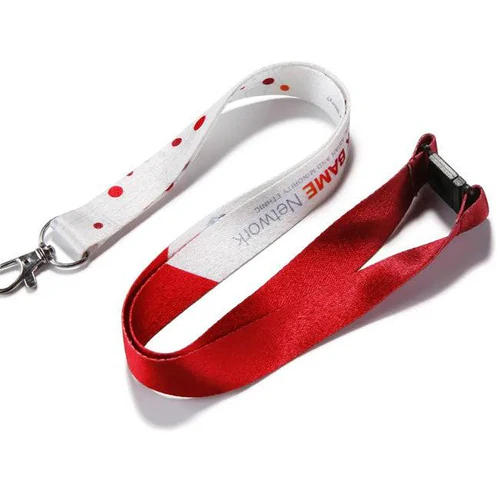
A breakaway lanyard includes a safety clasp, usually positioned behind the neck. If the lanyard is yanked or snagged, the clasp separates before dangerous pressure builds around the neck. This is why schools, healthcare facilities, manufacturing sites, and child-focused organizations often specify breakaway designs as a baseline requirement.
The value here is risk reduction. The U.S. Occupational Safety and Health Administration has long emphasized controlling caught-in and entanglement hazards in workplaces where moving equipment is present. While OSHA guidance does not revolve around branded lanyard buying decisions, the principle is clear: anything worn near machinery or moving parts deserves special scrutiny.
Where breakaway lanyards are the safer choice
Breakaway models are usually the better fit for environments such as:
- Schools where students may pull on one another’s badges
- Hospitals and clinics with fast-paced patient interaction
- Manufacturing floors with rotational or moving equipment nearby
- Warehouses with conveyors, carts, and narrow working spaces
- Care settings where staff may be grabbed unexpectedly
Where breakaway lanyards can be less ideal
The main tradeoff is that some wearers find breakaway clasps slightly less secure for aggressive movement. A low-quality clasp may release too easily or wear out prematurely. In customer-facing teams, that can be irritating if badges pop off during routine motion. So while breakaway is usually the safer route, product quality matters a lot.
“A breakaway feature should release under unsafe tension, not during normal walking and turning. The difference comes down to clasp engineering, testing, and quality control.”
Best Use Cases by Industry
The right lanyard depends on how people move, what they carry, and the level of safety exposure. Here is how we typically advise clients.
Offices and corporate campuses
For offices, detachable buckles are often the winner because employees constantly tap badges at doors, elevators, and parking entrances. If there is no major snag risk, detachable hardware can improve the user experience without adding unnecessary bulk. For larger campuses, combining detachable and breakaway features is often the best long-term choice.
Schools and universities
Educational environments usually benefit from breakaway lanyards first. Students are active, crowded hallways increase accidental pulling, and teachers often wear credentials all day. If staff also need to scan IDs frequently, a breakaway lanyard with a detachable buckle is usually the most balanced option.
Healthcare
Breakaway features are strongly preferred in hospitals, clinics, and care facilities. Nurses, technicians, and support staff move quickly, lean frequently, and interact closely with patients. Convenience matters, but neck safety matters more. A dual-feature build often makes the most sense.
Manufacturing and warehouse operations
Safety should lead the decision. In environments with moving equipment or snag points, breakaway lanyards are the safer default. Some sites avoid neck-worn credentials entirely in the highest-risk zones, which is worth considering during a hazard assessment.
Events and trade shows
For expos and conferences, detachable buckles tend to be very useful because badges are scanned often and attendees may need to present credentials quickly. For back-of-house crews doing setup and teardown, adding a breakaway feature is a smart upgrade.

Quick Comparison Table
| Feature | Detachable Buckle | Breakaway Lanyard | Best Business Scenario |
|---|---|---|---|
| Primary purpose | Quick removal of badge, keys, or tools | Safety release under tension | Corporate offices vs schools and healthcare |
| Typical placement | Lower part of lanyard near attachment | Back of neck or upper strap | Event passes vs factory badges |
| Main benefit | Convenience and workflow speed | Reduced choking or snag injury risk | Retail key access vs hospital staff IDs |
| Main limitation | Does not replace a safety release | Can feel less secure if clasp quality is poor | Fast scanning environments vs high-contact settings |
| Best combined option | Use with breakaway clasp for all-day wear | Use with detachable buckle for frequent badge handling | Universities, large campuses, and mixed-use workplaces |
Pros, Cons, and Limitations
Buyers get better outcomes when they stop asking which style is “better” in general and start asking which tradeoffs are acceptable for their environment.
Advantages of detachable buckles
- Faster access to cards, keys, and attached tools
- Less need to remove the whole lanyard
- Useful for jobs with repeated scanning or unlocking
- Can improve comfort during long shifts
Drawbacks of detachable buckles
- Not a substitute for neck safety release
- Plastic hardware quality varies widely
- Can fail sooner in rough environments if poorly made
Advantages of breakaway lanyards
- Better protection in snag or pulling incidents
- Often preferred for schools, healthcare, and industrial settings
- Supports safer wear in crowded or unpredictable environments
Drawbacks of breakaway lanyards
- Cheap clasps can release too easily or wear out
- Some users perceive them as less secure for heavy attachments
- Not all breakaway designs are tested to the same standard
There is also a branding angle. If your custom lanyards are part of your visual identity, adding both functions may slightly increase cost, but it usually improves user satisfaction and reduces complaints. That can matter more than shaving a few cents off unit price.
How to Choose the Right Option
If you need to make a purchasing decision this week, use this process.
- Map the environment. Identify whether the lanyard will be worn near machinery, in patient care, in crowded schools, or in low-risk office settings.
- List the attachment behavior. Note how often users need to scan, remove, hand off, or manipulate what hangs from the lanyard.
- Assess the carried load. Lightweight badge holders behave differently than heavy key rings or multi-tool attachments.
- Set the safety threshold. If there is meaningful snag risk, make breakaway a non-negotiable feature.
- Test real samples. Have actual users wear the lanyards for a few shifts before placing a large order.
- Review hardware quality. Buckles, clasps, hooks, and stitching often determine whether a lanyard lasts three months or two years.
According to a 2025 report from Grand View Research, the global ID card and access control ecosystem continues to grow as workplaces expand credential-based security and visitor management systems. That means lanyards are not fading out; they are becoming part of a more integrated physical access experience. Choosing the right hardware now can reduce reorders, replacements, and operational friction later.
What We Have Seen at Best Patches
At Best Patches, I have personally seen how often teams order the wrong lanyard because they focus on color and imprint first. One of our clients was a regional healthcare group that initially requested a standard detachable buckle style for all departments. On paper, it looked efficient because staff frequently needed to present badges. But after we asked about patient interaction and movement patterns, it became obvious that convenience alone was the wrong priority.
We recommended a breakaway lanyard with a detachable lower buckle for nurses, lab staff, and admissions personnel. After the pilot batch, their feedback was clear: staff still had fast badge access, but supervisors felt more confident about safety during busy shifts. The client later standardized that combination across multiple sites rather than using detachable-only lanyards.
I also worked with an event production company that assumed every crew member needed breakaway-only styles. During testing, stage managers and registration leads kept removing their entire lanyards to scan credentials and access restricted areas. We revised the spec to include detachable buckles for teams with heavy credential use, while keeping breakaway features in place for safety. That simple shift improved workflow and reduced badge handling complaints almost immediately.
Those projects reinforced the same lesson: the best answer to detachable buckle vs breakaway lanyard is often not either-or. It is role-specific design backed by actual use conditions.
What Is Changing in 2026
Several trends are shaping lanyard buying decisions in 2026.
Hybrid hardware is becoming the standard
More buyers want lanyards that combine detachable and breakaway functionality. This is especially true for universities, healthcare systems, convention centers, and enterprise campuses with mixed-risk environments.
Material quality matters more than novelty
There is growing demand for recycled polyester, better stitching, stronger clips, and more reliable molded components. Sustainability matters, but buyers are also less willing to accept eco claims if the hardware fails early.
Branding and safety are being evaluated together
Procurement teams increasingly want products that support culture, visibility, and safety at the same time. According to a 2024 Deloitte perspective on workforce operations and workplace design, organizations are paying closer attention to tools that shape daily employee experience. Lanyards may seem small, but they sit right at the intersection of function, identity, and compliance.
Conclusion
The main difference is straightforward: detachable buckles improve convenience, while breakaway lanyards improve safety. If your people regularly scan badges or handle keys, a detachable buckle can save time and reduce hassle. If there is any realistic risk of pulling, snagging, or contact around the neck, a breakaway feature should move to the top of your checklist.
For many organizations, the strongest answer is a lanyard that includes both features and matches the demands of each role. That gives you usability without ignoring risk.
Best Patches recommends these next steps:
- Audit how each team actually uses lanyards during a normal workday.
- Run a small wear test with detachable-only, breakaway-only, and combined samples.
- Standardize by department instead of forcing one lanyard setup across every role.
References
- HID — Access control and credential-use insights that support faster, lower-friction badge interactions.
- U.S. Occupational Safety and Health Administration — Workplace safety principles related to caught-in, entanglement, and wearable risk considerations.
- Grand View Research — 2025 market outlook showing continued growth in ID, credentialing, and access-related systems.
- Deloitte — 2024 workplace operations perspective highlighting the importance of practical tools in employee experience and safety.
FAQ
What is the difference between a detachable buckle and a breakaway lanyard?
-
A detachable buckle lets you remove the lower part of the lanyard to access keys, badges, or tools quickly. A breakaway lanyard has a safety clasp that opens under tension to reduce neck injury risk. One is mainly for convenience; the other is mainly for safety.
Which is better for schools and healthcare settings?
-
In most cases, breakaway lanyards are the better baseline for schools and healthcare because they add a safety release at the neck. If staff also need frequent badge access, a model with both breakaway and detachable features is often the most practical option.
Can a lanyard have both a detachable buckle and a breakaway clasp?
-
Yes. Many premium custom lanyards combine both features. The breakaway clasp handles safety at the neck, while the detachable buckle improves day-to-day convenience for scanning badges or removing keys.
Is detachable buckle vs breakaway lanyard an either-or choice?
-
Not always. The real answer depends on your environment. Low-risk offices may prefer detachable-only styles for convenience, while higher-risk environments should prioritize breakaway safety. Many organizations get the best result by combining both.
Are breakaway lanyards required in industrial workplaces?
-
Requirements vary by site policy and hazard profile, but breakaway lanyards are usually the safer choice where snagging or entanglement is possible. In some high-risk zones, employers may decide not to allow neck-worn lanyards at all.
Do detachable buckles wear out faster than standard lanyards?
-
They can, especially if the buckle is low quality or used heavily with weighty attachments. Better plastic molding, stronger joints, and proper load matching make a major difference in service life.