 Promotional Products




















Why this lanyard design matters
If you are asking how do detachable buckle lanyards work, you are probably trying to solve a practical problem: fast access without taking the whole lanyard off your neck. That matters in offices, schools, events, factories, hospitals, and retail environments where badges, keys, USB drives, or tools need to be detached in seconds.
Best Patches has worked with organizations that wanted lanyards to do more than just hold an ID card. They needed a safer, faster, more durable carrying system that reduced fumbling at doors, printers, lockers, and point-of-sale stations. A detachable buckle is one of the simplest hardware upgrades that changes how a lanyard performs all day.
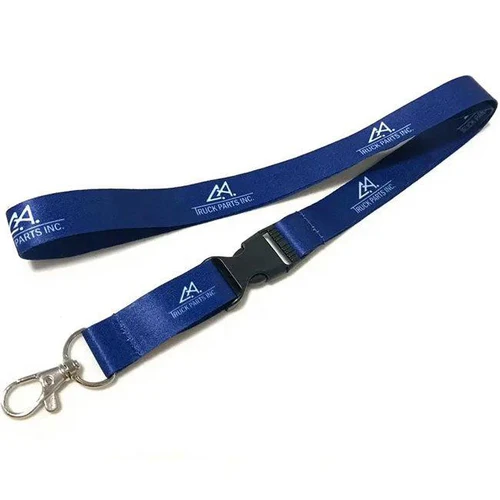
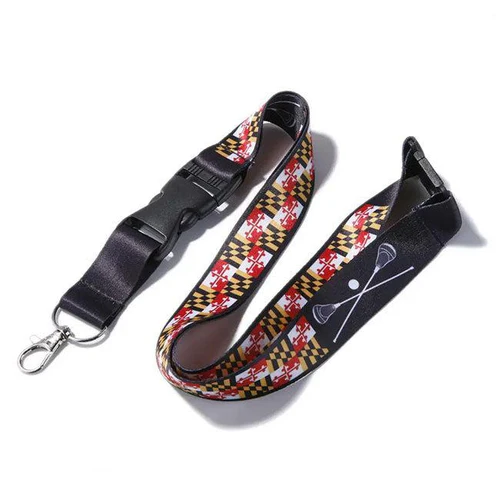
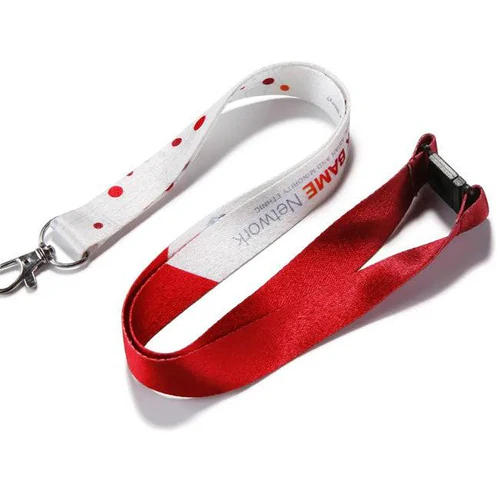
A detachable buckle lanyard is a neck strap with a quick-release connector built into the lower section. The buckle lets the user separate the end attachment from the main strap without removing the lanyard from the neck. In plain terms, it is a two-part system: the strap stays on, while the item clipped to the buckle comes off quickly.
That small mechanism has a big effect on convenience, workflow, and safety. But not every buckle is built the same, and not every use case should use the same setup. The details matter.
Table of Contents
- The basic mechanism behind a detachable buckle
- The key parts of a quick-release lanyard
- How the design works in real daily use
- Where detachable buckle lanyards perform best
- Detachable vs standard vs breakaway lanyards
- Materials, durability, and failure points
- How to choose the right buckle lanyard
- Common mistakes buyers make
- What we have seen at Best Patches
- What is changing in 2026
The basic mechanism behind a detachable buckle
A detachable buckle lanyard works through a male-and-female snap connection placed near the end of the strap. One side of the buckle stays attached to the neck loop. The other side connects to the badge holder, key ring, swivel hook, or accessory. When the user presses, pinches, or pulls the release points, the lower segment separates from the main strap.
The design sounds simple because it is. The effectiveness comes from how the hardware manages three jobs at once:
- Hold securely during movement
- Release quickly when the user needs access
- Reconnect repeatedly without loosening too soon
Most detachable buckles are made from molded plastic such as acetal or ABS. Better versions are engineered for repeated cycles and more consistent lock engagement. Lower-cost versions may still function well for promotions or short-term events, but they often show wear faster at the latch tabs.
In practical terms, the user wears the lanyard as normal. When they need to scan a badge, unlock a cabinet, use a USB, or hand over keys, they detach only the lower end. That saves time and reduces the awkward motion of lifting the entire lanyard over the head or leaning toward a scanner.
The key parts of a quick-release lanyard
To understand performance, it helps to break the lanyard into components. Each part affects comfort, durability, and speed.
Neck strap
This is usually polyester, nylon, tubular polyester, satin, woven material, or eco-friendly RPET. The width often ranges from 3/8 inch to 1 inch. Wider straps feel more premium and distribute weight better, while narrower straps are lighter and cheaper.
Detachable buckle
This is the defining feature. The buckle sits above the end fitting and creates the quick-release function. The tighter the manufacturing tolerance, the more reliable the snap fit tends to be over time.
End attachment
Common options include:
- Swivel hook for badge holders and key rings
- Split ring for keys
- Lobster clasp for accessories
- Bulldog clip for direct badge attachment
- Cell phone loop for lightweight tech items
Safety breakaway
Some lanyards also include a breakaway clasp behind the neck. This is different from the detachable buckle. The buckle is for convenience; the breakaway is for neck safety if the lanyard gets caught or pulled.
“People often confuse a quick-release buckle with a breakaway clasp. They solve different problems. One improves access. The other reduces choking or snag risk.”
How the design works in real daily use
Most buyers do not need a mechanical diagram. They need to know what happens during a normal day.
Picture an employee entering a secure building. Their badge sits in a holder attached to the lower buckle section. At the entry gate, they detach the badge segment, tap it at the reader, then click it back into place. Later, they use the same detached segment to access a file cabinet, sign out equipment, or connect a USB at a workstation.
That quick action reduces friction in tasks that repeat dozens of times per shift. In high-frequency environments, that matters. A 2024 report from the U.S. Bureau of Labor Statistics continued to show that repetitive tasks and workflow inefficiencies have measurable effects on productivity and worker frustration, especially in service and administrative roles. While lanyards are a small detail, reducing repeated motion and interruption is exactly the kind of operational improvement facilities teams look for.
Typical quick-release sequence
- Wear the lanyard with the buckle locked in place.
- Reach the lower connection point near the chest.
- Press or pull the buckle release tabs, depending on the design.
- Detach the badge, keys, or accessory without removing the neck strap.
- Use the item as needed.
- Reattach by aligning both sides and pushing until the buckle clicks.
The best designs make this motion feel obvious. If users have to look down every time, the buckle is technically working but poorly optimized for speed.
Where detachable buckle lanyards perform best
Detachable buckle lanyards are not automatically better for every situation, but they shine in environments where access speed and repeated handling matter.
Office and corporate access
Employees often need to tap badges several times a day. A detachable buckle allows easy scanning at entry points, elevators, and restricted rooms.
Trade shows and events
Event staff and exhibitors need to show credentials, exchange passes, or access equipment fast. A detachable end makes this less awkward in crowded spaces.
Schools and universities
Teachers, staff, and students may carry ID cards, whistle clips, classroom keys, and USB devices. The lower segment can be detached without removing the full lanyard in front of students or at doors.
Healthcare settings
Many clinicians and support staff use access badges all day. Depending on infection-control protocols and safety requirements, a detachable section can improve convenience, though breakaway compatibility is especially important in active environments.
Manufacturing and warehousing
Workers may need credentials for doors or check-out stations. Here, the right answer depends on machinery exposure. In some production zones, a lanyard may introduce snag risk, so site safety rules should always come first.
According to OSHA guidance on struck-by and caught-in hazards, wearable accessories can become dangerous around moving equipment. That is why detachable buckle lanyards should never be selected without reviewing the actual work environment. Convenience should not override safety.
Detachable vs standard vs breakaway lanyards
Buyers often compare styles only by price. That is a mistake. The better comparison is workflow plus safety.
| Lanyard Type | Best Business Scenario | Main Advantage | Main Limitation |
|---|---|---|---|
| Standard lanyard | Basic visitor badges at small offices | Lowest cost and simple construction | No quick detachment for frequent use |
| Detachable buckle lanyard | Corporate staff with repeated badge scans | Fast access without removing neck strap | Buckle quality varies by supplier |
| Breakaway lanyard | Schools, hospitals, active public-facing teams | Improved neck safety if pulled | Does not improve item access by itself |
| Detachable plus breakaway | Hospitals, schools, large events | Convenience and added safety in one product | Slightly higher cost |
| Retractable badge reel plus lanyard | Security desks, hospitals, office towers | Great for frequent scans with less detaching | More components can mean more wear points |
Materials, durability, and failure points
If you are sourcing custom lanyards, the buckle gets attention, but the full system determines lifespan.
Strap material affects comfort and branding
Polyester remains the most common because it balances cost, print quality, and durability. Nylon can feel smoother and more premium. Woven options create a textured look but may limit complex color gradients. RPET has gained traction for sustainability-focused organizations.
A 2025 McKinsey report on consumer packaging and sustainability preferences noted that buyers continue to reward practical sustainability claims when the product still performs well. That applies to promotional products too. Eco-material lanyards can support brand messaging, but only if the hardware and stitching still hold up in daily use.
Buckle material affects cycle life
The buckle is repeatedly snapped and released, so poor resin quality or weak mold design leads to cracking, tab fatigue, or sloppy fit. The most common failure points are:
- Latch tabs that lose tension
- Hairline cracks at the buckle base
- Weak stitching above the buckle
- Deformation from heat or rough storage
Attachment hardware affects real load capacity
A strong buckle means little if the swivel hook bends or the split ring opens under stress. For keys, flash drives, and small tools, hardware choice should match actual weight and usage frequency.
“A lanyard failure rarely starts with the printed strap. It usually starts at the moving parts: buckle tabs, clips, rings, or stitching transitions.”
How to choose the right buckle lanyard
Buyers usually ask about color and logo placement first. A better buying sequence starts with use case.
Ask these questions before ordering
- Will users detach the lower section a few times a week or dozens of times a day?
- Will the lanyard carry only a badge, or also keys and accessories?
- Does the setting require a safety breakaway?
- Is the order for a short event, long-term staff use, or resale?
- Does the brand need premium appearance, eco positioning, or lowest possible cost?
Recommended selection logic
- Define the actual task frequency.
- Choose the strap width based on comfort and visual branding.
- Select detachable buckle quality based on expected cycle count.
- Add breakaway functionality if the environment calls for it.
- Match the end fitting to the carried item.
- Test a sample before scaling the full order.
Common mistakes buyers make
Detachable buckle lanyards are straightforward, but procurement teams still make repeatable errors.
Choosing by photo instead of function
Many product images hide hardware quality differences. Two buckles can look nearly identical online while performing very differently after a month of use.
Ignoring the environment
A lanyard for a school front office and a lanyard for a warehouse floor should not be selected the same way. Heat, moisture, cleaning chemicals, movement, and machinery exposure all matter.
Overloading the lower segment
Quick-release buckles are not designed for every weight class. A badge and a key are fine. A heavy multi-tool, access fob cluster, and mini flashlight may not be.
Skipping user testing
People with gloves, limited dexterity, or fast-paced roles may struggle with certain release shapes. A five-minute sample test can prevent a frustrating bulk order.
Forgetting the difference between convenience and safety
The detachable buckle is not a substitute for a breakaway clasp. If there is any realistic snag or pull risk around the neck, evaluate breakaway options separately.
What we have seen at Best Patches
At Best Patches, we have seen how small hardware choices change daily user behavior more than clients expect. One customer in the education sector initially requested standard polyester lanyards because they were trying to keep costs down. After we discussed teacher workflow, it became clear that staff were constantly removing badges to open interior doors and access storage rooms.
I recommended a detachable buckle plus breakaway configuration instead of the cheapest standard option. After the sample round, the customer told us the staff preferred the quick-release version immediately because it felt faster and less annoying during a full school day. What stood out was not just convenience. It reduced badge twisting, stretching, and the habit of clipping badges to pockets when the standard lanyards got irritating.
In another project, I worked with an event operations team that needed custom branded lanyards for staff, vendors, and backstage access. They wanted premium print quality, but their bigger issue was handoff speed at checkpoints. We built a detachable buckle design with swivel hooks so credentials could be detached, checked, and reattached fast in crowded areas. The event team later reordered because the setup helped keep lines moving while maintaining a more polished appearance than improvised badge handling.
Those projects reinforced the same lesson: people do not remember lanyards until lanyards slow them down. Good hardware disappears into the workflow. Bad hardware becomes a daily complaint.
What is changing in 2026
Lanyards are simple products, but buyer expectations are getting more specific. In 2026, three trends are shaping demand.
Higher demand for hybrid safety designs
More buyers want detachable and breakaway features together rather than choosing one. This is especially common in education, healthcare, and public event settings.
Stronger interest in sustainable materials
Recycled PET straps and lower-impact packaging are becoming standard requests, especially for universities, nonprofits, and brand-conscious companies. Sustainability claims now get more scrutiny, so material transparency matters.
Branding expectations are rising
Buyers want lanyards that feel like part of a brand system, not just a utility item. That means cleaner dye-sublimation, better edge finishing, more premium hardware color options, and packaging fit for onboarding kits or event welcome sets.
According to a 2024 report by the Promotional Products Association International, usefulness remains one of the main reasons recipients keep branded merchandise. That data matters here: a detachable buckle lanyard has a better chance of being used consistently because it solves a real operational need, not just a branding objective.
Conclusion
So, how do detachable buckle lanyards work? They use a quick-release connector that separates the lower attachment from the main neck strap, making badges, keys, and accessories easier to access without removing the entire lanyard. The real value is not the buckle alone. It is the combination of buckle quality, strap material, attachment hardware, and whether the environment also calls for a breakaway safety feature.
For many organizations, this design is the sweet spot between convenience and control. It speeds up repeated tasks, improves day-to-day usability, and can make branded lanyards feel much more intentional.
Best Patches recommends these next steps:
- Audit how often your team actually detaches or scans badges during a normal day.
- Request a sample with both detachable and detachable-plus-breakaway configurations.
- Match the end fitting and buckle strength to the real weight and use pattern of the carried items.
References
- Occupational Safety and Health Administration (OSHA) — Guidance on workplace hazards and the importance of evaluating snag and caught-in risks in active environments.
- U.S. Bureau of Labor Statistics — Ongoing labor and workflow context that supports the value of reducing repetitive friction in day-to-day tasks.
- McKinsey & Company, 2025 sustainability reporting — Insights into continued buyer interest in sustainable materials when product performance remains strong.
- Promotional Products Association International, 2024 — Data highlighting usefulness as a major driver of retained branded merchandise.
FAQ
How do detachable buckle lanyards work in everyday use?
A detachable buckle lanyard uses a quick-release connector near the end of the strap. The neck loop stays on, while the lower section holding your badge, keys, or accessory snaps off and back on quickly. That makes it easier to scan IDs, unlock doors, or hand over credentials without removing the full lanyard.
Is a detachable buckle the same as a breakaway clasp?
No. A detachable buckle is mainly for convenience and quick access. A breakaway clasp is a safety feature designed to separate if the lanyard is pulled hard around the neck. Many workplaces choose a lanyard that includes both features.
Are detachable buckle lanyards durable enough for keys?
Usually yes, for light to moderate key loads. The better question is how many keys and how often they are used. A few office keys are fine on most quality lanyards. Heavier tool sets or bulky key bundles may require stronger hardware and sample testing first.
What attachment works best with a detachable buckle lanyard?
A swivel hook is the most versatile option for badges and lightweight accessories because it allows rotation and reduces twisting. Split rings work well for keys, while bulldog clips can be useful for direct badge attachment when speed matters more than flexibility.
Are detachable buckle lanyards good for schools and hospitals?
Yes, often they are a strong fit because staff need repeated badge access during the day. In these settings, many buyers prefer a detachable buckle combined with a breakaway clasp to support both convenience and added safety.
How can I tell if a buckle lanyard is low quality?
Watch for loose snap fit, brittle plastic, rough molding edges, weak stitching near the buckle, and hardware that bends too easily. If the buckle does not reconnect cleanly or feels inconsistent during testing, it will probably frustrate users after bulk rollout.