 Promotional Products





























Introduction
If your lanyard setup keeps failing at the exact wrong moment, the problem usually is not the strap. It is the attachment. The right detachable lanyard attachments affect speed, security, comfort, and even how professional your team looks in daily use. Whether you carry badges, keys, tools, or a phone, one weak connector can turn a simple carry system into a daily annoyance.
That is why buyers, event planners, schools, and operations teams increasingly focus on attachment hardware first. At Best Patches, we have seen clients spend weeks choosing colors and logos, then realize the attachment type determines whether the final product actually works in the field. A stylish lanyard with the wrong end fitting is still the wrong product.
Detachable lanyard attachments are the removable end components that connect a lanyard to an item such as an ID badge, key set, phone tab, USB drive, or tool. Common options include swivel hooks, split rings, badge reels, and phone loops, each designed for different levels of access, weight, and security.
Choosing the best attachment comes down to three things: what you carry, how often you detach it, and how much failure risk your environment can tolerate. That is where most smart buying decisions begin.
Table of Contents
- What Detachable Lanyard Attachments Actually Do
- The Main Types and Where They Fit Best
- Quick Comparison by Real Business Use
- How to Choose the Right Attachment
- Materials, Durability, and Safety Factors
- What We Learned at Best Patches
- Common Buying Mistakes to Avoid
- What Is Changing in 2026
- Final Takeaways and Next Actions
- References
What Detachable Lanyard Attachments Actually Do
A detachable attachment is not just a connector. It controls how an item is accessed, how it hangs, how much twisting it can tolerate, and how safely it releases under load. In practical terms, that means it influences user behavior every single day.
For example, a hospital visitor badge needs quick presentation and low snag risk. A warehouse key set needs strength and easy removal. A phone tether used at trade shows needs reliable retention while still allowing a demo rep to lift the phone naturally. These are very different jobs, so they should not share the same hardware by default.
According to IBM’s 2024 Cost of a Data Breach Report, stolen or compromised credentials remain one of the most common pathways in security incidents. That matters here because badge access systems are only as reliable as the physical carry method. A badge that is constantly dropped, forgotten, or detached too easily creates avoidable operational risk.
There is also a human-factors angle. Friction in small repetitive actions adds up fast. If employees need to unclip, scan, reattach, and move all day, the connector should support that motion instead of fighting it.
The Main Types and Where They Fit Best
Swivel Hooks
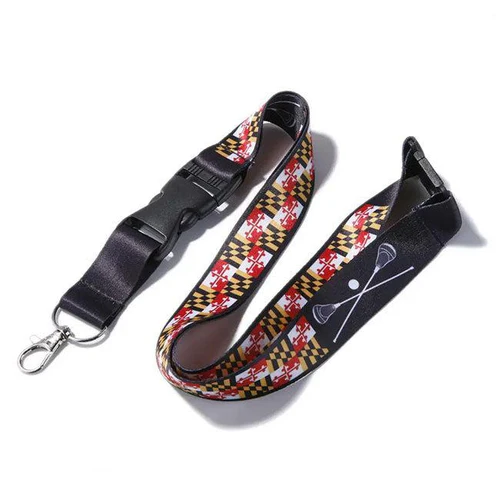
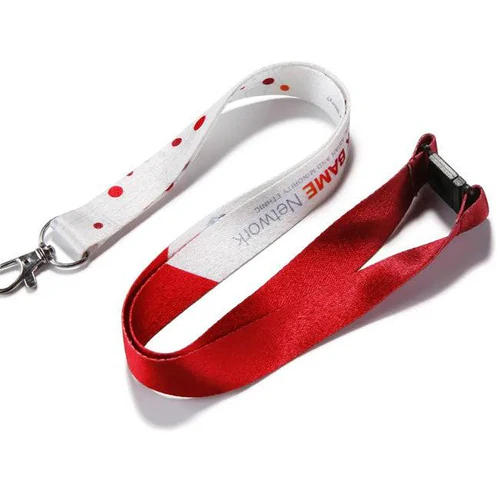
Swivel hooks are one of the most versatile detachable lanyard attachments. They rotate, reduce tangling, and clip on and off quickly. These are often the best all-around option for keys, badge holders, small tools, and event credentials.
The main advantage is movement. Because the hook rotates, the attached item lies more naturally against the body and is less likely to twist the strap. The tradeoff is that low-grade spring gates can wear out faster in high-use settings.
Split Rings
Split rings are simple, secure, and familiar. They are ideal for keys, USB drives, and lightweight accessories that should stay attached long term. They are less convenient when frequent removal is required, but they are hard to beat for low-cost reliability.
The weakness is access speed. Anyone who has fought with a split ring using fingernails knows it is not built for constant change. For static carry, though, it works extremely well.
Badge Reels
Badge reels add extension rather than full detachment. They are especially useful for offices, hospitals, schools, and secure facilities where users need to tap, scan, or display ID cards repeatedly without unclipping them. Retractable motion improves convenience and cuts down on card drops.
However, reel performance depends heavily on spring quality and cord strength. Cheap reels often fail at the retraction point long before the lanyard strap shows wear.
Phone Loops and Tether Tabs
Phone loops have surged in popularity because people now use phones for payments, event check-ins, mobile credentialing, content capture, and team communication. A phone tab or loop attaches through the case or around the device and connects to the lanyard via a detachable clip.
This setup is excellent for trade shows, field teams, retail associates, and creators working in motion. The caution is compatibility. Some phone cases block tether tabs or create pressure points near charging ports.
Lobster Clasps and Trigger Clips
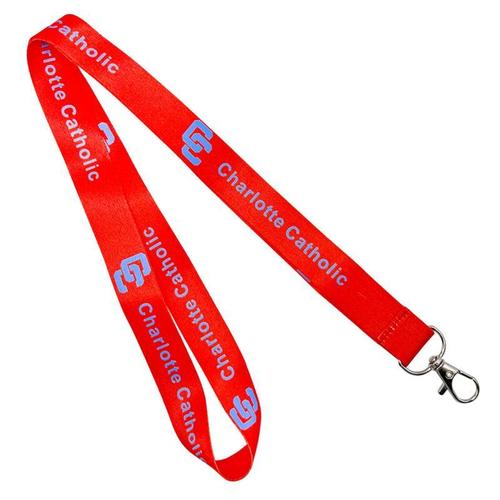
These are common when buyers want a slightly more premium look than a basic hook. They are secure, compact, and easy to operate with one hand. Trigger clips tend to be favored in branded promotional lanyards because they feel familiar and polished.
Quick-Release Buckles
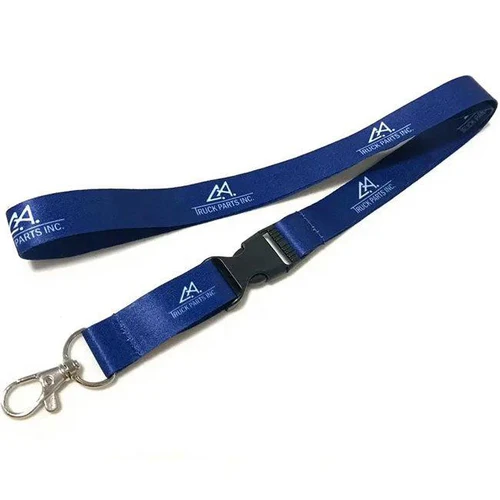
Strictly speaking, these often sit between the strap sections rather than at the item end, but they matter in detachable systems. Quick-release buckles let users separate the lower section from the neck strap fast. They are especially useful for safety, sanitation workflows, and anyone who needs to hand off credentials without removing the entire lanyard.
“The best attachment is the one that matches the user’s motion pattern, not just the product catalog photo. If the person scans, clips, and moves all day, hardware choice becomes a workflow decision.”
Quick Comparison by Real Business Use
| Attachment Type | Best Business Scenario | Main Strength | Main Limitation |
|---|---|---|---|
| Swivel Hook | Trade show staff managing badges, keys, and mini tools | Fast detach and reduced twisting | Low-quality springs wear out in heavy use |
| Split Ring | Property managers carrying permanent key sets | Secure and low cost | Slow to remove or swap |
| Badge Reel | Healthcare and office access control teams | Easy scanning without unclipping | Retractor failure on cheap models |
| Phone Loop | Retail associates and event content teams | Hands-free phone security | Case compatibility can be inconsistent |
| Quick-Release Buckle | Factories, schools, and multi-user visitor systems | Fast separation and safer handoff | Not always enough on its own for item-end security |
How to Choose the Right Attachment
Most teams choose based on appearance first and function second. That order should be reversed. Start with the object, the task frequency, and the environment.
Ask These Questions Before You Order
- What item will the lanyard carry: badge, keys, phone, tool, or multi-item bundle?
- How often will the item be detached, scanned, or presented?
- Does the environment involve moisture, dust, chemicals, or high motion?
- Is silent operation important, such as in healthcare or classrooms?
- Does the user need one-handed access?
- Is breakaway safety required by policy?
- What is the acceptable replacement cycle: monthly, quarterly, or yearly?
A Simple Selection Process
- List the exact item or items the attachment must support and note the weight.
- Map how often the user interacts with that item in a normal day.
- Choose the function category: fixed, retractable, or detachable.
- Match hardware material to the environment, especially if corrosion or repeated pulling is likely.
- Test samples with real users before placing a full branded order.
According to the 2024 ASIS International trends coverage on physical security management, organizations are paying closer attention to usability in access systems because user friction often leads to workarounds. In plain language, if badge carry is irritating, people stop using it properly. That is exactly why attachment choice matters beyond convenience.
Materials, Durability, and Safety Factors
Hardware quality is often hidden behind product photos, but it should be one of the first things you verify with a supplier. Zinc alloy, stainless steel, plated iron, and plastic all behave differently under repeated strain.
Stainless steel generally resists corrosion better and suits healthcare, outdoor events, and humid environments. Zinc alloy offers a good balance of appearance and durability for premium branded work. Basic plated metal is affordable but may chip or rust over time. Plastic parts can reduce weight and cost, but they should be reserved for low-stress applications unless the polymer grade is clearly specified.
Safety matters too. Neck lanyards used in schools, factories, and healthcare settings often need breakaway features. A detachable lower section does not replace a proper breakaway neck closure. They solve different problems. One supports access and handoff; the other reduces strangulation risk if the lanyard gets snagged.
There is also a branding issue here. Cheap hardware sends a signal, especially in client-facing settings. When the attachment squeaks, flakes, jams, or breaks, people tend to associate that failure with the brand printed on the strap.
“A lanyard is a small object, but it lives at the intersection of branding, security, and usability. The attachment hardware is where those three priorities either align or fall apart.”
What We Learned at Best Patches
At Best Patches, we have worked with customers who originally asked for “standard clips” without a second thought. In one event project, the client needed branded lanyards for a three-day expo where staff carried ID cards, booth keys, and phones. Their first idea was a simple split ring because it looked inexpensive and durable on paper.
I pushed back because I had seen that setup fail in fast-paced convention halls. Staff would need to present badges constantly, open storage, and use their phones for lead capture. We built sample sets with swivel hooks and a phone tether option instead. During the test run, the client’s team immediately noticed they moved faster and stopped dropping devices during booth setup. That single hardware change made the final order more practical without altering the brand look.
In another project, I worked with a school program that needed lanyards for faculty and rotating visitors. Their old reels snapped often, and replacements were becoming a hidden budget drain. We reviewed actual use patterns and moved to a stronger reel body for staff, while assigning quick-release clip systems to visitors for easier handoff and collection. The result was fewer failures and better control over temporary credentials.
Those experiences reinforced a simple rule: the “best” detachable lanyard attachments are never universal. The best option is the one that fits the actual motion, weight, and risk of the job.
Common Buying Mistakes to Avoid
Teams often repeat the same avoidable errors when sourcing lanyards at scale.
- Choosing by unit price alone instead of total replacement cost
- Using one attachment type for very different user groups
- Skipping sample testing with real devices or badge holders
- Ignoring metal finish quality and corrosion resistance
- Assuming all phone loops fit every case setup
- Confusing breakaway neck safety with detachable end hardware
- Overloading reels with keys or tools they were never designed to carry
Another issue is underestimating noise. Metal-on-metal hardware can rattle in quiet environments. That might not matter at a festival, but it absolutely matters in a clinic, classroom, or museum.
According to Statista’s 2025 outlook on smartphone dependence in work and personal settings, mobile devices continue to dominate daily task management and communication. That trend makes phone-compatible lanyard systems more relevant, but also raises the stakes for choosing secure tether solutions rather than decorative loops with weak anchors.
What Is Changing in 2026
The attachment market is moving in a few clear directions. First, more buyers want modular systems. Instead of one fixed configuration, they want a branded lanyard that can switch between badge, keys, sanitizer, phone, or access token depending on the role. That favors swivel clips, mini buckles, and mixed-hardware kits.
Second, phone carry is no longer niche. Mobile credentials, QR check-ins, point-of-sale apps, and creator workflows have made phone loops and tabs a serious category rather than an accessory add-on. Expect better cross-device compatibility and more anti-drop features in 2026 orders.
Third, procurement teams are asking harder questions about lifecycle value. A slightly more expensive attachment with lower failure rates usually wins if the program is large enough. This is especially true for schools, healthcare groups, venues, and enterprise event programs.
Finally, branding standards are rising. Buyers want hardware that matches the polish of the printed lanyard. Matte black clips, cleaner finishes, and premium-feel reels are becoming more common because they improve perceived quality without dramatically increasing cost.
Final Takeaways and Next Actions
Detachable lanyard attachments are not a minor detail. They shape daily usability, product lifespan, brand perception, and even access-control discipline. Hooks offer speed, split rings offer security, badge reels support repeated scanning, and phone loops solve modern mobility needs. The right answer depends on task frequency, carried weight, environment, and safety requirements.
Best Patches recommends three practical next steps:
- Audit your current lanyard use by role, not by department name alone.
- Request physical samples of two or three attachment styles before placing a bulk order.
- Pair your branding decision with a hardware decision so the final product performs as well as it looks.
References
- IBM Cost of a Data Breach Report 2024 — Provided current data on credential-related security risk and the operational importance of reliable access handling.
- ASIS International 2024 security management coverage — Supported the point that usability and compliance are closely linked in physical access systems.
- Statista 2025 smartphone usage outlook — Reinforced the growing role of phone-compatible lanyard systems in work and event environments.
FAQ
What are detachable lanyard attachments used for?
They connect a lanyard to items like ID badges, keys, phones, USB drives, or small tools while allowing easy removal, extension, or rotation. The right attachment improves convenience, safety, and durability.
Which detachable lanyard attachments are best for ID badges?
Badge reels are usually best when users need to scan or show credentials frequently. Swivel hooks also work well when the badge holder needs to be detached or replaced quickly.
Are phone loops secure enough for everyday work use?
Yes, if you use a quality tether tab or loop that matches the phone case and load requirements. Cheap decorative loops are risky for field work, events, or retail teams that handle phones constantly.
What is the most durable attachment for keys?
Split rings are often the most durable for permanent key carry because they are simple and hard to open accidentally. If faster removal is needed, a high-quality swivel or trigger hook is a better balance.
Do I need both a breakaway clasp and a detachable end piece?
Often, yes. A breakaway clasp improves neck safety if the lanyard is snagged, while a detachable end piece helps with access, scanning, and item swaps. They serve different functions.
How do I choose detachable lanyard attachments for a large custom order?
Start with user roles, item types, and daily motion patterns. Then request samples, test them with actual badges or devices, and compare not just price but expected replacement rate and usability.