 Promotional Products





















Introduction
If you are choosing a detachable lanyard for IDs, keys, event badges, or daily work gear, the wrong width causes problems fast. A detachable lanyard width that is too narrow can twist, dig into the neck, and feel flimsy around a quick-release buckle. Too wide, and it can look bulky, cost more, and overwhelm smaller badge attachments.
That is why buyers keep asking the same practical question: what width actually works best with a detachable buckle? At Best Patches, we have seen this decision affect comfort, branding space, print clarity, hardware balance, and long-term wear. The best answer usually depends on what the lanyard carries, who wears it, and how often the buckle gets used.
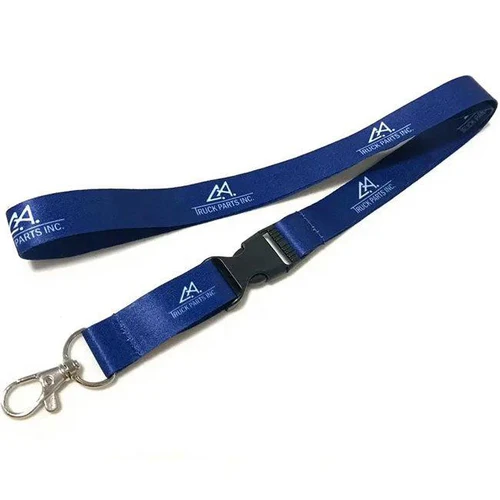
Detachable lanyard width refers to the strap width of a lanyard that includes a quick-release or breakaway buckle section. Common widths are 3/8 inch, 1/2 inch, 5/8 inch, 3/4 inch, and 1 inch, and each width changes comfort, durability, and visual impact.
Table of Contents
- Why Width Matters More With a Detachable Buckle
- The Most Common Widths and What They Do Best
- The Best Overall Width for Most Buyers
- How to Match Width to Use Case
- How Materials and Hardware Change the Answer
- Width Comparison by Business Scenario
- What We Have Seen at Best Patches
- Mistakes That Lead to the Wrong Width Choice
- What Is Changing in 2026
- Final Answer and Buying Checklist
Why Width Matters More With a Detachable Buckle
A detachable buckle changes the performance of a lanyard. On a basic one-piece lanyard, the strap simply supports the weight of the item. On a quick-release model, the buckle creates an extra stress point, adds hardware weight, and introduces repeated open-close motion. That means width is not just a style decision. It directly affects how stable the lanyard feels in use.
Narrow straps tend to work when the attached item is light, such as a single access card or a small key. But when users clip on several keys, a USB, sanitizer holder, or tools, a thin strap often feels underbuilt. Wider straps spread weight better and usually keep the buckle from feeling top-heavy or awkward.
According to the Promotional Products Association International 2024 market research, wearability and daily utility remain two of the strongest drivers of retention for branded carry items. That matters because a lanyard that feels annoying gets removed, stuffed into a drawer, or replaced quickly. Width plays a huge role in whether people keep wearing it.
“The best detachable lanyards feel balanced. The strap width and the buckle size should look and perform like they belong together, not like two parts forced into one product.”
What width changes in real-world use
- Neck comfort during long wear
- How much printed branding stays readable
- Resistance to twisting and rolling
- Compatibility with buckle and clip hardware
- Overall cost, especially at higher quantities
- Visual impression for corporate, school, retail, or event use

The Most Common Widths and What They Do Best
Most detachable lanyards are sold in a handful of standard widths. Each one has a natural sweet spot.
3/8 inch
This is slim, lightweight, and low-cost. It works for very light-duty applications, such as single cards, temporary visitor passes, or minimalist event use. The downside is that it twists easily and offers limited print space. With a detachable buckle, 3/8 inch can feel too delicate unless the hardware is also small and lightweight.
1/2 inch
For many buyers, this is the entry point for a practical detachable lanyard width. It is still sleek, but more stable than 3/8 inch. It suits schools, office badges, and promotional giveaways where comfort and price need to stay balanced.
5/8 inch
This width is often overlooked, but it is one of the smartest options for detachable styles. It offers noticeably better comfort and print presence than 1/2 inch without becoming bulky. For mixed-use needs, this width performs well.
3/4 inch
This is usually the safest all-around answer. It provides strong visual branding, good comfort, and enough structure to pair naturally with quick-release hardware. If someone asks for the best default detachable lanyard width, 3/4 inch is often the recommendation.
1 inch
This width creates a premium, bold look and excellent print visibility. It works for high-visibility branding, trade shows, team credentials, and heavier attachments. But it can feel oversized for lightweight daily badge use, especially for smaller wearers.
The Best Overall Width for Most Buyers
If you want the short answer, 3/4 inch is the best detachable lanyard width for most buyers in 2026. It balances comfort, strength, buckle compatibility, and branding space better than the other common widths.
Why not 1/2 inch? Because detachable buckles create extra visual and structural complexity, and 1/2 inch can start to feel narrow once real-life accessories get added. Why not 1 inch? Because many users do not need that much strap, and wider lanyards can feel excessive for daily office use.
So if you are buying for a broad audience and do not have highly specific requirements, 3/4 inch is usually the best default. It feels substantial without being heavy, carries logos well, and works with common clips and release hardware.
When another width beats 3/4 inch
- Choose 1/2 inch if the budget is tight and the lanyard carries only a card or light badge.
- Choose 5/8 inch if you want a clean middle ground with better comfort than 1/2 inch.
- Choose 1 inch if brand visibility is a top priority or the detachable end will carry multiple accessories.
- Choose 3/8 inch only for very lightweight, short-term, or highly price-sensitive use.
How to Match Width to Use Case
The right width depends more on use case than preference. A school district, a music festival, a hospital, and a warehouse team may all need detachable buckles, but they should not all order the same width automatically.
Office and corporate IDs
Most office teams do best with 1/2 inch to 3/4 inch. If the badge is the only attachment, 1/2 inch can work nicely. If you want stronger logo visibility or a more premium feel, move to 3/4 inch.
Schools and campuses
Schools usually need comfort, affordability, and durability. We often recommend 1/2 inch or 5/8 inch for students and 3/4 inch for staff, especially when keys are involved.
Trade shows and events
For event credentials, the lanyard is both a carrying tool and a visual branding asset. That makes 3/4 inch or 1 inch the strongest choice. Wider straps display sponsor names and event branding much better from a distance.
Industrial and facilities use
If the detachable end holds access fobs, keys, or small tools, a narrower strap usually underperforms over time. In these settings, 3/4 inch or 1 inch is safer.
Retail and hospitality
Front-facing staff benefit from a neat, polished lanyard that does not look too technical. 5/8 inch and 3/4 inch often work best, depending on how much hardware is attached.
“Width should follow function. The more often the quick-release gets used, and the more weight it carries, the less forgiving a narrow lanyard becomes.”
How Materials and Hardware Change the Answer
Width does not act alone. Material thickness, weave density, print method, and buckle quality can shift the ideal choice.
Polyester vs. nylon
Polyester is common for promotional lanyards because it prints well and stays cost-effective. Nylon often feels smoother and stronger, which can let a slightly narrower width still feel solid. That said, polyester at 3/4 inch usually outperforms nylon at 3/8 inch for detachable applications simply because the structure is broader.
Flat weave vs. tubular styles
Tubular lanyards can feel softer, but they may not present logos as crisply. Flat woven styles often look sharper and feel more stable with detachable hardware. If your branding matters, a 5/8 inch or 3/4 inch flat style usually gives the best result.
Buckle size and clip style
A large plastic quick-release clipped onto a very narrow strap tends to look awkward and wear unevenly. The visual ratio matters. Hardware should feel proportional to the strap width, and the end attachment should not overpower the detachable section.
According to a 2025 report from ASI Central on promotional product buyer preferences, practical quality cues such as stronger hardware and longer usability are increasingly influencing repeat orders. That supports the idea that width and hardware should be selected together, not separately.
Width Comparison by Business Scenario
| Business Scenario | Recommended Width | Why It Works | Watch-Out |
|---|---|---|---|
| Corporate office badges | 1/2 inch to 3/4 inch | Comfortable for daily wear with enough space for logo and employee color coding | 1/2 inch may twist if staff add keys or tools |
| School staff and student IDs | 1/2 inch or 5/8 inch | Affordable, lightweight, and practical for card access systems | Very narrow styles wear out faster with rough use |
| Trade shows and conferences | 3/4 inch or 1 inch | Better sponsor visibility and stronger premium look in photos | 1 inch can feel bulky for all-day wear |
| Warehouse and facilities teams | 3/4 inch | Balances strength, comfort, and hardware stability for heavier attachments | Cheap buckles can still fail even with the right width |
| Retail and hospitality uniforms | 5/8 inch to 3/4 inch | Looks polished while handling ID, key, or cardholder use | Overly wide straps may clash with uniform styling |
What We Have Seen at Best Patches
At Best Patches, we have worked with buyers who came in focused on color and logo placement, then realized width was the real issue after a failed previous order. One client in the events space had been using 1/2 inch detachable lanyards for multi-day expos. On paper, the choice looked efficient. In practice, the strap rolled, the buckle felt oversized, and sponsor logos were hard to read in photos.
I remember reviewing their sample set and immediately noticing the mismatch between the hardware and the strap. We recommended moving to a 3/4 inch flat polyester lanyard with a better-proportioned detachable buckle. After the switch, they told us the lanyards felt more comfortable, looked sharper on attendees, and gave sponsors better visibility. That is the kind of change that seems small until it affects an entire event floor.
In another case, we worked with a school program that initially wanted 3/4 inch for everyone because it sounded safer. After discussing the actual use, we split the order: 1/2 inch for students carrying only IDs, and 3/4 inch for staff carrying keys and access fobs. I liked that solution because it respected how people really used the product instead of forcing one width across every role.
Those projects reinforced the same lesson: there is no universal best width in the abstract, but there is a best width for a specific workload, audience, and branding need.
Mistakes That Lead to the Wrong Width Choice
Buyers usually get detachable lanyard width wrong for predictable reasons. The good news is that these mistakes are easy to avoid.
Choosing by price only
Narrower widths may save money per unit, but if the lanyard feels cheap or wears out faster, the value disappears. For internal use, replacement costs add up. For public-facing use, the brand impression suffers.
Ignoring attachment weight
A badge alone is not the same as a badge plus keys plus a sanitizer holder. Width should be based on what hangs from the detachable section in actual use.
Forgetting print readability
If your logo includes a long company name, a slogan, or fine detail, narrow widths restrict clarity. A cleaner print on a wider strap often produces better long-term brand recall.
Overbuilding for simple use
On the other side, some buyers assume wider always means better. It does not. For a simple visitor badge or short-term conference access pass, a 1 inch strap may feel unnecessary and overly expensive.
Data from the 2024 Advertising Specialty Institute buyer trend coverage points to a continued preference for products that combine branding with daily usefulness. That means practical optimization matters more than oversized specs. The best lanyard is not the biggest one. It is the one people actually keep wearing.
What Is Changing in 2026
The lanyard category is getting more selective, not more complicated. Buyers are paying closer attention to comfort, sustainability, and quality consistency. In 2026, detachable lanyards are increasingly expected to function as part of a broader kit that may include badge holders, retractable reels, RFID cards, and accessories.
That shift favors widths that can adapt. We expect 5/8 inch and 3/4 inch to remain the strongest choices because they sit in the practical middle. They are wide enough to support better branding and improved wearability, but not so wide that they become niche.
Another change is visual minimalism. Some brands want a cleaner strap with less clutter, which means width has to carry more of the perceived quality. When the design is simpler, the physical proportions become more obvious. If the buckle is chunky and the strap is too thin, users notice it immediately.
Final Answer and Buying Checklist
For most people, 3/4 inch is the best detachable lanyard width because it offers the strongest blend of comfort, durability, branding space, and buckle balance. If your use is lighter and budget-sensitive, 1/2 inch or 5/8 inch can work well. If your branding needs are big or the detachable end carries heavier items, 1 inch may be the better move.
Best Patches recommends three next steps before placing an order:
- List exactly what the detachable end will carry, including keys, badge holders, and accessories.
- Request a full-size sample or mockup at the intended width so you can judge print clarity and hardware proportion.
- Default to 3/4 inch when you need a reliable all-purpose answer and do not want to risk underbuilding.
References
- Promotional Products Association International, 2024 market research on promotional product usefulness and wearability trends.
- ASI Central, 2025 buyer preference reporting on quality cues, durability, and repeat-order behavior in branded merchandise.
- Advertising Specialty Institute, 2024 trend coverage highlighting practical daily-use promotional products and retention value.
FAQ
What is the best detachable lanyard width for everyday office use?
For most office teams, 3/4 inch is the safest overall pick because it balances comfort, print visibility, and buckle stability. If employees carry only a light badge, 1/2 inch can also work.
Is 1/2 inch too small for a detachable buckle?
Not always. A 1/2 inch width is fine for light-duty use such as a single badge or access card. It becomes less ideal when users attach keys, tools, or multiple accessories to the detachable end.
Does detachable lanyard width affect logo printing?
Yes. Wider lanyards give you more room for readable logos, longer brand names, and cleaner artwork. Narrow widths can make detailed graphics look cramped or less sharp.
What detachable lanyard width should I choose for trade shows?
3/4 inch is usually the best fit for trade shows because it offers strong branding visibility without feeling too bulky. For high-visibility sponsorships, 1 inch may be worth it.
How do I know if my detachable lanyard width is too narrow?
If the lanyard twists constantly, digs into the neck, makes the buckle look oversized, or struggles with attachment weight, the width is probably too narrow for the application.
Is 3/4 inch better than 1 inch for most buyers?
Usually, yes. 3/4 inch is more versatile for daily wear, while 1 inch is better when you want bolder branding or need to support heavier accessories.
Can Best Patches help me choose the right width before ordering?
Yes. Best Patches can help match lanyard width to your use case, hardware, branding goals, and budget so you do not end up with a detachable lanyard that looks right in a mockup but performs poorly in use.