 Promotional Products





Introduction
If you are buying branded lanyards for a trade show, school, hospital, or corporate rollout, the supplier you choose matters as much as the artwork itself. A cheap quote can turn into fuzzy logos, weak clips, late delivery, and a mess of reorders that cost more than the original project. Best Patches helps teams avoid that trap by focusing on the details that actually affect wearability, consistency, and brand perception.
The biggest mistake buyers make is treating lanyards like a basic commodity. They are not. A lanyard is a visible brand carrier that gets handled, tugged, washed, and judged in public. That means the right supplier needs to prove color accuracy, print durability, stitch quality, hardware strength, and reliable communication before you place a large order.
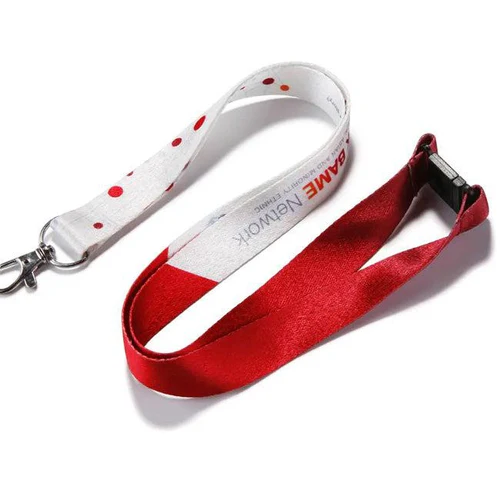
Branded lanyards are custom neck straps printed or woven with a logo, message, or identity system for events, access control, retail, and internal branding. The best suppliers combine decoration quality, safe materials, and repeatable production so the final product looks sharp and performs under daily use.
In 2026, buyers are also under more pressure to document sustainability claims, shorten lead times, and reduce risk across the supply chain. That is why supplier evaluation is no longer a back-office task; it is a brand protection process. Best Patches approaches it that way, and you should too.
Table of Contents
- What a Strong Lanyard Supplier Actually Proves
- Quality Signals That Separate Good from Average
- Pricing, MOQ, and Lead Time Tradeoffs
- How to Compare Supplier Types Side by Side
- Best Patches Case Studies from Real Orders
- Common Risks That Cut Into Margin
- A Practical Supplier Scorecard for Buyers
- What Is Changing in 2026
- Next Steps Before You Place the Order
What a Strong Supplier Actually Proves
A strong supplier does more than send a mockup and a price. They prove that they can translate your brand into a product that looks consistent across thousands of units. For branded lanyards, that means fabric density, print alignment, edge finishing, attachment choice, and color matching must all be controlled before production starts.
Material and construction quality
Start with the base material. Polyester is common because it prints well and holds color, while satin gives a smoother premium feel. Tubular and woven styles can work for different use cases, but each has a different visual finish and durability profile. Ask for GSM, weave type, and whether the edges are heat-sealed or stitched. Fraying edges are one of the fastest ways to make a branded piece look cheap.
Hardware matters just as much. Metal swivel hooks, breakaway clasps, badge reels, and buckle releases all affect safety and function. If the supplier cannot name the hardware grade or provide photos of the attachment points, that is a red flag.
Print consistency and brand color control
Color drift is one of the most common failures. A supplier should be able to explain how they match Pantone targets, whether they use dye sublimation, silkscreen, or woven text, and how they handle dark backgrounds. Ask to see a production sample, not just a digital proof. A mockup can look perfect while the actual fabric prints muddy or oversaturated.
“The cheapest lanyard quote is often the most expensive decision after freight, rework, and brand damage are added up.”
Pricing, MOQ, and Lead Time Tradeoffs
Low unit pricing only helps if the quote is complete. Some suppliers omit setup fees, plate charges, packaging costs, split shipments, or rush fees. Others offer a rock-bottom price but require a large MOQ that leaves you stuck with excess inventory. For branded lanyards, the real question is not “What is the price?” but “What is the total landed cost at the quantity I actually need?”
Lead time is a quality signal
Fast turnaround is useful, but unrealistic promises usually mean weak planning. A supplier that quotes a 5-day production window for a custom order without seeing artwork, hardware, and packaging requirements is probably guessing. Reliable factories give clear ranges, explain bottlenecks, and tell you what happens if approval is delayed.
How to compare supplier types
| Supplier type | Best fit | Common risk | What to verify |
|---|---|---|---|
| Factory-direct manufacturer in Shenzhen | Large event runs and repeated reorders | Communication gaps if you lack a clear spec sheet | Sample quality, print method, QC photos, shipment terms |
| Domestic promotional distributor | Teams that need easier coordination and faster support | Higher unit cost and less production control | Who is actually manufacturing, and where final QC happens |
| Eco-certified boutique supplier | Brands with sustainability messaging or premium positioning | Limited capacity and higher MOQ on specialty materials | Certification documents, fiber source, and packaging claims |
| Marketplace broker | Small test orders and price shopping | Inconsistent finish and unclear accountability | Factory identity, review quality, and replacement policy |
How Best Patches Evaluates Suppliers in Practice
I have seen teams overfocus on artwork and ignore supplier discipline. At Best Patches, we review branded lanyards by asking the same question every time: can this supplier repeat the result at scale? On one university orientation order, the first sample looked fine, but the attachment hardware varied from box to box. We stopped the job before production, tightened the spec sheet, and saved the client from a campus rollout full of mismatched clips.
On a separate fitness expo project, the client wanted a bright gradient print with a soft-touch feel. The first vendor promised the world and delivered a harsh finish that made the logo look flat. We switched to a supplier that could show prior sublimation work, test-stripe samples, and packed-bag photos from the production floor. The final run landed on time, and the lanyards became part of the booth identity rather than an afterthought.
“When a supplier is serious, they do not just answer questions. They reduce uncertainty with samples, documents, and transparent timing.”
What we request before approving a vendor
- Production sample or pre-production photo set
- Pantone or color-matching method
- Hardware options with sizing details
- Packaging and labeling specifications
- Clear remake or defect policy
- Proof of recent similar orders
Common Risks That Cut Into Margin
Price risk is obvious, but quality risk is usually more expensive. A lanyard that arrives with crooked print or weak seams can trigger replacements, delayed launches, and wasted staff time. In some cases, the hidden cost is reputational: a premium brand does not want flimsy neckwear at a conference full of buyers and partners.
Watch for these warning signs
- Quotes that skip artwork setup or hardware details
- Samples that do not match the production method
- Overly broad claims like “premium quality” without measurements
- Reluctance to share factory photos or QC steps
- Responses that change every time you ask for clarification
According to Gartner’s 2024 supply chain research, procurement teams are placing more weight on supplier visibility and risk control than on price alone. That lines up with what buyers are seeing on the ground: the best purchase is the one that arrives right the first time.
A Practical Supplier Scorecard for Buyers
Use a simple scoring method before you approve any order. It keeps the process objective and makes vendor comparison much easier.
Use this order-review process
- Confirm the print method and fabric type.
- Request a sample that matches final production specs.
- Check hardware strength, attachment type, and safety features.
- Verify lead time, MOQ, and shipping terms in writing.
- Ask for defect handling and remake policy details.
- Approve only after the sample matches your brand standard.
According to a 2025 Deloitte manufacturing outlook, buyers are increasingly favoring vendors that can support faster iterations without sacrificing traceability. That matters for branded lanyards because the fastest supplier is not useful if they cannot document what changed between sample and shipment.
What Is Changing in 2026
Three shifts are shaping supplier evaluation now. First, buyers want cleaner sustainability claims, which means recycled polyester, low-impact inks, and packaging that can be explained to stakeholders. Second, branded lanyards are being tied more closely to access control and event technology, so hardware compatibility matters more than ever. Third, teams expect faster artwork proofing and better digital communication, even when production happens overseas.
Where smart buyers are focusing next
They are asking for traceability, not just pretty mockups. They are checking whether the supplier can support smaller test runs before a national rollout. And they are pushing for clearer defect thresholds so there is no debate when an order arrives off spec.
According to an IBM 2024 supply chain study, visibility into supplier operations remains one of the strongest predictors of resilience. That principle applies cleanly here: if you cannot see how the lanyard is made, you are guessing about the final result.
Next Steps Before You Place the Order
Best Patches recommends three actions before you commit:
- Ask for a real sample with your exact print and hardware combination.
- Compare at least three suppliers using the same scorecard.
- Put quality, timing, and remake terms in writing before paying a deposit.
If a supplier cannot meet those basics, they are not ready for your brand.
Conclusion
Choosing a supplier for branded lanyards is really about controlling risk. The right partner proves material quality, print consistency, hardware strength, and reliable communication before production begins. The wrong one leaves you with corrections, delays, and a product that undercuts your brand.
Best Patches recommends these next moves: approve only from a matching sample, compare vendors with a simple scorecard, and lock your defect policy before you send any deposit. That is how you get branded lanyards that look professional and stay that way.
References
- Gartner 2024 Supply Chain Research — informed the emphasis on supplier visibility and risk control.
- Deloitte 2025 Manufacturing Outlook — supported the point about faster iteration and traceability.
- IBM 2024 Supply Chain Study — reinforced the value of operational visibility and resilience.
FAQ
How do I evaluate a supplier for branded lanyards?
Check sample quality, print method, hardware strength, lead time, communication, and remake policy before approving production.
What is the best material for branded lanyards?
Polyester is the most common choice for durability and print quality, while satin works well for a smoother premium look.
How many branded lanyards should I order first?
Start with a test run if the design is new, then scale after you confirm print accuracy, hardware comfort, and supplier reliability.
What should I ask before placing a bulk order?
Ask about sample approval, Pantone matching, lead time, shipping method, defect policy, and whether the supplier can show recent similar work.
Are eco-friendly branded lanyards worth the extra cost?
Yes, if sustainability is part of your brand story. Just verify the material claims, certifications, and packaging so the premium is justified.
How do I avoid color mismatch on custom lanyards?
Provide Pantone references, request a physical sample, and make sure the production method matches the sample method exactly.