 Promotional Products





Introduction
If your printed lanyards look dull, fade too fast, or come back with blurry logos, the material is usually the problem. Polyester sublimation lanyards perform better because the fabric and the print process are built for each other. When brands need crisp color, repeatable quality, and cost control, polyester is typically the safest choice.
That is exactly why companies, schools, event planners, and merch teams turn to Best Patches for guidance on custom lanyards. The real challenge is not just picking a lanyard supplier. It is choosing a substrate that can hold detailed artwork, survive daily wear, and still make your branding look sharp after weeks or months of use.
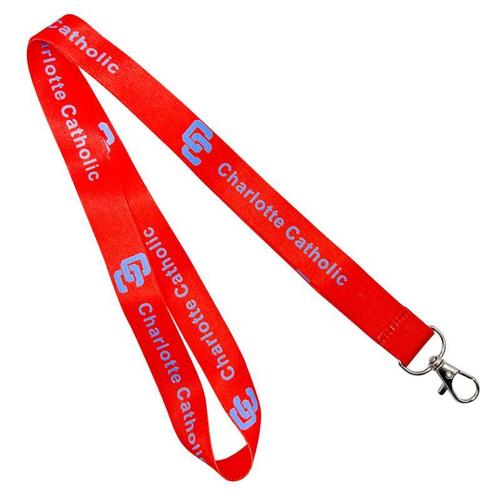
Polyester sublimation lanyards are custom lanyards made from polyester fibers and printed using dye sublimation, a heat-based process that turns ink into gas and bonds color into the fabric. Instead of sitting on top of the surface like some other print methods, the design becomes part of the material, which helps produce vibrant, durable graphics.
That matters when your lanyard has to do more than hold an ID badge. It has to represent your brand in crowded trade shows, busy campuses, healthcare settings, and security-sensitive workplaces where readability and durability are not optional.
Table of Contents
- Why Polyester Is the Best Match for Dye Sublimation
- How Dye Sublimation Works on Lanyards
- Business Benefits of Polyester Sublimation Lanyards
- Material Comparison for Real-World Use
- How to Design Better Custom Lanyards
- What We Learned at Best Patches
- Limits, Risks, and Common Mistakes
- How to Order the Right Lanyard for Your Brand
- What to Expect in 2026 and Beyond
Why Polyester Is the Best Match for Dye Sublimation
Polyester works best for sublimation because the chemistry supports the print method. Sublimation dyes bond most effectively with polyester polymers under heat and pressure. That bond is what gives polyester lanyards their strong color payoff, better wash resistance, and smoother visual finish.
Cotton may feel softer to some buyers, but it does not accept sublimation the same way. Nylon can be strong, but it often performs better with other decoration methods, depending on coating and finish. Polyester gives the best balance of print clarity, tensile strength, production speed, and price consistency.
For branding, that matters in very practical ways:
- Fine text stays more legible on polyester surfaces
- Gradients and full-color logos reproduce more accurately
- The fabric resists everyday abrasion reasonably well
- Bulk orders remain cost-efficient for events and staff programs
- Production is scalable for both short runs and high volumes
According to the European Outdoor Group’s 2024 market sustainability discussions and broader textile sourcing trends, polyester remains one of the most widely specified performance fibers because of its durability and processing flexibility. In promotional products, those same characteristics make it a reliable print base when consistency matters more than novelty.
“When a lanyard carries a logo all day, color accuracy is not a cosmetic detail. It is part of brand recognition.”
How Dye Sublimation Works on Lanyards
Dye sublimation sounds technical, but the logic is simple. Artwork is printed with special sublimation ink onto transfer paper, then applied to polyester webbing under heat and pressure. The heat turns the solid dye into gas, and that gas penetrates the polyester fibers. As it cools, the color locks into the material.
This is why sublimated lanyards usually feel smooth rather than thick or rubbery. There is no heavy ink layer sitting on top. The design becomes embedded in the textile structure, which helps reduce cracking, peeling, and edge flaking.
What this means for print quality
The process is especially effective for:
- Full-color brand marks
- Photographic or gradient designs
- Repeating patterns across long runs
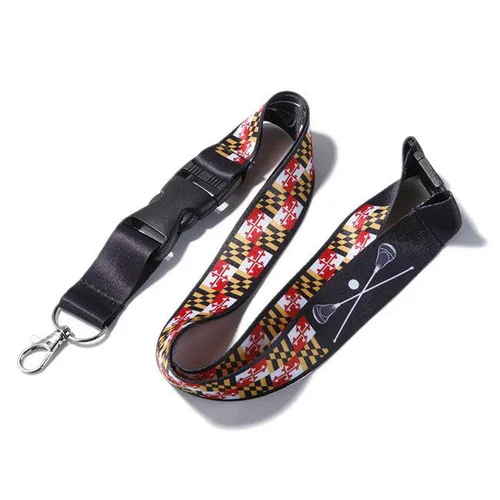
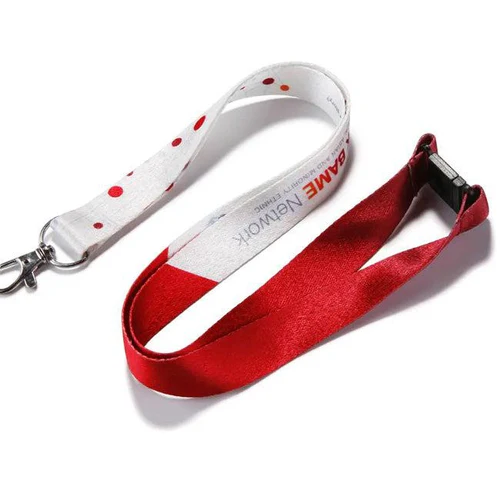
- Small logos used on both sides of a lanyard
- Complex event branding with multiple sponsor colors
Why polyester handles heat better in this use case
Polyester is stable enough for the sublimation temperature range used in commercial production. The fiber structure welcomes dye transfer more predictably than natural fibers. That predictability reduces waste, improves repeatability, and makes color matching easier across reorder cycles.
Business Benefits of Polyester Sublimation Lanyards
Most buyers are not shopping for fabric. They are shopping for outcomes: lower complaint rates, stronger event presentation, easier reorders, and better logo visibility. Polyester sublimation lanyards deliver those outcomes better than many alternatives.
Brand visibility
At trade shows and conferences, a lanyard is often one of the first branded items people see. A washed-out logo makes even a polished brand feel cheap. A vibrant, well-printed polyester lanyard holds color saturation that reads clearly across hallways, registration lines, and expo floors.
Budget efficiency
Polyester is generally cost-effective for medium and large production runs. According to 2024 sourcing discussions across the promotional products sector, polyester remains a preferred option for custom wearable accessories because it balances print performance with manageable material cost. That is especially useful for annual events, campus programs, and distributor-led reorder models.
Daily durability
Lanyards live a rough life. They get twisted, pulled, clipped, dropped, and stuffed into bags. Polyester does not make them indestructible, but it does help them keep shape and print quality under regular use.
Versatility
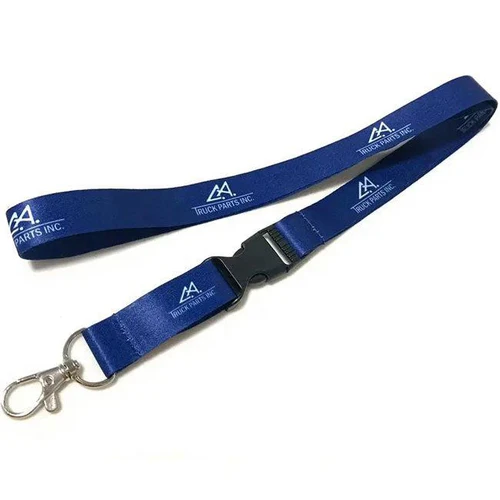
These lanyards can be paired with breakaway clasps, buckle releases, swivel hooks, bulldog clips, badge reels, and safety hardware. That flexibility makes them useful for very different settings, from music festivals to healthcare facilities.
Material Comparison for Real-World Use
Choosing between polyester and other materials gets easier when you compare them by actual business use rather than abstract specs.
| Material | Best Use Case | Print Performance | Main Tradeoff |
|---|---|---|---|
| Polyester | Trade shows, staff IDs, schools, branded merch | Excellent for full-color sublimation and gradients | Can feel less premium than specialty woven styles |
| Nylon | High-sheen branded lanyards with screen printing | Good for spot colors, less ideal for sublimation depth | Usually higher cost |
| Cotton | Eco-positioned campaigns and softer hand feel | Limited for true dye sublimation | Lower color vibrancy with sublimation-style goals |
| Tube polyester | Budget promotions and simple giveaways | Acceptable for simpler branding | Less flat area for detailed artwork |
| Woven fabric | Premium identity programs and long-term wear | Strong texture, limited for photo-quality effects | Higher setup complexity for intricate graphics |
How to Design Better Custom Lanyards
A great substrate still needs a smart design. The most expensive mistake in custom lanyards is trying to force a poster layout into a narrow strip of fabric. Good lanyard design is about readability, repetition, and motion.
Design rules that usually work
- Keep logos simple and high-contrast
- Use repeating patterns instead of one oversized graphic
- Avoid tiny legal text that becomes unreadable on narrow widths
- Choose a width that fits the brand use, often 15mm to 25mm
- Plan for hardware placement so clips do not hide key text
A practical ordering workflow
- Define the use case, such as event entry, employee ID, or retail resale.
- Pick the lanyard width, attachment hardware, and safety features.
- Prepare vector artwork and brand colors.
- Request a digital proof and confirm logo orientation and repeat spacing.
- Test one sample if the order is tied to compliance, sponsorship, or a major event launch.
- Approve production only after checking text legibility and hardware compatibility.
According to Adobe’s 2024 creative workflow guidance for print production, vector artwork remains the safest way to preserve sharp edges and scalable logo quality across physical outputs. That advice absolutely applies to lanyards, especially when logos are repeated across long, narrow surfaces.
“The best custom lanyard design is not the one with the most detail. It is the one people can read at a glance while walking.”
What We Learned at Best Patches
I have seen buyers focus heavily on hardware and almost ignore fabric choice, then wonder why their finished product feels off. At Best Patches, one of the clearest examples came from a mid-sized tech conference that had used a low-cost non-optimized material from another vendor the previous year. Their complaint was simple: the logos looked muddy, and sponsor colors did not match booth signage.
We reviewed their prior lanyards, rebuilt the artwork for a cleaner repeat, and moved the project to polyester sublimation lanyards with a flatter printable surface. The change was immediate. Sponsor logos looked brighter, gradient transitions were cleaner, and the organizer told us attendee photos finally matched the polished visual identity they had invested in across the rest of the event.
In another project, I worked with a school district that needed durable lanyards for staff IDs across multiple campuses. Their old lanyards cracked at the printed areas because the decoration sat too heavily on the surface. We recommended polyester sublimation so the color became part of the fabric instead. After rollout, reorders became easier because the district had a stable template, and wear complaints dropped noticeably over the following term.
These are not dramatic miracles. They are the result of matching the right print process to the right material.
Limits, Risks, and Common Mistakes
Polyester is usually the best option for sublimation, but it is not perfect for every buyer or every brand position. Honest sourcing means talking about the limits too.
Possible drawbacks
- Some buyers want natural-fiber messaging for sustainability positioning
- Very cheap polyester can feel rough or thin if specifications are weak
- Color matching can still vary slightly by batch and heat settings
- Premium luxury brands may prefer woven or specialty finishes for texture
Common ordering mistakes
The biggest mistake is buying on unit price alone. A cheaper lanyard that fades or misprints is not cheaper once you count event embarrassment, staff complaints, or emergency reorders. Another common issue is overcomplicating artwork. Fine lines, dense patterns, and low-contrast palettes often fail on a moving wearable item.
There is also the sustainability question. According to the U.S. Environmental Protection Agency and broader 2023-2025 textile waste reporting trends, synthetic materials remain under scrutiny for end-of-life impact. That does not automatically disqualify polyester, but it does mean buyers should ask suppliers about recycled content, production waste control, and realistic product lifespan.
How to Order the Right Lanyard for Your Brand
If you want fewer surprises, build your order around function first and branding second. That sounds backward, but it prevents expensive mismatches.
Questions to answer before you buy
- Will the lanyard be worn for one day or every day?
- Does it need a safety breakaway?
- Will it carry an ID card, keys, or heavier devices?
- Do you need double-sided print?
- Is this for staff use, resale, events, or sponsorship visibility?
Best specification choices for many buyers
For most organizations, a flat polyester lanyard with dye sublimation, a swivel hook, and optional safety breakaway covers the majority of use cases. Add a buckle release if users need to detach credentials quickly. Use double-sided printing if visibility matters in photos or crowded venues.
If the lanyard is part of a broader brand kit, coordinate it with badge cards, uniform colors, packaging inserts, and event signage. That is where the color performance of polyester sublimation really pays off.
What to Expect in 2026 and Beyond
The biggest shift is not that lanyards are becoming futuristic. It is that buyers are becoming less tolerant of inconsistent quality. As procurement teams get sharper and brand standards get tighter, material choice will matter more, not less.
Several trends are already shaping the market:
- More demand for recycled polyester options
- Stronger emphasis on color consistency across branded merchandise lines
- Shorter event timelines that reward reliable, repeatable production methods
- Greater interest in retail-grade merch quality, even for operational products like lanyards
According to McKinsey’s 2024 analysis of consumer and brand expectations in apparel and textile-adjacent categories, performance, consistency, and sustainability claims are all facing closer scrutiny. In practical terms, buyers will keep favoring products that do what they promise without forcing tradeoffs they did not anticipate.
That is good news for polyester sublimation lanyards. When specified properly, they remain one of the clearest examples of fit between material and print method.
Conclusion
Polyester wins for sublimation because it delivers the right combination of vivid print quality, daily durability, flexible customization, and scalable cost. For businesses, schools, events, and organizations that need reliable branding on a wearable product, that combination is hard to beat.
At Best Patches, the smartest next steps are straightforward:
- Start with your use case and choose flat polyester if color detail matters most
- Request a proof that shows repeat layout, logo direction, and hardware placement
- Consider recycled polyester options if sustainability is part of your buying criteria
References
- Adobe, 2024 print production guidance: reinforced the value of vector artwork for sharp, scalable print results.
- McKinsey, 2024 consumer and textile market analysis: highlighted growing pressure for performance, consistency, and credible sustainability claims.
- U.S. Environmental Protection Agency, 2023-2025 textile waste reporting context: informed the discussion around synthetic material scrutiny and lifecycle considerations.
- European Outdoor Group, 2024 textile sourcing and material discussions: supported the broader point that polyester remains a widely specified performance fiber.
FAQ
What are polyester sublimation lanyards?
-
They are custom lanyards made from polyester and printed with dye sublimation. The heat-transfer process bonds color into the fibers, which helps create bright, long-lasting graphics without a thick printed surface.
Why is polyester better than cotton for sublimation?
-
Polyester bonds far more effectively with sublimation dyes, so it produces stronger color, sharper detail, and better durability. Cotton may feel softer, but it does not naturally support true dye sublimation in the same way.
Are polyester sublimation lanyards durable enough for daily staff use?
-
Yes, in most workplace settings they hold up very well. They resist fading better than many surface-print methods and are suitable for IDs, access badges, and event credentials, especially when paired with quality hardware.
Can I print full-color logos and gradients on these lanyards?
-
Yes. That is one of the main reasons buyers choose sublimated polyester. It handles full-color artwork, gradients, repeating patterns, and detailed logos much better than many basic print methods.
What width is best for custom sublimation lanyards?
-
For many organizations, 20mm or 25mm is a strong choice because it gives logos enough room to stay readable. Narrower widths can work for simple text marks, but they are less forgiving with detailed branding.
Are recycled polyester options available?
-
Many suppliers now offer recycled polyester lanyards, though exact availability, pricing, and print performance may vary by factory and order size. If sustainability matters to your brand, ask for fiber-source details before approving production.
How do I choose the right hardware for a lanyard?
-
Match the hardware to how the lanyard will be used:
Use a swivel hook for standard ID badges
Add a buckle release for quick detachment
Choose a safety breakaway for workplaces, schools, or healthcare
Use stronger attachments if the lanyard will hold keys or devices